
AMA Vertical Tasting
Domaine Jamet
(2011-2022)
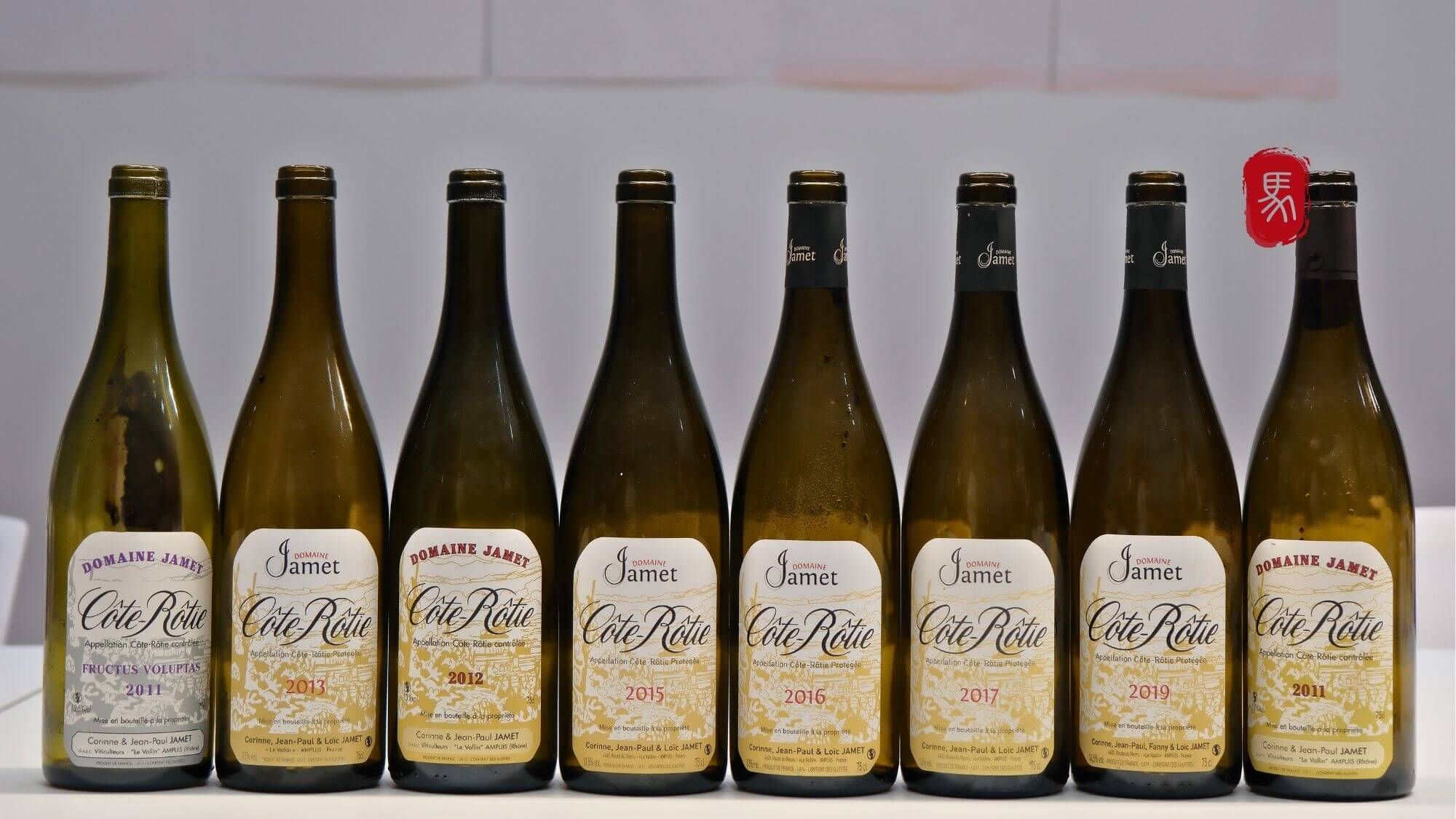
Domaine Jamet is a flag carried in the hearts of all Côte-Rôtie lovers, and a name widely acknowledged within the wine world as the very summit of the traditional school.
Exceptionally gifted yet fiercely independent, the estate has never aligned itself with any stylistic movement since it began bottling under its own name in 1976. Even during the global sweep of the so-called “Parker era,” when the aesthetic of the Rhône Valley itself was all but redefined, Jamet never wavered.
Over several decades, Domaine Jamet has shown a level of quality consistency that is nothing short of remarkable. Over the past ten years or more, I have tasted the estate repeatedly, across young and fully mature bottles, through cool vintages and hot ones alike, and I have yet to encounter a single wine compromised by technical shortcomings. For a domaine so firmly rooted in traditional methods, that kind of consistency is, in itself, a statement of sheer ability.
Just before last Christmas, I shared a vertical tasting of Domaine Jamet from the 2011 to 2019 vintages with friends in Bordeaux. Through this article, I would like to speak properly about the Côte-Rôtie producer I regard as a personal benchmark, and I also hope that each reader may find, in these wines, something of the same state of mind I experienced at the table that day.
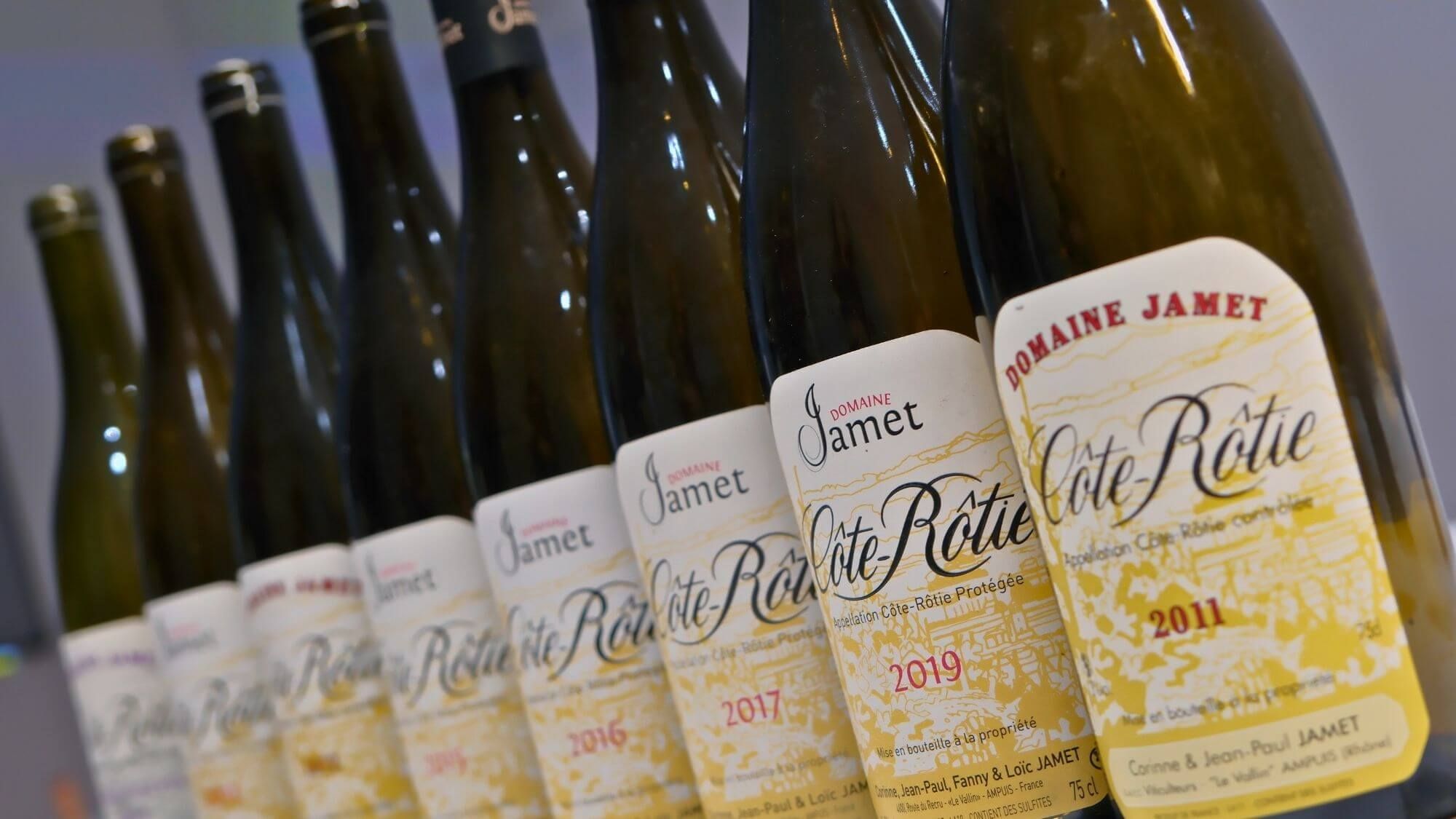
AMA SNAPSHOT OF DOMAINE JAMET
To frame this vertical tasting more clearly, here are my key takeaways, distilled for quick reference:
1. Whole-cluster fermentation
Jamet works with 80% to 100% whole-bunch fermentation, most often close to full inclusion, yet the wines never show green notes or unruly edges.
2. Aromatic profile
Ripe black fruit forms the core at every stage, young or mature. The classic violet note can feel more reserved in particularly hot vintages, with 2015 as a textbook case, while cooler years tend to express it with greater clarity. With aging, nearly all vintages evolve toward black olive, liquorice confection, and a refined animal note reminiscent of well-worn leather.
3. Palate structure
A textbook expression of the traditional school. Compact structure, a clearly defined frame, vivid acidity and tension, with an overall temperament that is cool, firm, and built for long aging. With time, graphite tones and an ash-like texture become increasingly evident.
4. Cool vintages are not a risk
Thanks to Jamet’s strict control over both yields and ripeness, cooler years consistently deliver. In vintages such as 2017, where colour and body are relatively light, reduced concentration allows Jamet’s poised, quietly stylish character to come through even more clearly.
5. Recommended vintages
2016, 2019, and 2011 stand out as key references. Those who favour a richer expression may turn to 2015, while drinkers drawn to elegance and linear precision will find 2017 particularly compelling.
6. The arrival of Loïc Jamet
The 2013 vintage marked both the first year after the family split and the first year the eldest son, Loïc Jamet, joined the winemaking team. From my tastings, his influence preserves the domaine’s traditional foundations while bringing greater aromatic definition and a more transparent overall expression.
From Grape Grower to Domaine: A Hard Road Earned the Long Way
The history of Domaine Jamet can be traced back to the 1950s. The estate was founded by Joseph Jamet, who began with just 0.35 hectares of vines on the steep slopes of Côte-Rôtie, near Ampuis. By today’s standards, that amount of land would barely equal the size of a hotel lobby in China.
The Second World War had only recently ended, and Côte-Rôtie at the time was a region in disrepair. According to stories passed down among local growers, the purchase price of apricots in those years was nearly on par with that of grapes, a telling reflection of how bleak the wine trade then was.
Like many winegrowing families in the Rhône Valley, the Jamets spent more than twenty years selling their grapes to négociants. Yet Joseph Jamet never abandoned his conviction that truly great wine could be made on these steep, barren, and largely overlooked slopes of Côte-Rôtie. I cannot say where such certainty came from at the time, but history has since provided the most persuasive answer.
The real turning point arrived in 1976.That year, Joseph’s son, Jean-Paul Jamet, officially joined the family operation and began bottling wines under the name Domaine Jamet. In the decades that followed, Jean-Paul became the undisputed driving force of the estate, and it was under his leadership that Jamet stepped onto the international stage.
It is worth noting that Jean-Paul did not come from a formal academic background. Instead, his understanding of terroir and vintage was built gradually through years of hands-on work in the vineyards and the cellar, an experience that would go on to shape the stylistic direction of Domaine Jamet in a profound way. In the end, isn’t this precisely what we now like to call “learning by doing”?
Why Are There Two Jamets?
After the 2012 harvest, with 2013 marking the first vintage following the split, the two brothers ultimately chose to part ways, and the original estate was divided in two.
Domaine Jamet remained under the stewardship of Jean-Paul Jamet and his wife Corinne Jamet, with their eldest son Loïc Jamet joining the winemaking team in 2013. Jean-Paul’s younger brother, Jean-Luc Jamet, established his own estate on the Lancement plateau of Côte-Rôtie, under the name Domaine Jean-Luc Jamet. I will save the story of that domaine for another occasion.
Compared with Domaine Jamet’s traditional style, defined by firm structure and clearly drawn lines, Jean-Luc Jamet tends toward earlier picking, a lighter body, and brighter acidity. Public information on his current stylistic direction remains relatively limited, and I will return to it in more detail in a separate article.
Where Exactly Are Jamet’s Vineyards?
Following the family split, Jean-Paul Jamet went on to acquire additional parcels in Côte-Rôtie and the surrounding appellations, bringing the total vineyard area at one point to around 17 hectares. Of this, roughly 8 hectares lie within the heart of Côte-Rôtie itself, almost all of them situated on the slopes of Côte Brune.
According to official figures, the estate now works with 20 individual parcels in Côte-Rôtie, spread across 15 different lieux-dits, including Fongeant, Côte Blonde, La Landonne, Côte Rozier, Plomb, Chavaroche, Moutonnes, Lésardes, Gérine, Truchet, Leyat, Bonnivières, Côte Bodin, Tartaras, and Rochins.
To make this easier to visualise, I have marked all of them on a map.
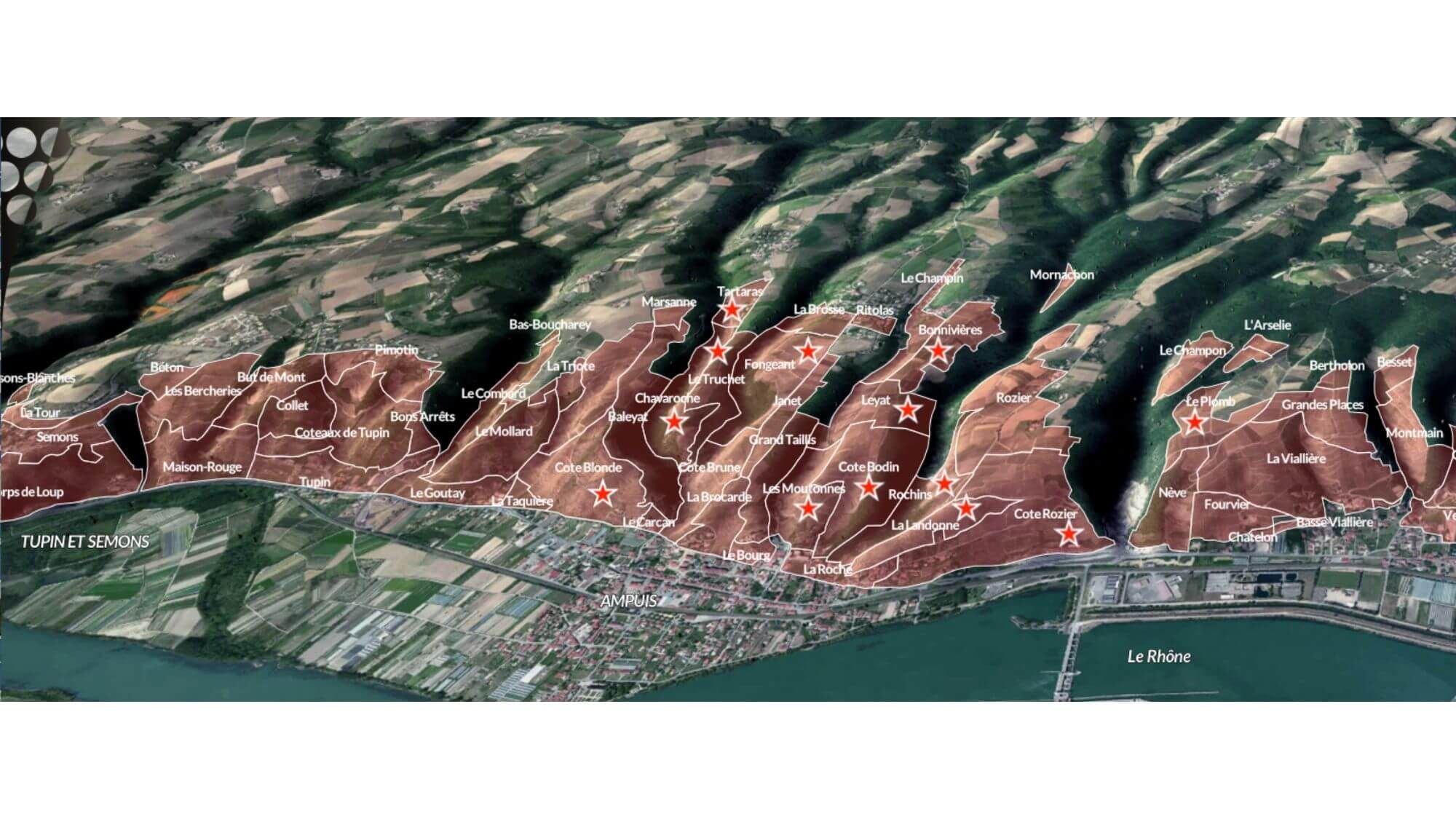
For those who have watched my video on Côte-Rôtie, the soils of Côte Brune will already be familiar. Dominated by schist, they are highly fractured and exceptionally well drained. Countless fissures within the rock allow vine roots to penetrate deep into the ground in search of water and nutrients. It is precisely this soil profile that gives Domaine Jamet its hallmark style: cool in temperament, tightly wound, and unmistakably mineral.

Blending Is Not a Compromise, but a More Advanced Form of Expression
Jean-Paul Jamet’s understanding of terroir stands in marked contrast to today’s widespread fascination with single-vineyard wines. In his view, the complexity of Côte-Rôtie does not come from the extreme expression of any one parcel, but from the balance and interplay between many. Syrah grown on different exposures, with varying soil depths and levels of ripeness, corrects and supports one another in the blend, each filling in what the others lack. It is this process that ultimately defines the underlying character of Domaine Jamet.
On the subject of blending versus single-vineyard wines, I once put a rather awkward question to the domaine at a trade fair.
I said, “I often emphasise to my friends and students that blending is king, a view I fully agree with. But if Domaine Jamet truly believes blending to be the superior approach, why continue to produce the Côte Brune and La Landonne cuvées, especially given that a new La Landonne was released again in 2018?”
I can no longer recall their response word for word, but the message was perfectly clear:
Blending has always been, and remains, the unchanging backbone and focus of the estate. Producing single-vineyard wines is not meant to prove that a single parcel is ‘better,’ nor is it a concession to market demand. Rather, it serves as a long-term tool for exploring terroir itself.
As for how others might interpret that answer, I cannot say. From my own tasting experience, however, I have consistently found myself more drawn to the blended wines of Domaine Jamet. They deliver greater pleasure at the table, at a lower price point as well. And really, why wouldn’t one choose that?
The Jamet Way: A Philosophy of Winemaking
The Côte-Rôtie wines of Domaine Jamet are composed almost entirely of Syrah. Grape selection is carried out exclusively by hand in the vineyard, with particular attention paid to the health of both berries and stems, a crucial prerequisite for the whole-cluster fermentations that follow.
In most vintages, Domaine Jamet works with a high proportion of whole bunches, often approaching 100%. The exact percentage is adjusted according to the level of ripeness in each year and is generally not disclosed. This is not a stylistic flourish, but a choice that has emerged naturally from decades of practice.
As I see it, whole-cluster fermentation plays three distinct roles within the Jamet framework.
- It broadens the aromatic spectrum, notably enhancing spice notes and a fresh, pine-cone-like lift.
- It refines the tannin structure, making it more linear and taut rather than dense or heavy.
- And, within an overall sense of restraint, it reinforces the wine’s frame, providing a controlled yet enduring structural backbone.
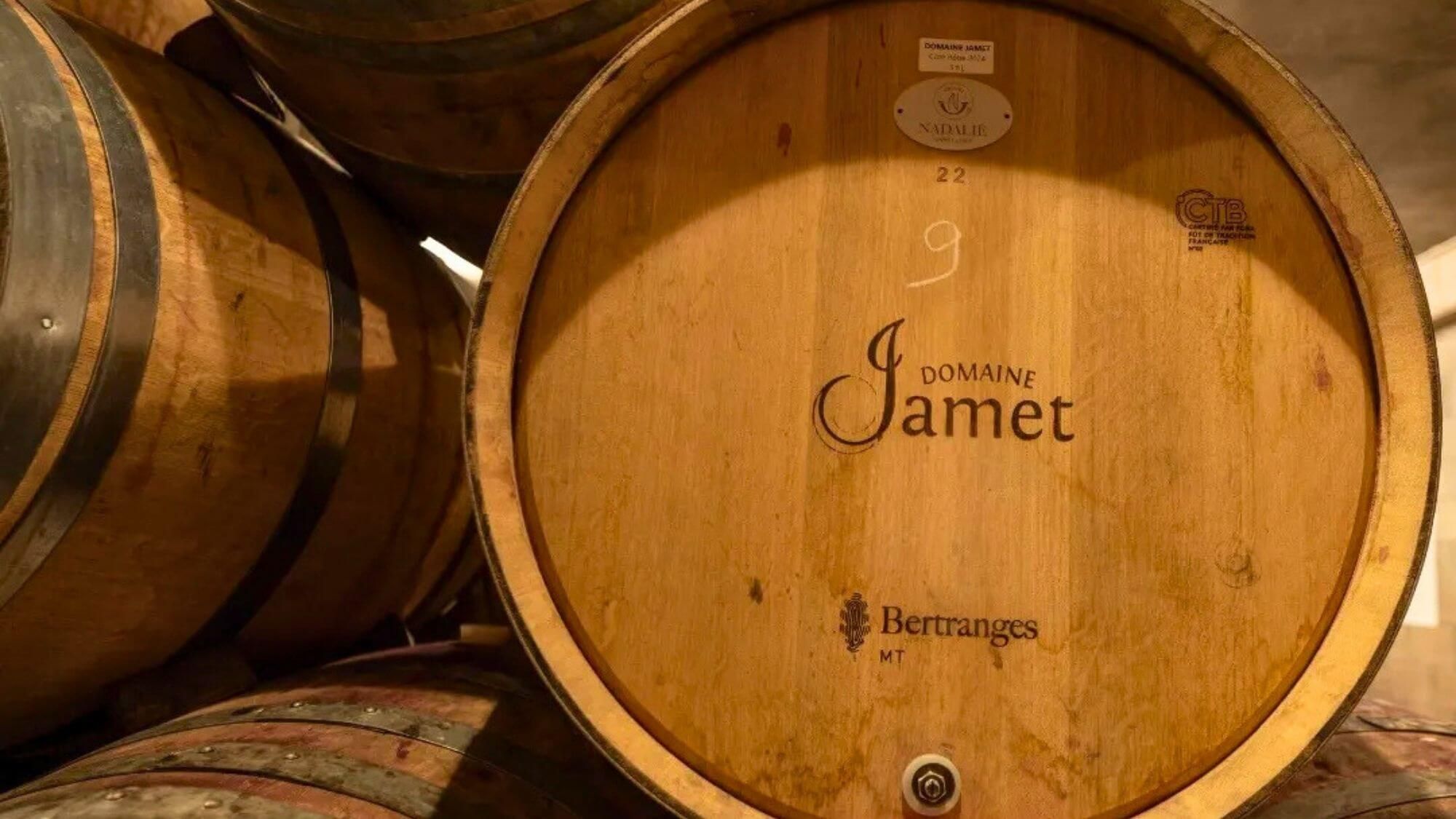
Alcoholic fermentation then takes place entirely in stainless steel or other inert vessels, without any intervention from new oak. Indigenous yeasts are relied upon throughout, and maceration typically lasts around three weeks. The same restraint carries through to aging. Although total élevage extends to roughly 22 months, the estate relies mainly on older barrels and 600-litre demi-muids, with new oak usually kept below 15%.
The wines are bottled without filtration, preserving as much of their original drive as possible.
By this point, I suspect most readers will already have formed their own conclusions about Domaine Jamet.
To me, it is not an estate designed to chase trends, but one that has spent decades quietly testing the value of terroir and conviction through time itself. It reinforces the belief that, on this long and often solitary road called wine, remaining true to one’s principles matters far more than keeping pace with the moment.
In today’s wine world, we see no shortage of bottles crafted to flatter the palate. Jamet has chosen a different path, staying faithful to itself for a full fifty years and leaving the final verdict to time.
Perhaps that is the lesson Jamet offers us. And perhaps it is also a quiet wish that anyone walking their own path, determined not to lose sight of where they began, might find the strength to keep going.