AMA Vertical Tasting
Château Dassault
(2010-2023)
Those who have followed my work know that, when writing a vertical tasting article, I rarely spend much time recounting the history of an estate’s owning family. I generally prefer to focus on the terroir, the winemaking, the tasting itself, and, above all, the style of the wines.
This estate, however, is an exception.
The reason is simple: the name Marcel Dassault occupies a remarkable place in modern French history. Across France, it is not uncommon to come across streets bearing his name—Avenue Marcel Dassault. The industrial group he founded profoundly shaped the development of France’s post-war aerospace industry and, in many ways, helped restore the country’s stature as a leading military power.
There is also a more personal reason.
I have been an aviation enthusiast for as long as I can remember. From the Dassault Mirage 2000 and the Dassault Rafale to the Dassault Falcon business jets favored by many of the world’s most prominent entrepreneurs and ultra-high-net-worth individuals, the name Dassault is instantly familiar to anyone with a passion for aviation.
So before we turn our attention to the wines of Château Dassault, I’d like to begin by telling the story of the extraordinary man behind the name: Marcel Dassault.
Part One: The story of Marcel Dassault
Marcel Dassault: The Man Who Built a French Aviation Empire
If I had to summarize the life of Marcel Dassault in a single sentence, it would probably read something like this:
First World War aeronautical engineer → survivor of a Nazi concentration camp → father of the Mirage fighter jet → owner of a Grand Cru Classé estate in Saint-Émilion.
It sounds less like a résumé than the script of an epic film.
Marcel was born in Paris in 1892 into a Jewish family. At the time, however, he was not yet known as Marcel Dassault. His birth name was Marcel Bloch.
In 1914, as the World War I broke out, Marcel had just graduated from ISAE-SUPAERO and joined France’s aeronautical engineering service.
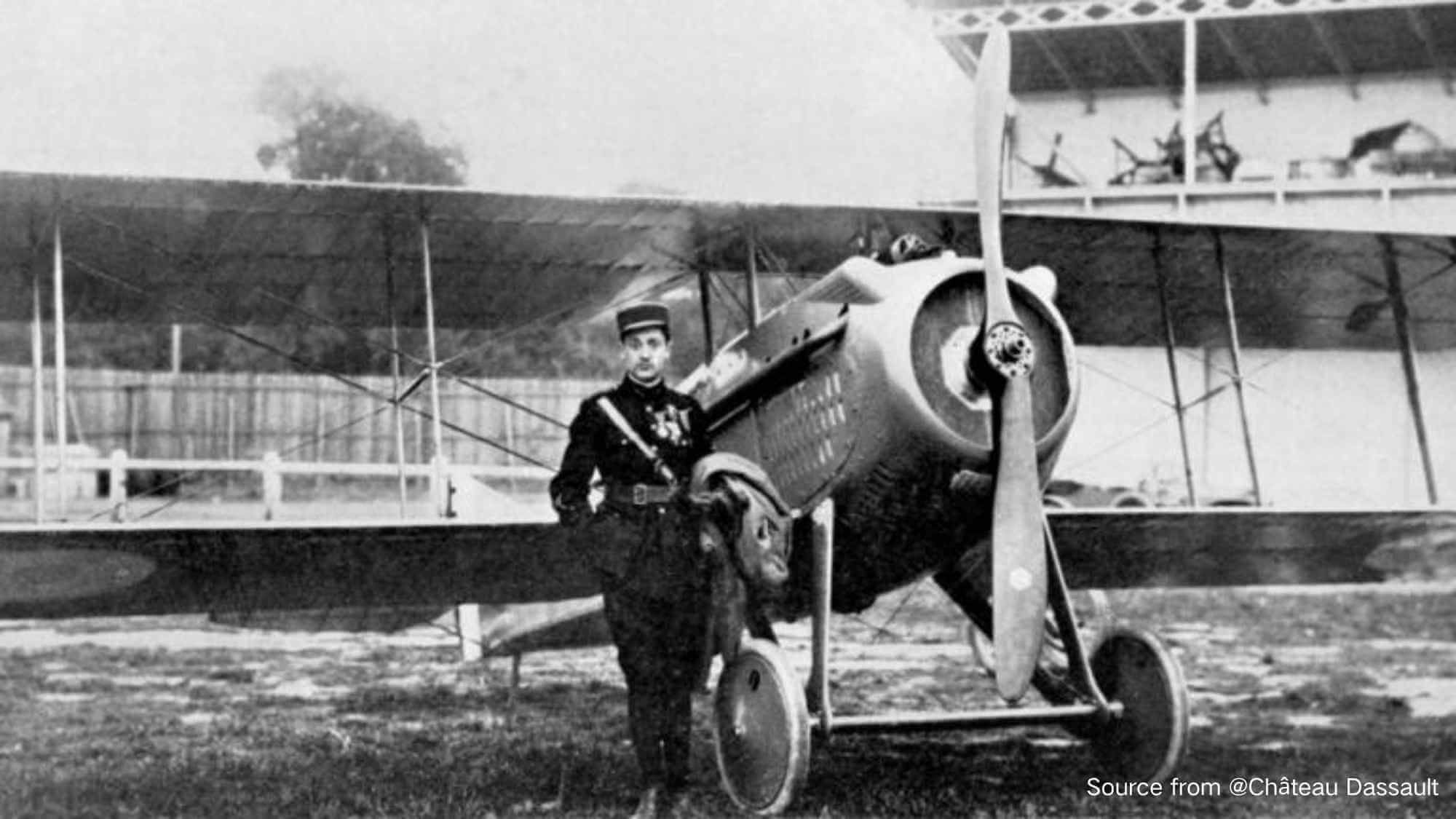
Aviation was still in its infancy. Aircraft of the era struggled with limited engine power and poor climbing performance. Working with a close colleague, Marcel developed the celebrated Éclair propeller (Hélice Éclair), an innovation that significantly improved aircraft thrust. From 1917 onward, the design was adopted by a large number of Allied aircraft and is widely regarded as one of the most important technological advances achieved by the French aviation industry during the war.
After the war, Marcel founded his own company. By the 1930s, the aircraft he designed had become an essential part of the French Air Force. Among them, the MB.152 emerged as one of France’s principal fighter aircraft during the period.
By the late 1930s, Marcel Bloch had established himself as one of the country’s most successful aviation industrialists. The company he built would eventually evolve into what is now Dassault Aviation, the manufacturer behind the legendary Dassault Mirage series and the Dassault Rafale, two aircraft that have become enduring symbols of French aerospace engineering.
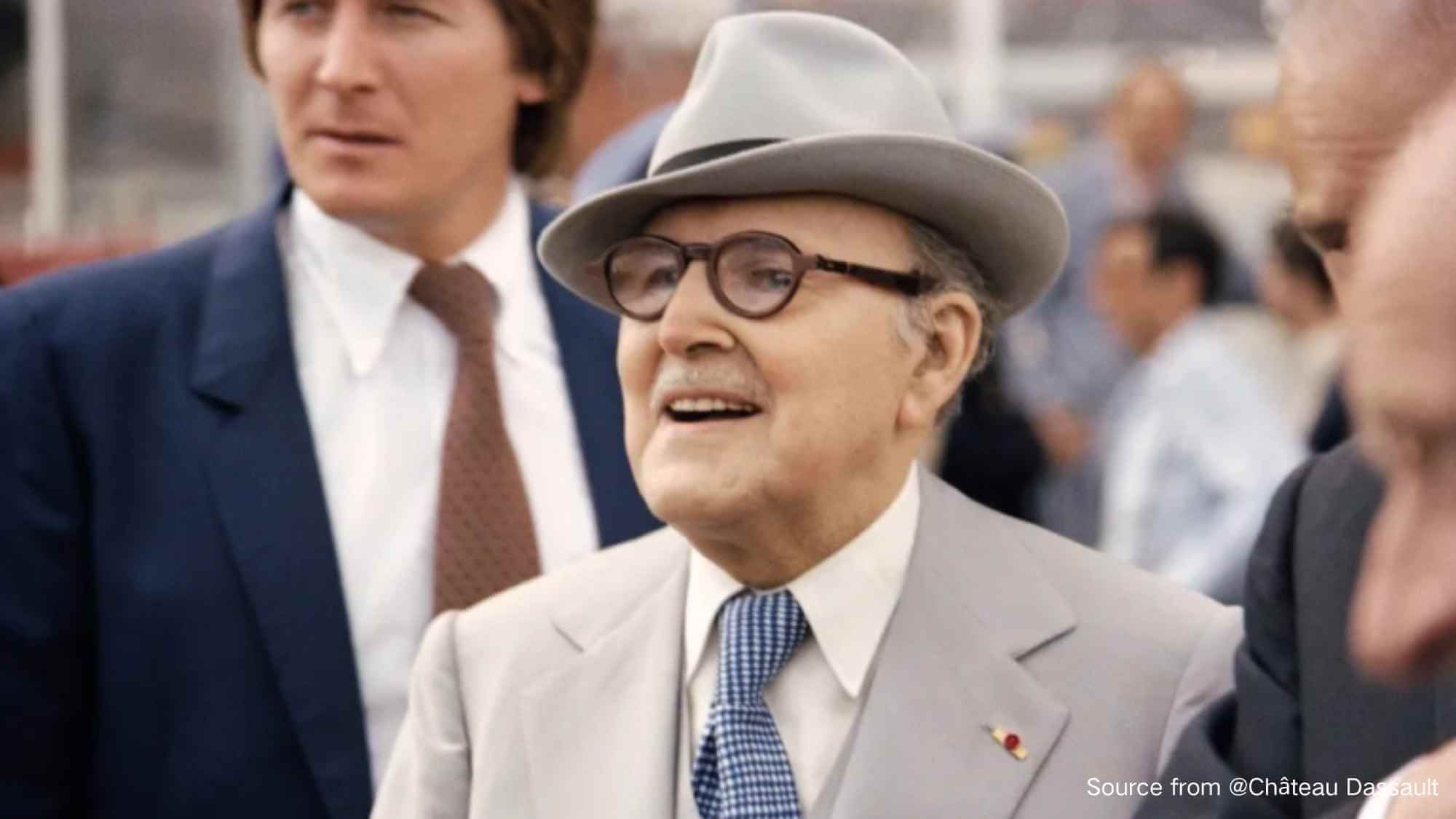
Buchenwald: The Darkest Chapter of His Life
History, however, rarely follows a straight line.
After the Battle of France and the fall of France in 1940, the German authorities demanded that the French aviation industry produce aircraft for the Nazi war effort. As a Jew, Marcel refused to manufacture weapons for the regime.
In 1944, he was deported to the Buchenwald concentration camp.
There, he lost his freedom. He lost the business he had spent decades building. He very nearly lost his life.
Yet he survived, sustained by extraordinary resilience and determination.
In April 1945, Buchenwald was liberated by American forces. Marcel was fifty-three years old. For many people, such an ordeal would have marked the end of a life’s work. But for him, it became the beginning of an even more remarkable chapter.
After the war, Marcel made a decision of profound personal significance.
He abandoned his birth name, Bloch, and became Marcel Dassault.
The name Dassault was derived from the French expression char d’assaut—literally, “assault tank.” It had been the code name used by his brother in the French Resistance during the war. Adopting it was more than a tribute to his brother. It was also a symbolic farewell to one of the darkest chapters of his own life.
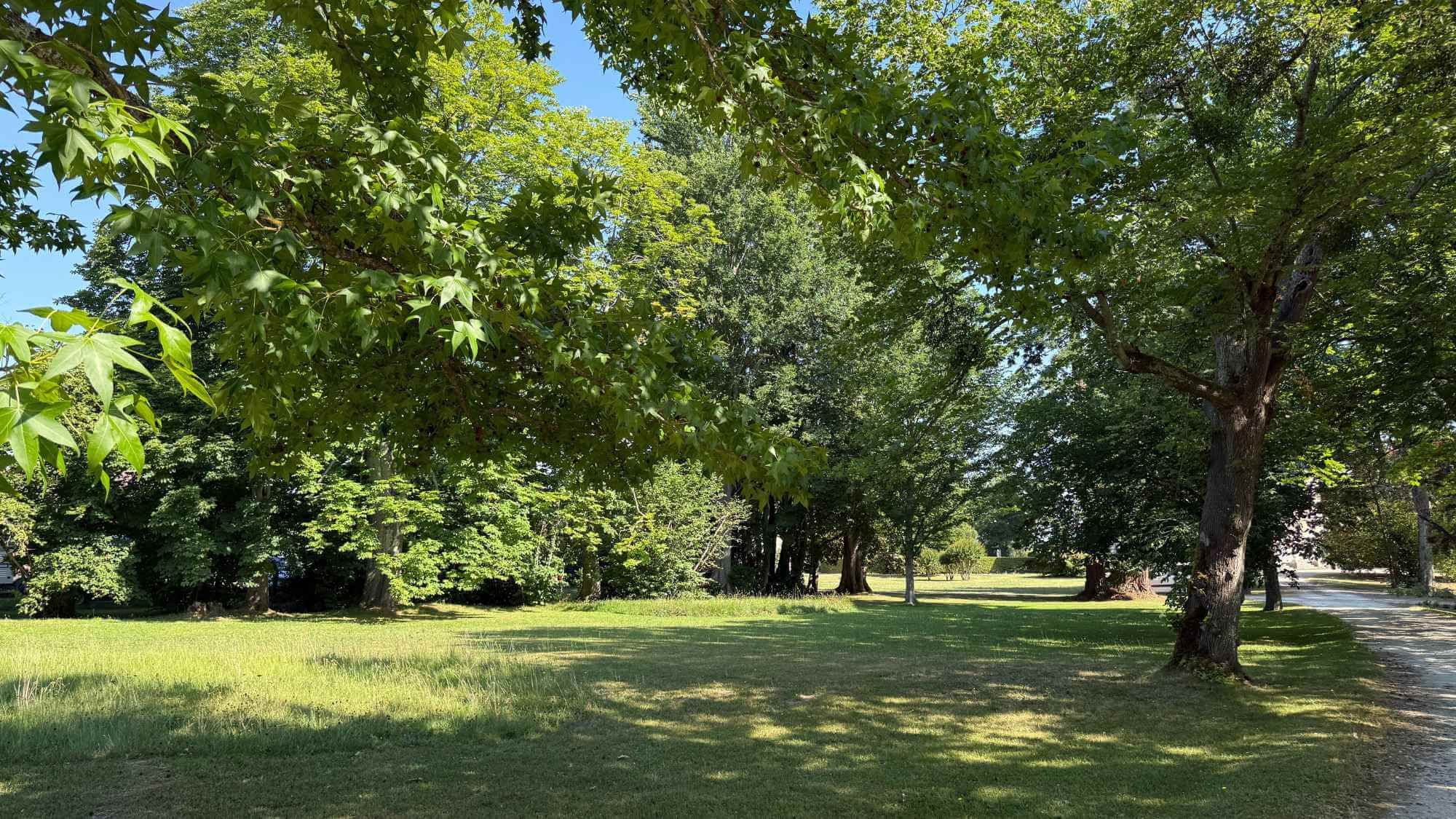
Seizing the Jet Age
After the World War II, the aviation industry entered a new era as jet engines rapidly replaced propeller-driven aircraft.
Marcel Dassault immediately recognized the scale of this transformation. He understood that the future belonged to jet aviation, and committed virtually all of his company’s resources to the development of military jet aircraft.
At the same time, the French government was determined to rebuild the nation’s aerospace industry. The state provided research programs, technical support, and military contracts, while Dassault contributed its engineering expertise, design capabilities, and industrial know-how. Together, they forged a uniquely French model of cooperation that would shape the country’s aviation industry for decades to come.
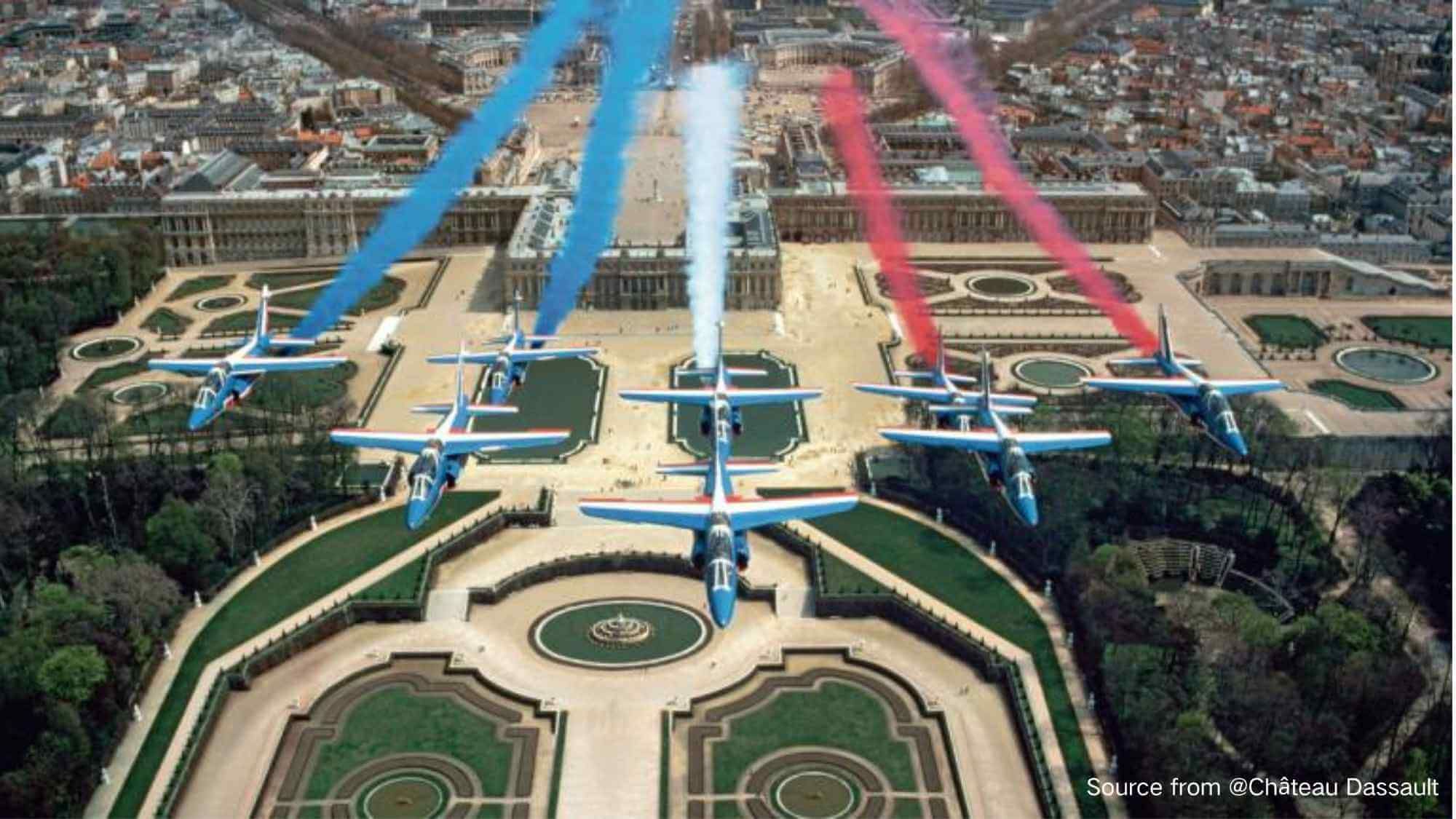
Mirage: The Aircraft That Defined a Legacy
The aircraft that truly established Dassault Aviation on the world stage was the Dassault Mirage III.
At a time when the United States fielded the Lockheed F-104 Starfighter and the Soviet Union deployed the Mikoyan-Gurevich MiG-21, France answered with the Mirage III. It made France the only nation outside the two Cold War superpowers capable of designing and producing a successful supersonic jet fighter.
The Mirage III combined reliability with straightforward maintenance and competitive operating costs. It served not only as a cornerstone of the French Air Force but also became one of France’s most successful military exports.
In many ways, the international standing that French aerospace enjoys today can be traced back to the vision that Marcel Dassault demonstrated during those formative years.
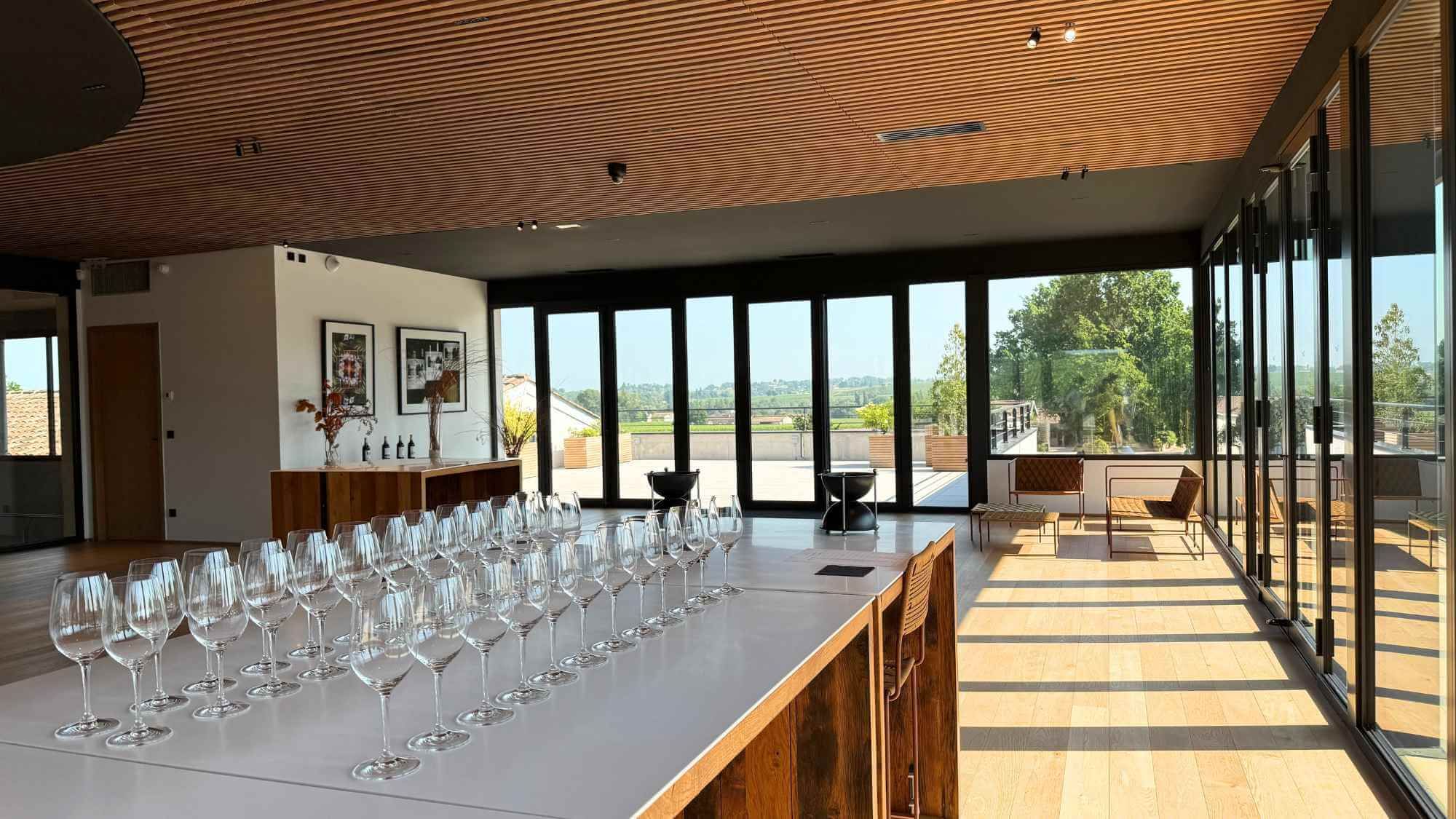
An Industrialist’s Wine Dream
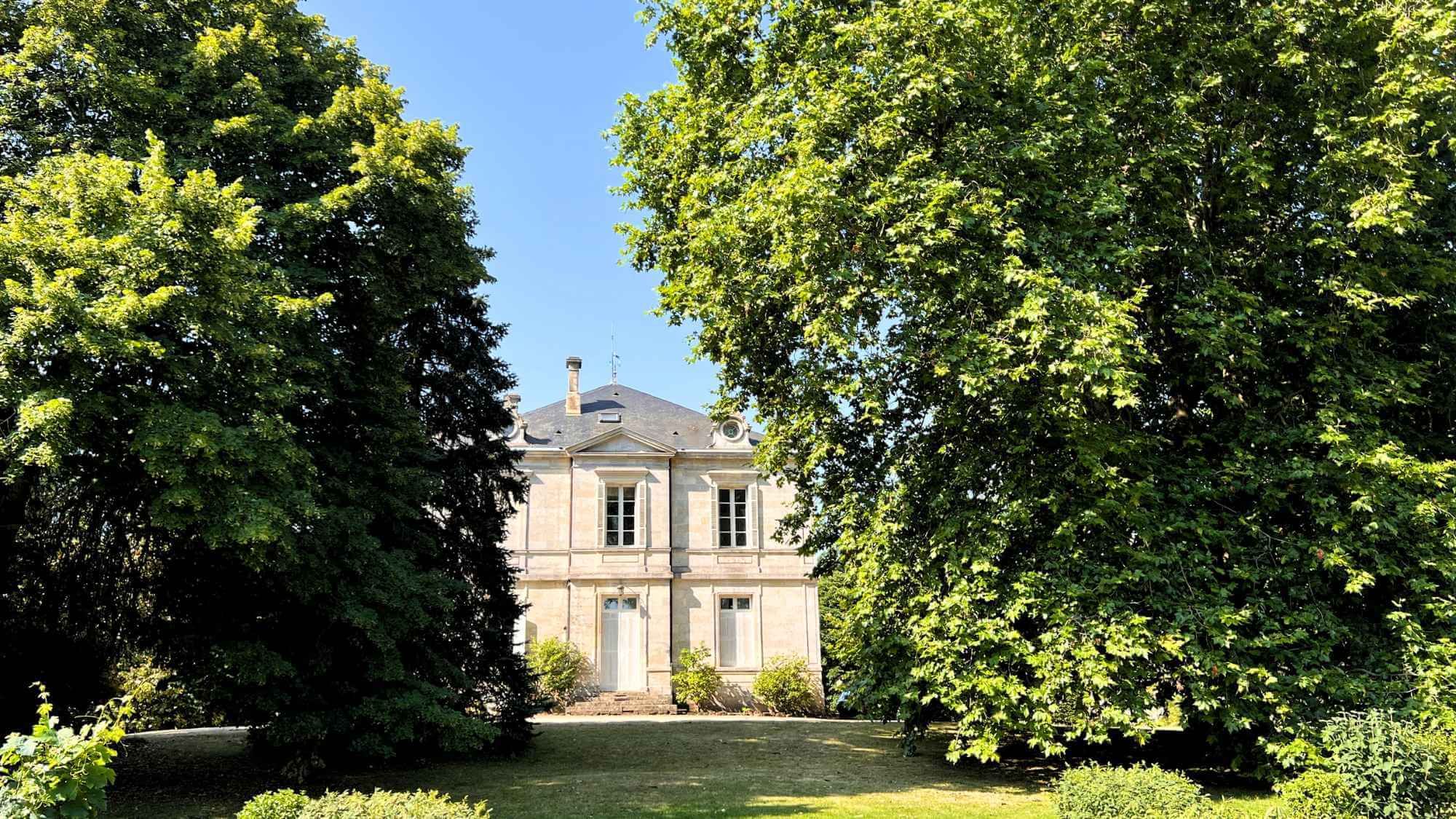
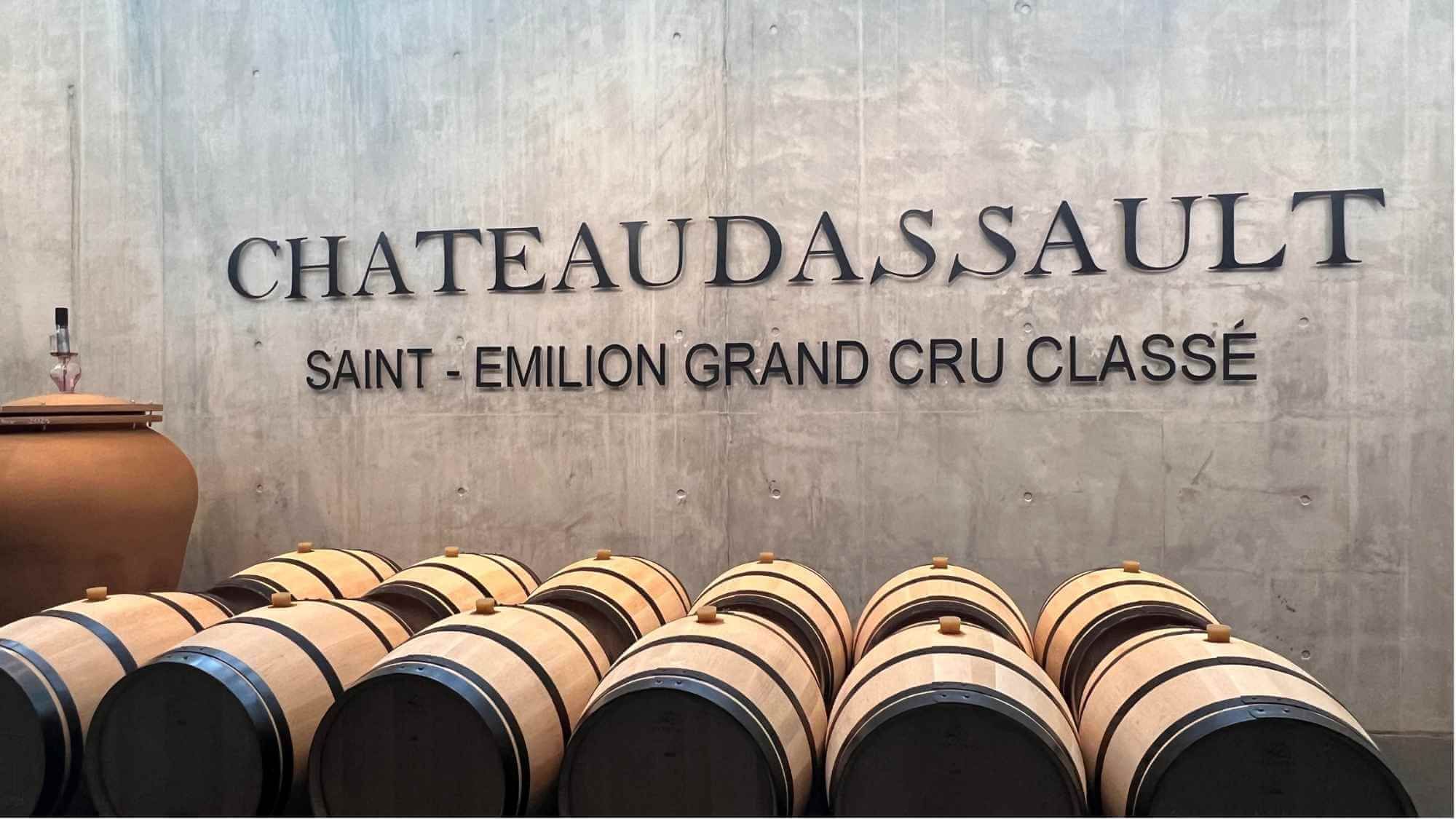
In 1955, Marcel Dassault arrived in Saint-Émilion and purchased an estate then known as Château Couperie. He soon made a decision that was remarkably bold for its time: he renamed it Château Dassault.
In Bordeaux, tradition has always carried immense weight. Most châteaux have retained their historic names for generations, and it is exceptionally rare for an owner to replace them with a family surname. Marcel Dassault did exactly that.
Once he had taken over the estate, he focused on three priorities.
First, he undertook a major expansion and replanting of the vineyards.
Second, he modernized the winery with new equipment and improved winemaking facilities.
Third—and perhaps most importantly—he introduced the management principles that had made his aerospace company successful, bringing an industrial mindset of organization, precision, and long-term planning to the running of the estate.
The results soon followed.
In 1969, Château Dassault was promoted to the rank of Saint-Émilion Grand Cru Classé, a milestone that demonstrated how Marcel Dassault’s disciplined industrial vision could succeed not only in aviation, but also in the world of fine wine.
Part Two: Vertical Tasting Experience
AMA Snapshot: Château Dassault
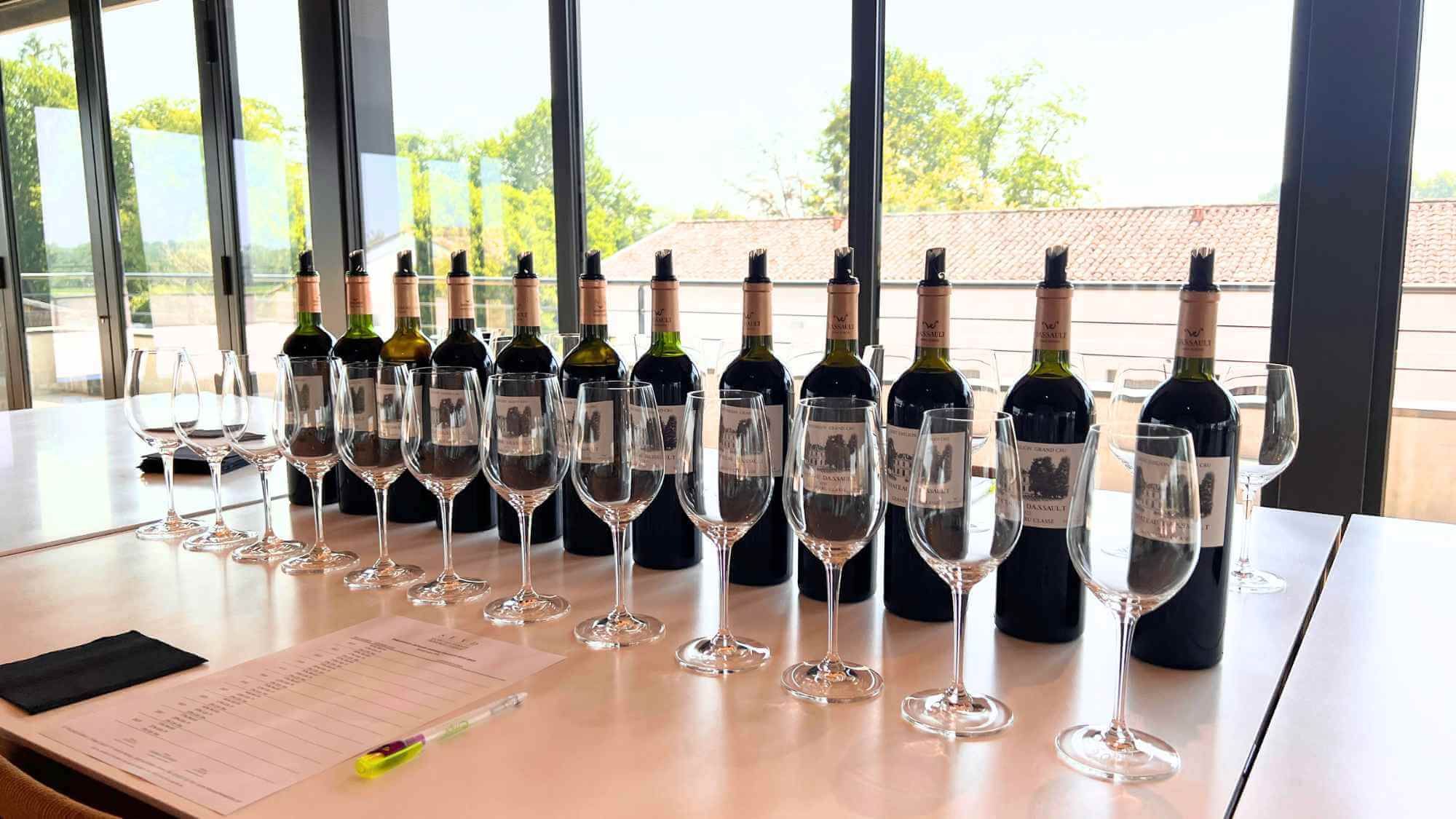
1. Consistently high alcohol levels across vintages
Château Dassault has always produced wines with relatively high alcohol. Even in cooler vintages such as 2011 and 2014, the wines rarely fall below 14% ABV. In recent years, alcohol levels have generally ranged between 14.5% and 15%.
2. Before 2015, the style was built around structure and power
The earlier vintages placed greater emphasis on structure, density, and concentration. Aromatically, they tended to be more restrained, expressing themselves through weight and intensity rather than allowing the terroir to speak naturally. Some vintages even came across as rather closed in their youth.
3. The 2016 vintage represents the pinnacle of the estate’s traditional style
For me, 2016 is the defining vintage of Château Dassault’s first era. Ripeness, structure, aromatic presence, and overall balance all reached an exceptional level, making it the finest expression of the estate’s classic identity.
4. 2018 marked the arrival of a new technical direction
The 2018 vintage was the first under the leadership of winemaker Jérôme Aguirre. The most noticeable improvements were the purity of the fruit and the increased transparency of the palate. If the wines before 2018 resembled standard-definition images, those from 2018 onward feel unmistakably high-definition.
5. The 2022 vintage ushered in a new era
The completion of the estate’s new winery made 2022 a genuine turning point for Château Dassault. From a tasting perspective, the difference is immediately apparent. Before 2022, the fruit often seemed slightly veiled, as though viewed through a thin layer of mist. From 2022 onward, the aromatics become clear, pure, and sharply defined. The transformation is nothing short of remarkable.
It is also worth noting that, following the latest revision of the Saint-Émilion classification, several limestone parcels formerly belonging to Château Faurie de Souchard were incorporated into the estate, subtly reshaping the overall terroir.
6. Cabernet Franc shines when it exceeds 20% of the blend
Whenever Cabernet Franc accounts for more than 20% of the final blend, the wines tend to perform at a noticeably higher level. They gain an extra degree of elegance and refinement, adding another dimension to the overall balance.
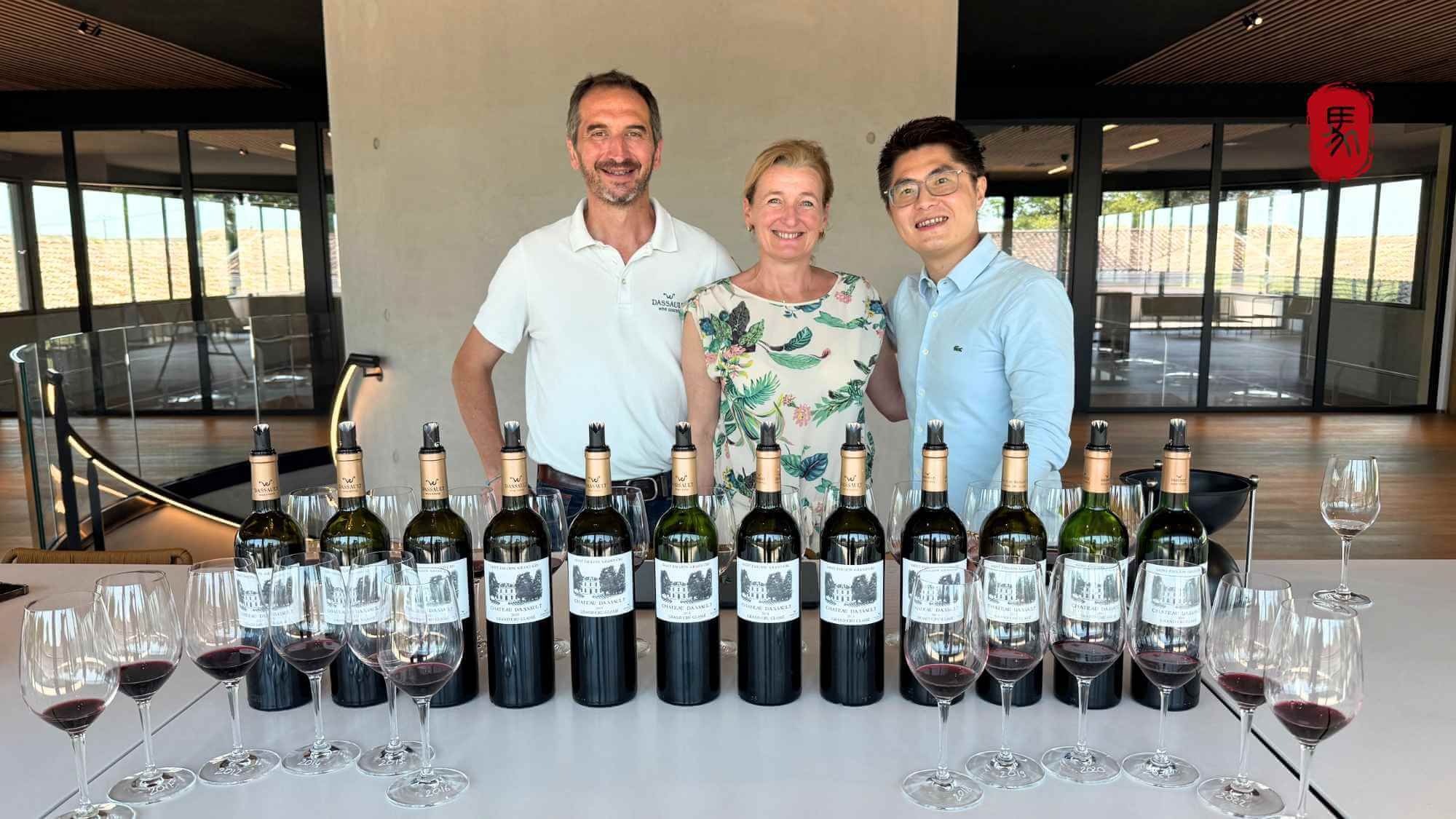
7. 2023 is the first vintage made in collaboration with Thomas Duclos
The 2023 vintage marks the beginning of the estate’s collaboration with Thomas Duclos. The fruit is more vibrant, the tannins more supple, and the palate more graceful and fluid. To me, it is the most complete expression yet of what contemporary Château Dassault is striving to become.
Part Three: Estate’s Terroir
When a North-Facing Slope Becomes an Advantage
To be completely honest, the terroir of Château Dassault is not generally regarded as one of the very finest in Saint-Émilion.
Compared with the prestigious limestone plateau, most of the estate’s vineyards are planted on sandy clay soils. Parcels with truly outstanding limestone are relatively limited, found mainly in the northeastern corner near Château La Fleur, together with a small number of limestone plots incorporated in 2022 from Château Faurie de Souchard.
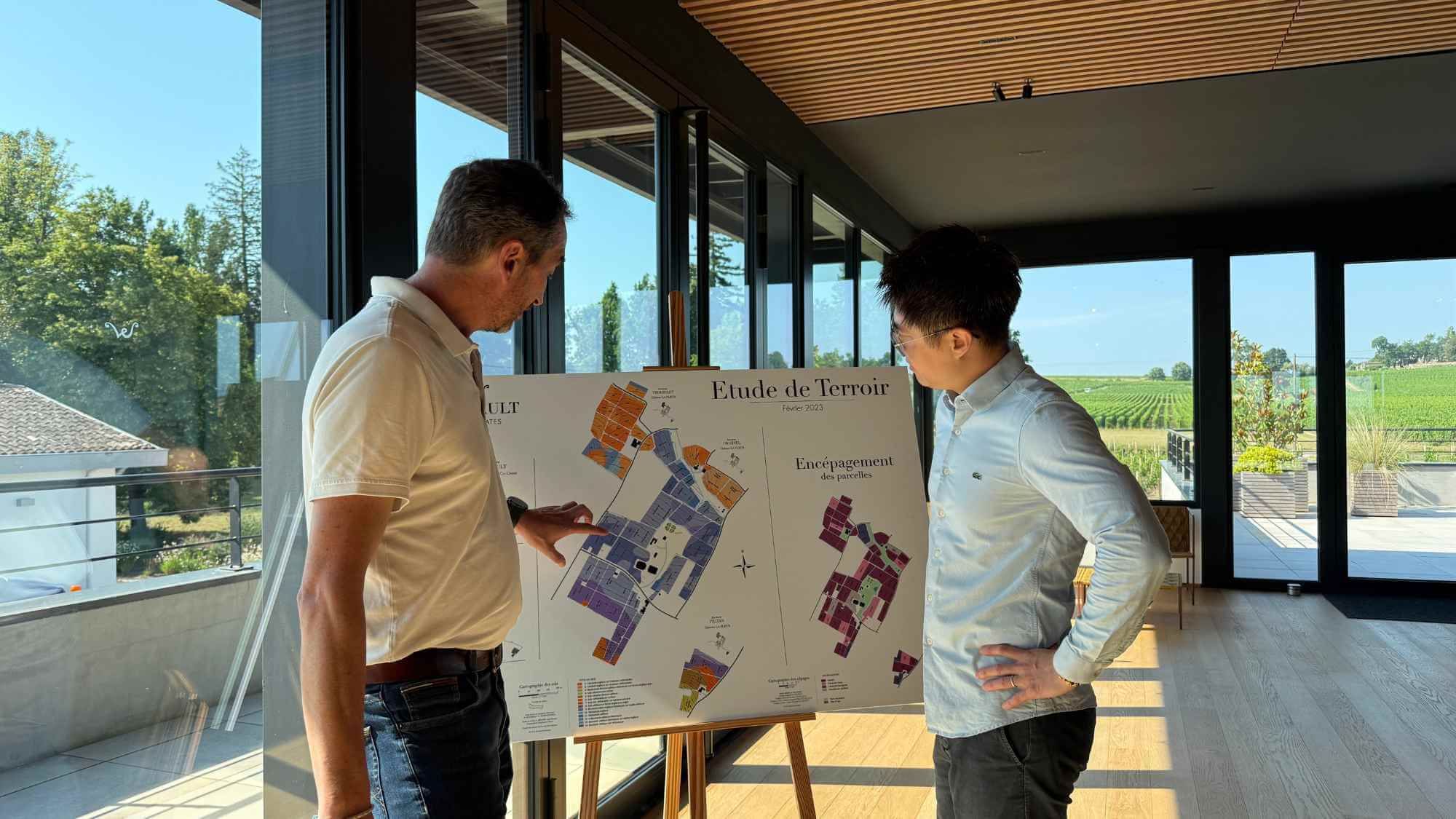
In my view, however, what makes Château Dassault special is not so much its soil composition as its location.
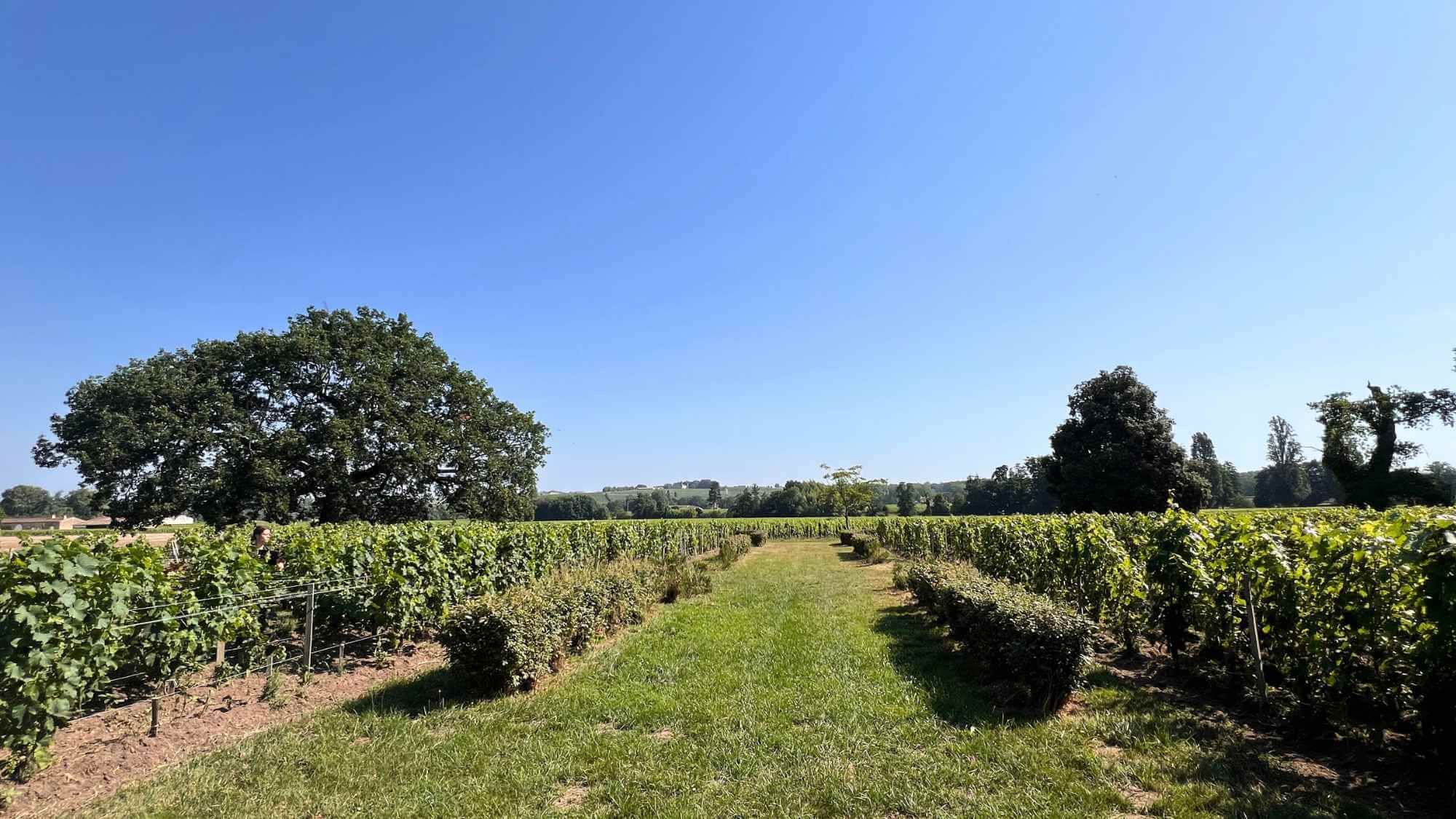
The vineyards lie on the north-facing slope of Saint-Émilion, where they are regularly exposed to cool easterly winds. At the same time, the northerly aspect receives less direct sunlight than the plateau, creating a noticeably cooler microclimate.
As a result, Château Dassault is a distinctly late-ripening terroir. In some years, harvest can begin as much as a week later than on the Saint-Émilion plateau.
For a long time, this was considered a disadvantage. Achieving full ripeness was often one of the estate’s greatest challenges.
But as global temperatures have continued to rise, the equation has gradually changed.
What was once viewed as a weakness has increasingly become an advantage. The cooler conditions of the north-facing slope, the ability to preserve acidity, and the longer, slower ripening season are now giving Château Dassault a growing edge.
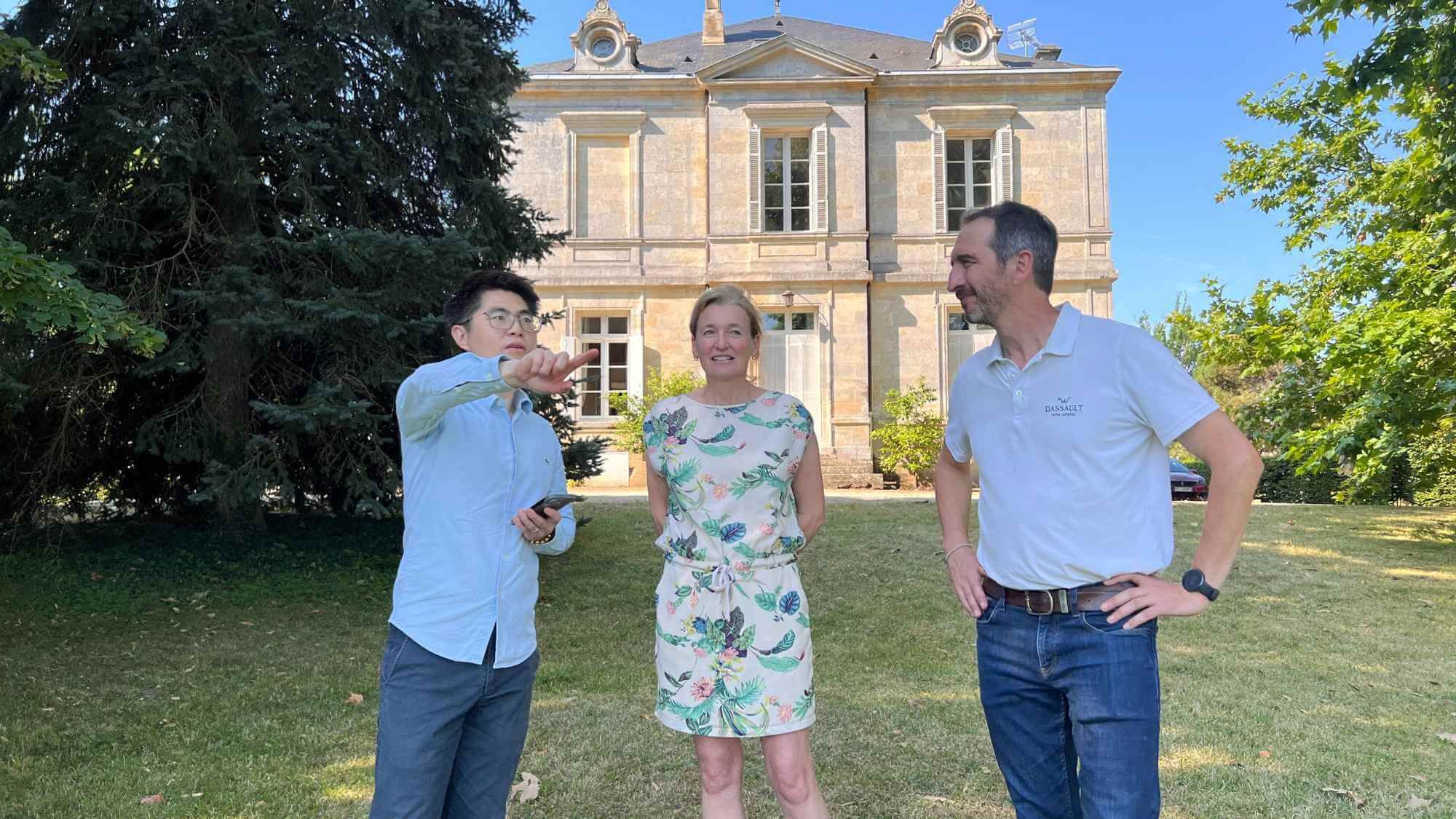
It was only after the arrivals of winemaker Jérôme Aguirre and General Manager Valérie Gervasoni in 2018 that the estate truly began to unlock the full potential of this terroir.
A New Cellar, A New Chapter
In 2022, Château Dassault inaugurated a brand-new winery, designed around one fundamental principle: gravity-flow winemaking. The objective is simple—to minimize mechanical pumping and handle both the grapes and the wine as gently as possible.
The renovation went far beyond the building itself. The estate also replaced its traditional fermentation tanks with double-walled, temperature-controlled stainless-steel vats, allowing for far more precise and consistent control throughout fermentation.
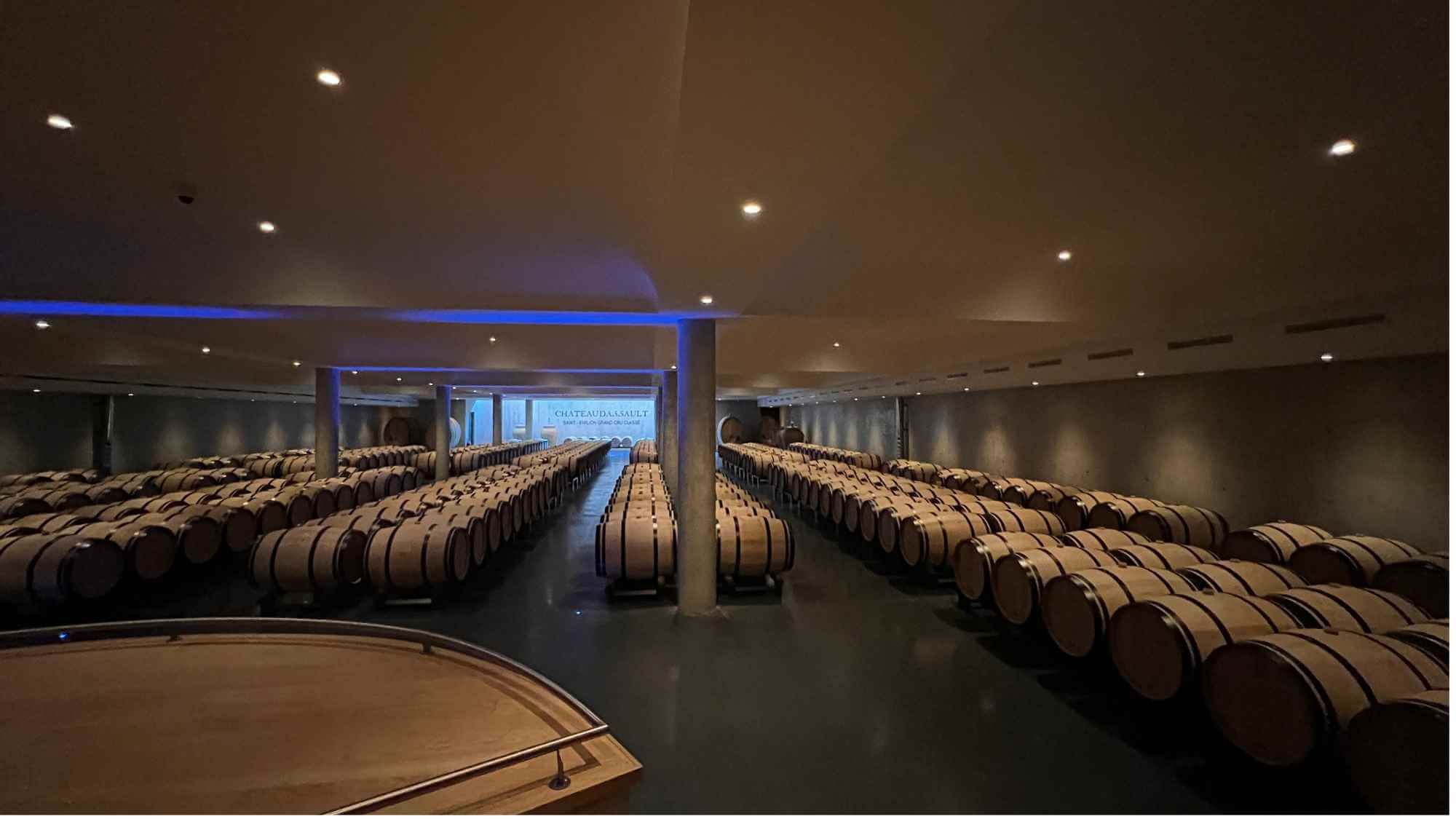
At the same time, the proportion of new oak was reduced. Today, the élevage is divided among 60% new French oak barrels, 10% one-year-old barrels, 15% large foudres, 10% egg-shaped concrete vats, and 5% Tava amphorae.
The rationale behind this approach is remarkably coherent. New oak provides structure and aging potential; the foudres preserve the purity of the fruit; the concrete eggs enhance texture and palate flow; while the amphorae further refine aromatic expression.
Judging by the remarkable clarity and transparency that first appeared in the 2022 vintage, this entirely new winemaking philosophy has already made a profound difference.
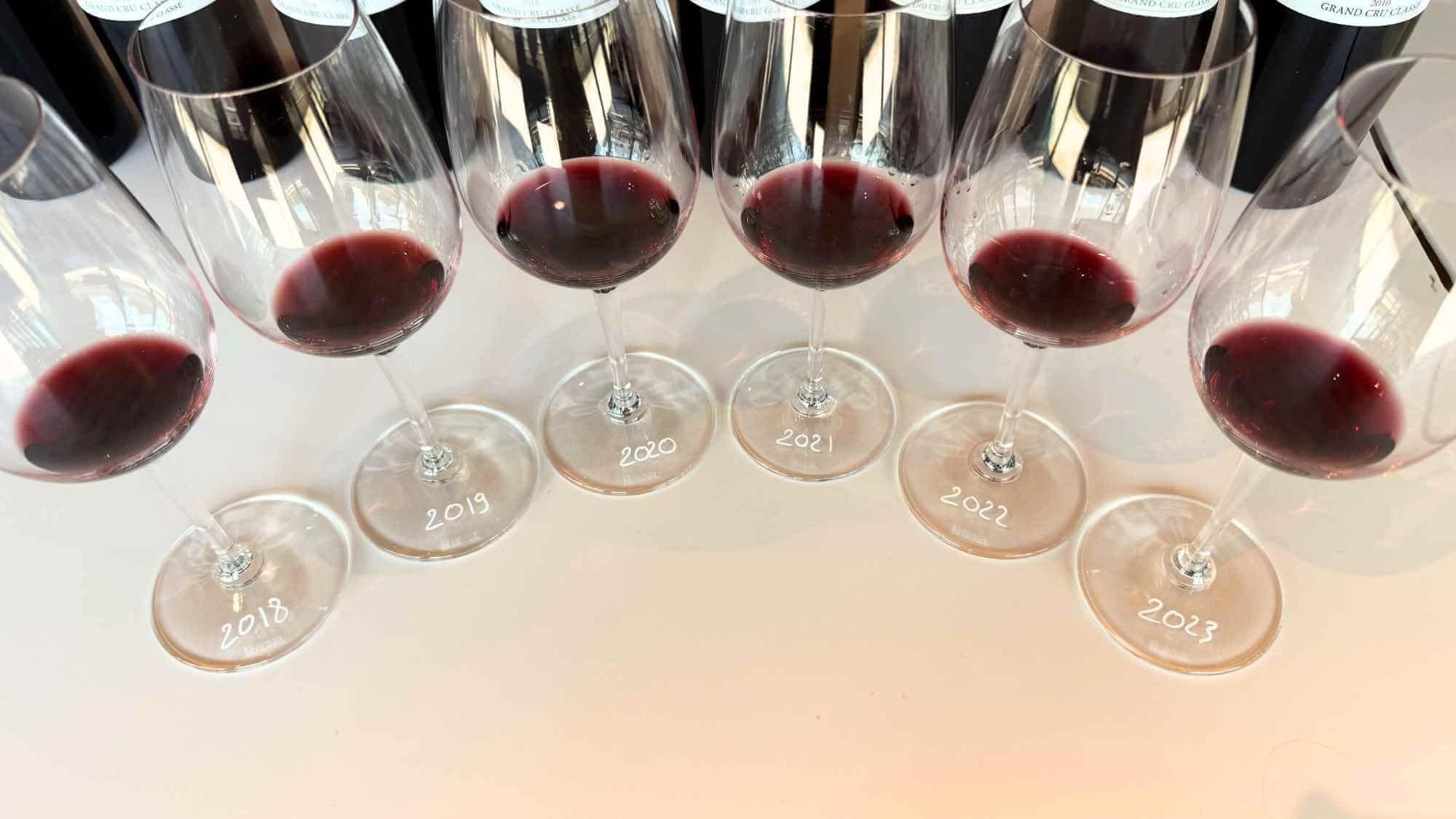
I was told that Marcel Dassault was an extraordinary wine lover. Given his wealth and stature, he must have enjoyed some of the world’s greatest bottles throughout his lifetime. Purchasing Château Dassault was his way of turning that passion into something lasting, and of ensuring that it would continue long after him.
Seeing the estate flourishing today, with its quality steadily reaching new heights, I cannot help but think that Monsieur Dassault would have been immensely proud.
As I was writing these final lines, an amusing thought crossed my mind.
Imagine if every client who purchased a Dassault Falcon 10X received a few cases of Château Dassault each year to stock the wine cabinet on board. Opening a bottle somewhere between Paris and Shanghai would be a rather wonderful experience, wouldn’t it?
If that ever happened, Château Dassault’s brand image would reach an entirely different level.
Well… perhaps I’m getting carried away.
I’d better get back to what I do best—tasting wine and writing about it.
See you in the next vertical tasting.