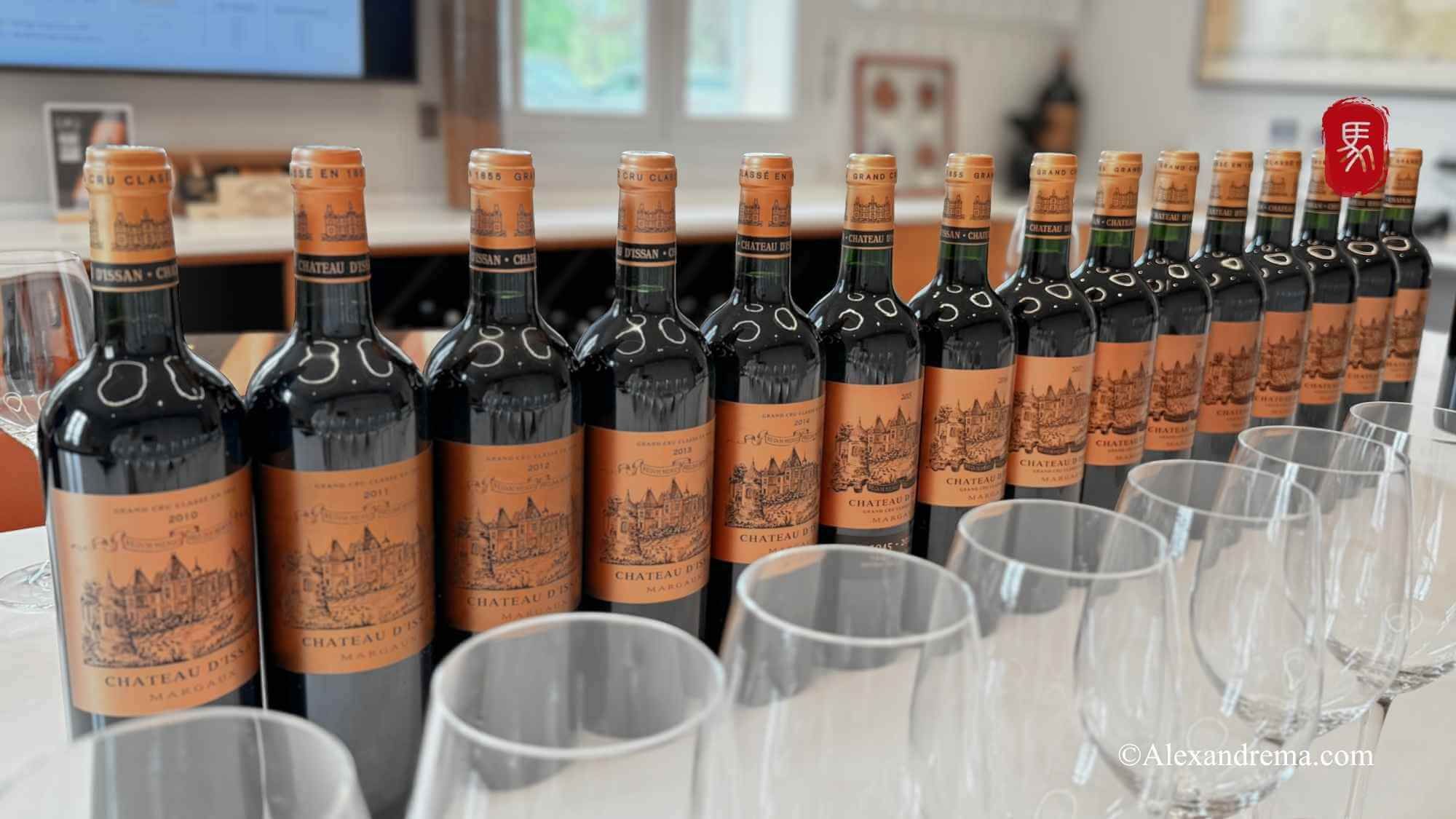
AMA Vertical Tasting
Château d’Issan
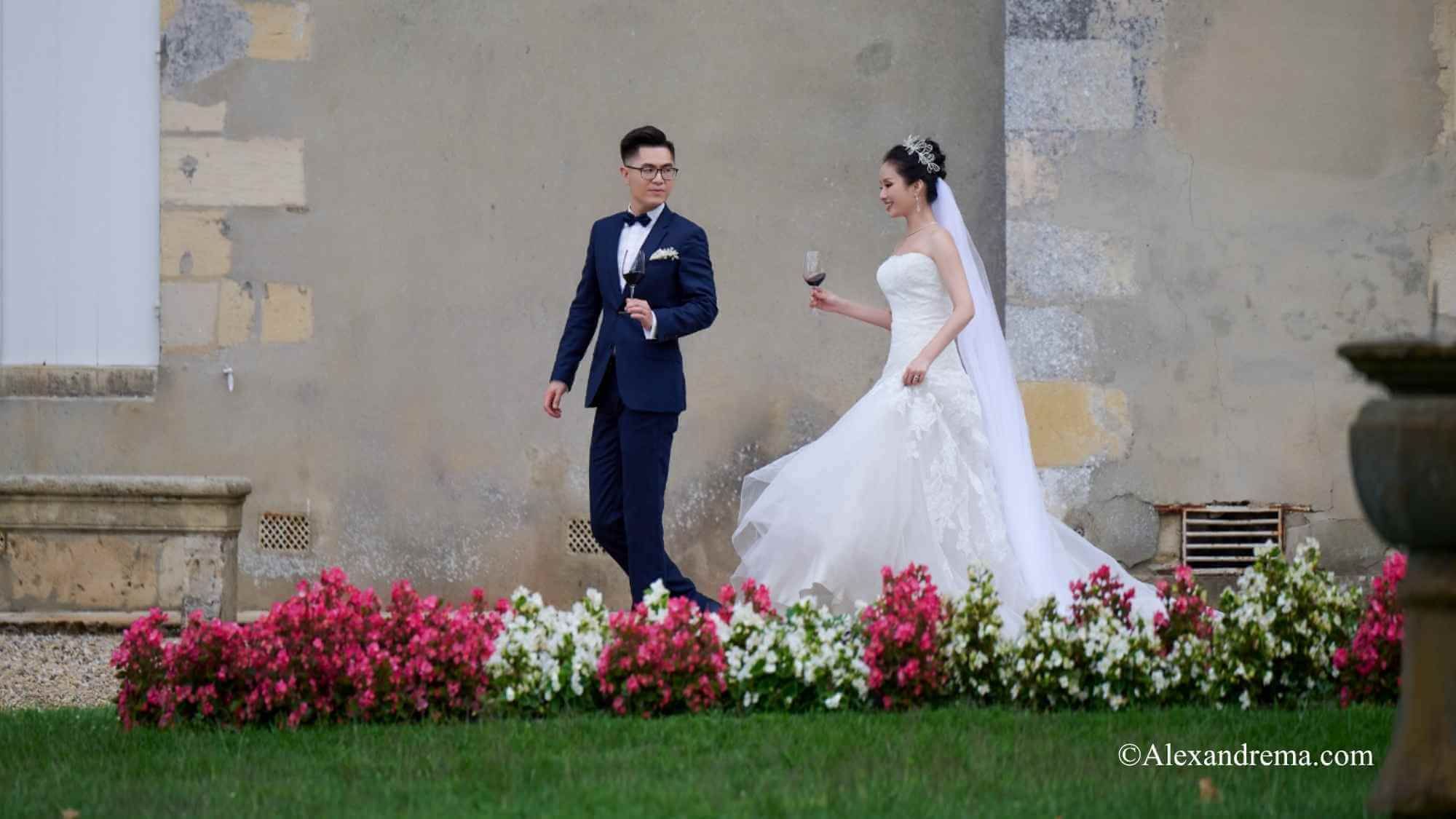
I still remember when Phydiasse and I were planning our wedding photoshoot in Bordeaux. She suddenly presented me with a question for the ages: which château should we choose?
At the time, I thought to myself, as someone who had become a familiar face in Bordeaux, I ought to show a little class, without making too much of a fuss about it. The château had to be beautiful, of course, but it also needed to have a meaningful story behind it. And naturally, we had to choose one estate on each bank!
On the Right Bank, I didn’t hesitate for a second: Château Ausone, one of Saint-Émilion’s finest ambassadors. The Left Bank, however, was a different story. There were simply too many wonderful estates to choose from. Still, my instincts kept pointing me towards Château d’Issan.
Phydiasse wasn’t entirely convinced at first. She insisted that we should choose a First Growth. So I told her a story about Château d’Issan and its connection to a royal wedding. Sure enough, her face lit up. She even gave me a thumbs-up and declared, “Excellent choice!” Well, what can I say? My literature-loving wife has always had a soft spot for stories like this.
The wedding photos turned out absolutely stunning! Phydiasse has kindly agreed to let me share two of our wedding photographs taken at Château d’Issan.
But what was so special about this historical connection that it managed to win over my wife, who takes wedding photography very seriously indeed?
Well, let me tell you the story.
A Wine Served at the Wedding of Aliénor d’Aquitaine and the Future King Henry II of England
Let’s turn the clock back to 1152…
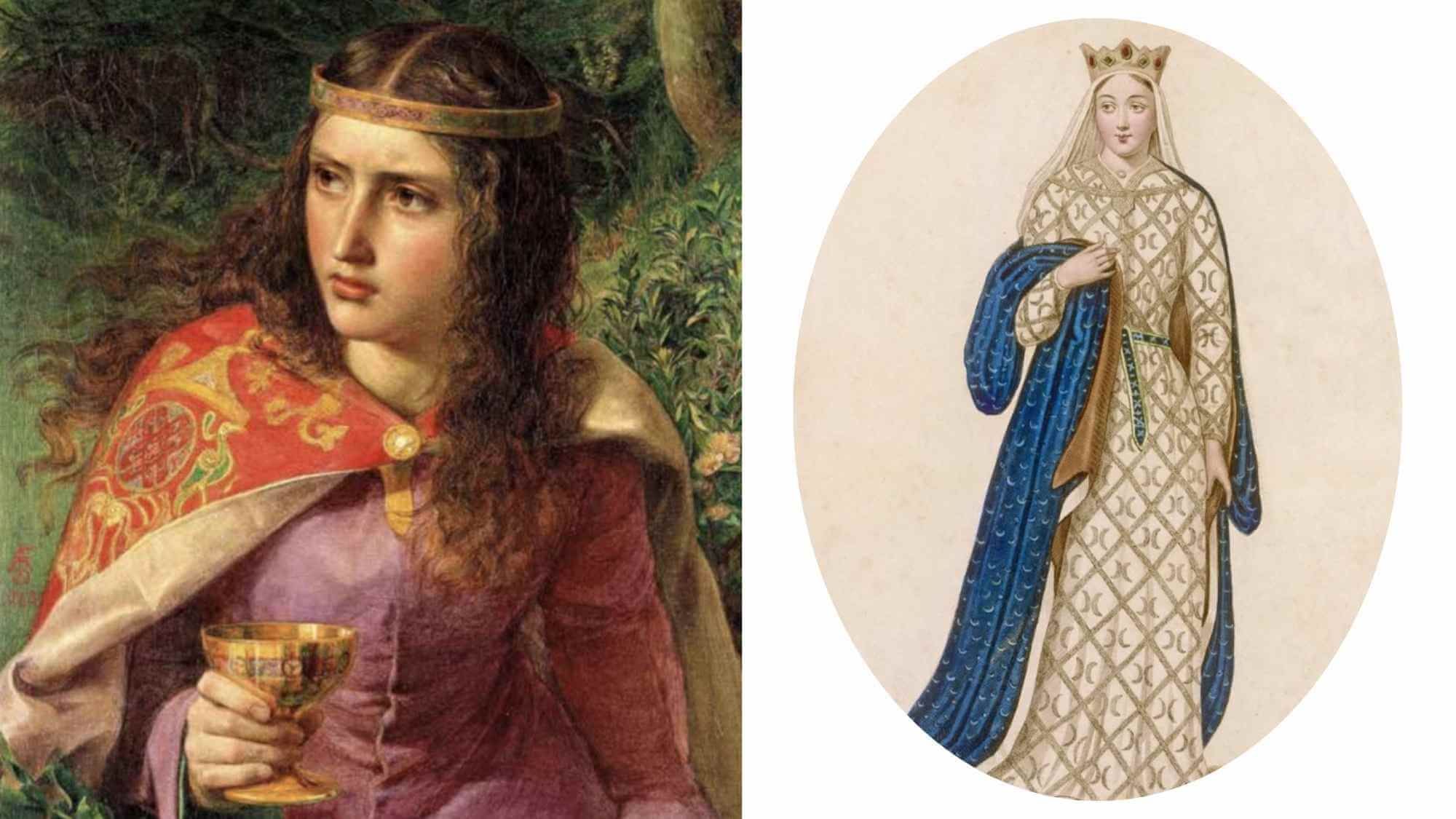
Our heroine is none other than Aliénor d’Aquitaine, better known in English as Eleanor of Aquitaine. And what a remarkable woman she was! As Duchess of Aquitaine, she already ruled over vast territories and possessed extraordinary wealth. Add beauty and intelligence to the equation, and you have all the makings of a formidable leading lady. Her extraordinary, often turbulent life certainly lived up to that image.
In 1137, she married King Louis VII of France and became Queen of France. Their wedding took place in Bordeaux’s largest church, Cathédrale Saint-André. Unfortunately, the marriage was far from a happy one. In 1152, after her marriage to Louis VII was annulled, Aliénor waited just eight weeks before marrying Henri Plantagenêt, a young man nine years her junior, who was only 19 at the time. He would later become King Henry II of England. Clearly, the charms of a wealthy, powerful woman were simply irresistible!
Two years later, Henry ascended the throne, and Aliénor became Queen of England.
To have worn the crowns of both France and England in a single lifetime… even a Hollywood screenwriter might think twice before inventing such a plot. And this really happened more than 800 years ago!
According to a story passed down through generations at the estate, the wine served at Aliénor and Henry’s wedding came from the property on which Château d’Issan stands today. There is certainly an element of legend to this account, but it gives the château a particularly charming connection to royal weddings.
Now think about it. Phydiasse and I met in Bordeaux because of wine. Doesn’t choosing Château d’Issan for our wedding photos suddenly seem rather meaningful?
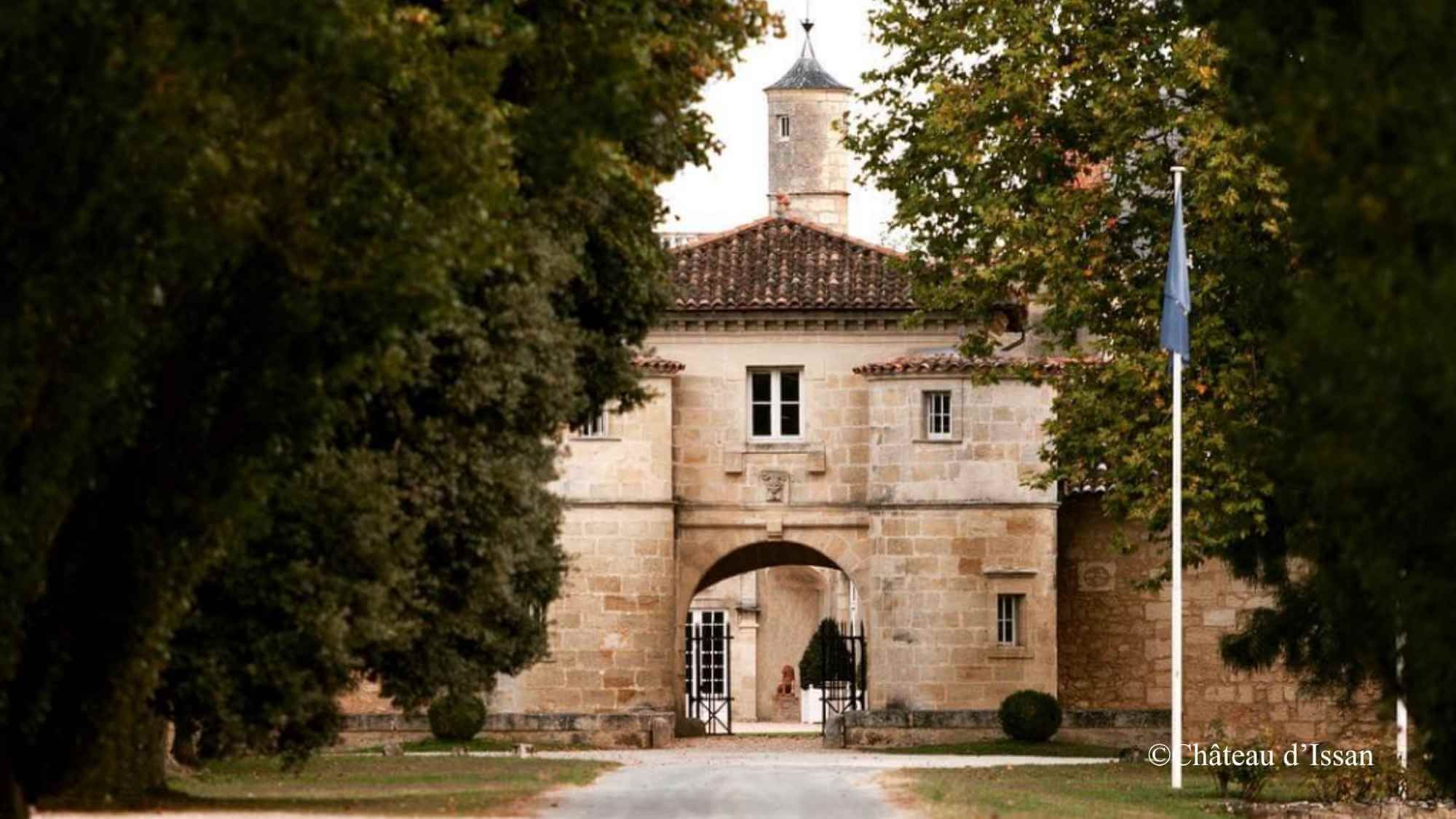
Back then, however, the estate was not yet called Château d’Issan. It was known as La Mothe-Cantenac. From 1575 onwards, the d’Essenault family managed the property for several generations, and the name “Issan” eventually evolved from a shortened form of their surname.
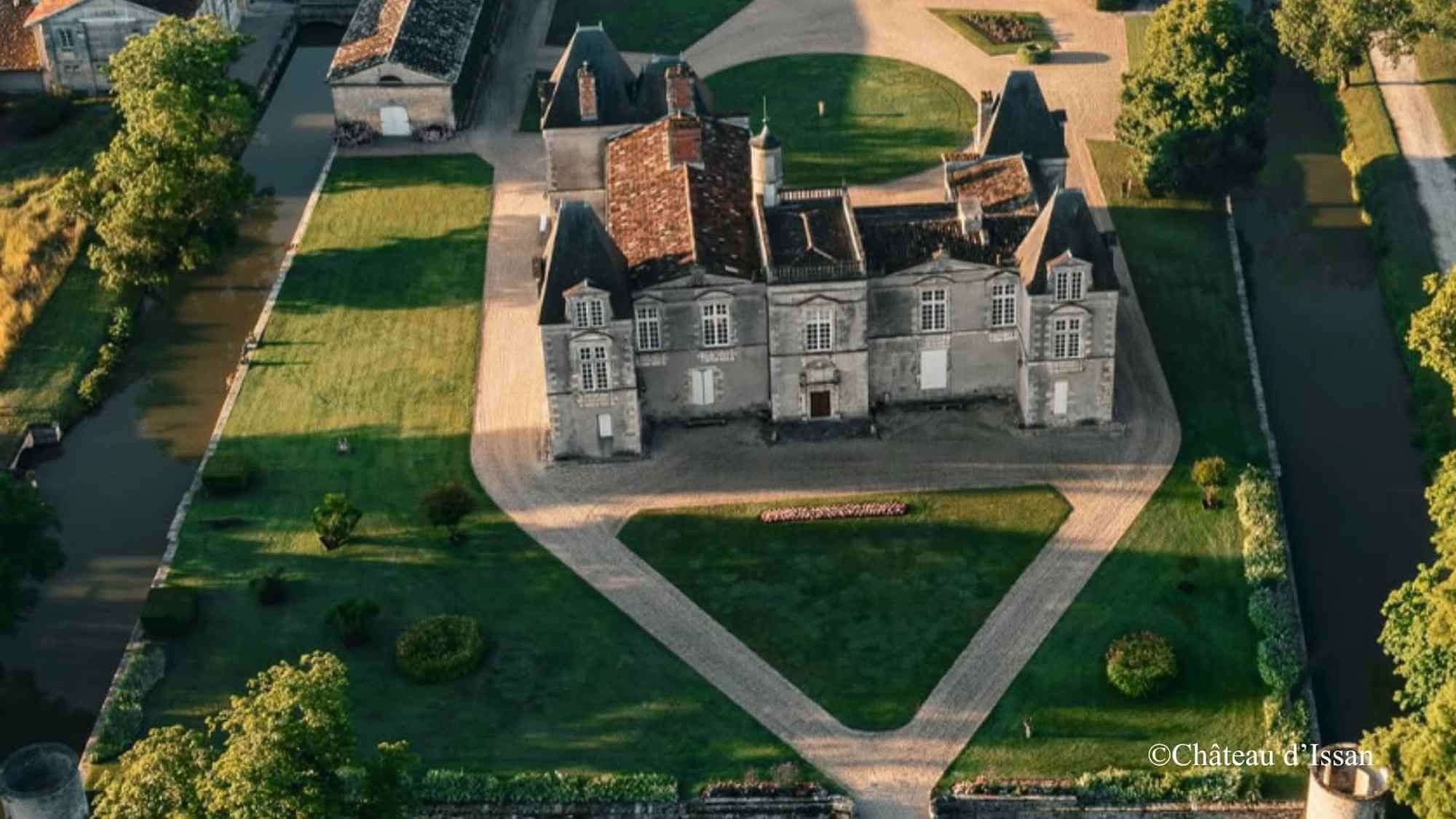
In the 17th century, the family rebuilt the château, creating the arrangement of towers, gatehouse and moat that we still admire today. In 1644, a stone wall was built around the historic vineyard, giving rise to what is now known as Clos d’Issan.
Interestingly, a Latin inscription is carved above the château’s entrance:
Regum mensis aris que deorum.
It means, “For the tables of kings and the altars of gods.”
The phrase is said to have originated from a tribute paid to Château d’Issan by the 19th-century Austrian Emperor Franz Joseph.
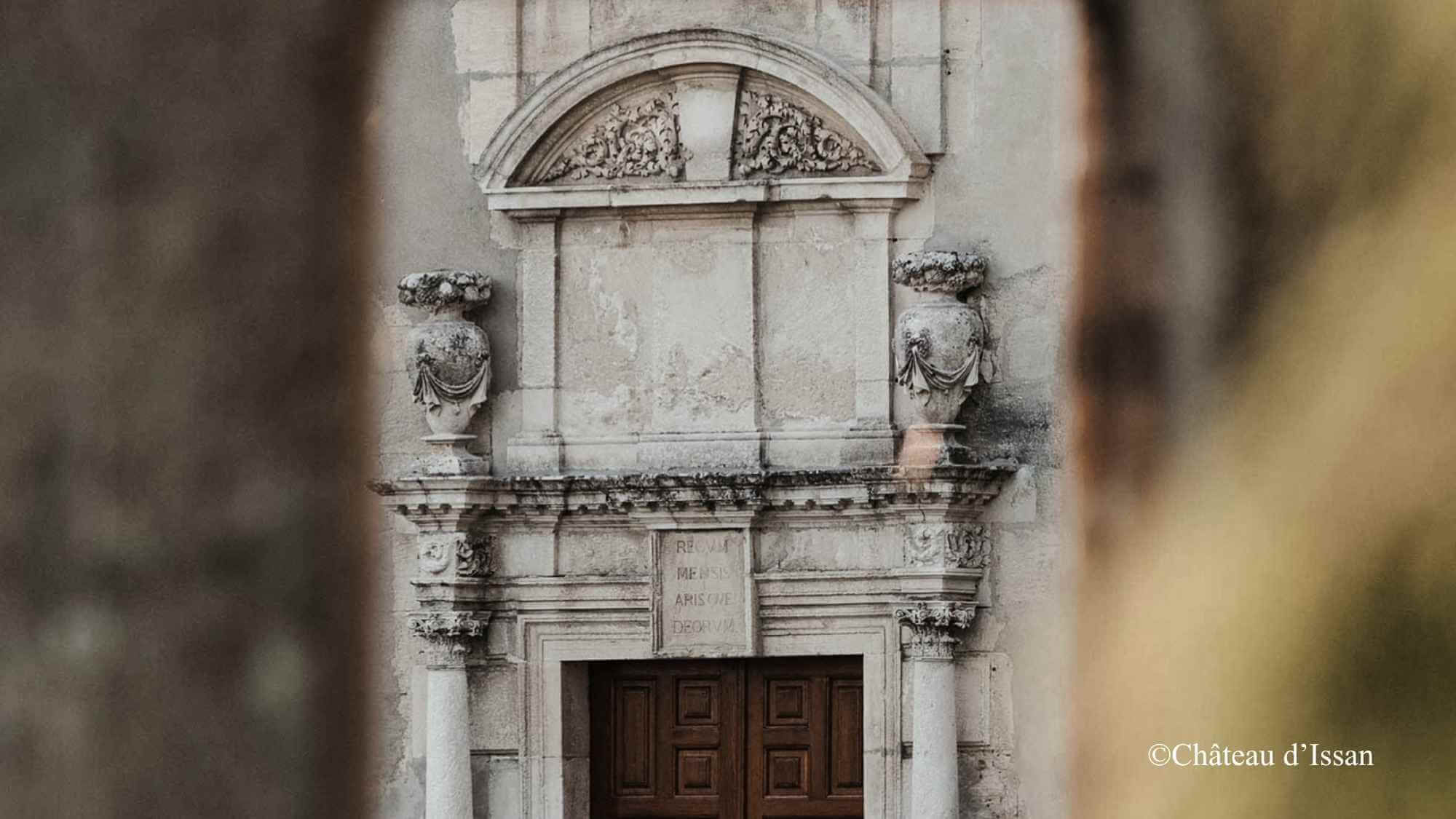
So the buildings you see in my photographs are more than 400 years old. Every time I visit the estate, I can’t help wondering how many stories have unfolded behind these walls over the centuries, particularly the kind that might need a little censorship before being told in public. I suppose I’ll just have to leave those to my imagination.
But back to the wine. What exactly defines the style of this legendary château?
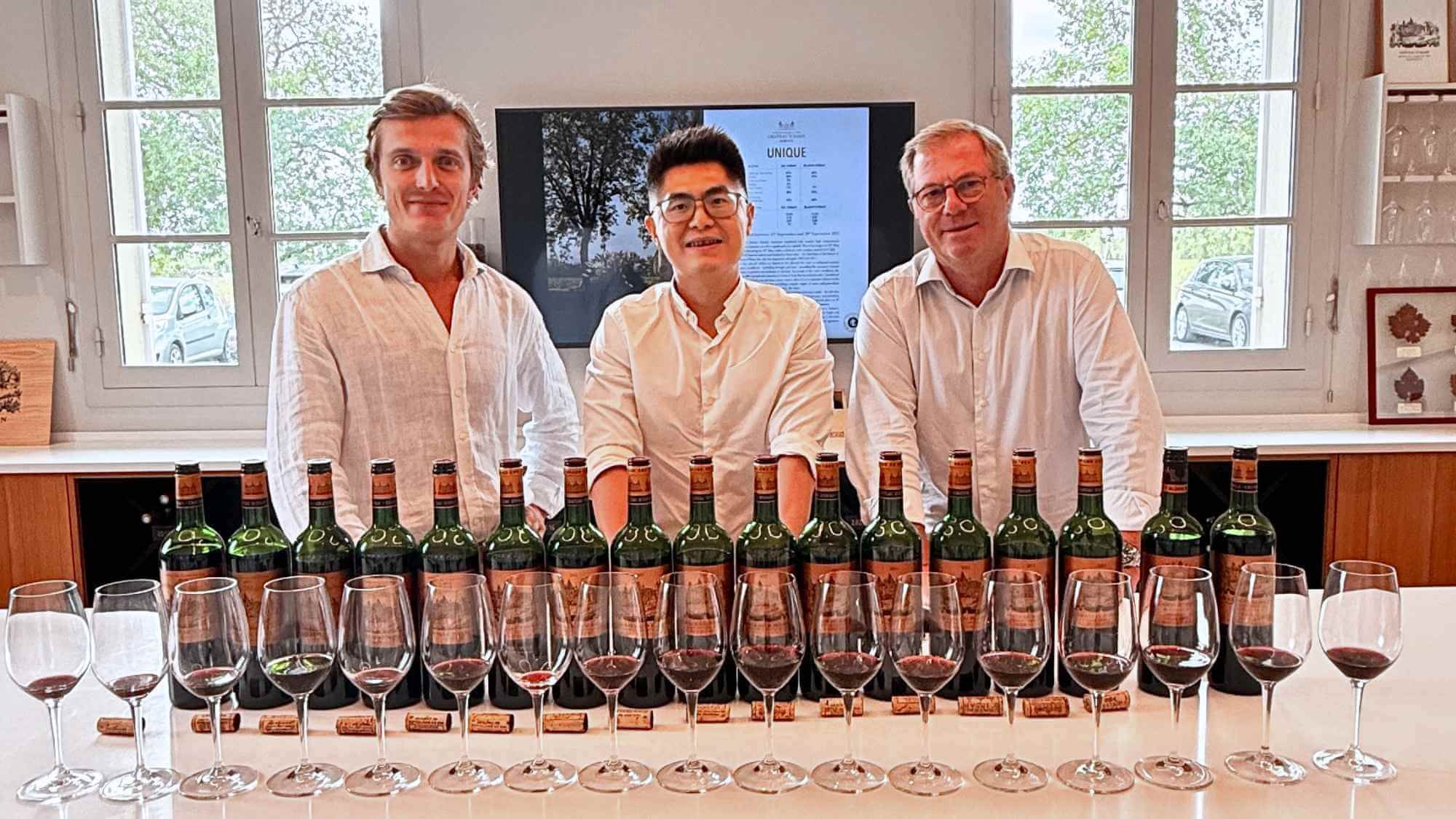
As always, let’s begin with my impressions from the vertical tasting.
AMA SNAPSHOT of Château d’Issan
1 A Distinctive Aesthetic
Introverted, delicate and guided by an aesthetic all its own. Château d’Issan never feels the need to flaunt its floral and fruity aromas. Instead, its real secret weapons are the cool, understated fragrances of cedarwood and a cold fireplace.
2. A Gentle, Flowing Elegance That Runs Through Every Vintage
D’Issan does not seek to impress through concentration or power. Instead, it unfolds slowly and gracefully across the palate, with the quiet elegance of a gentle rain nourishing the earth without a sound.
3. Almost Invisible Tannins, Yet a Clearly Defined Structure
The structure is unmistakably present, but the tannins themselves are almost impossible to isolate. They have become so thoroughly integrated into the wine that they seem to dissolve into its silky texture.
4. A Graphite Signature on the Finish
That cool, graphite-like note at the very end is the backbone hidden beneath the wine’s gentle beauty. It is also one of d’Issan’s most recognizable signatures, a distinctly Médoc expression of understated, old-money elegance.
5. 2010 and 2016: Greater Depth Behind the Elegance
These two vintages reveal the full structural potential of Château d’Issan. The palate remains supple and graceful, but there is noticeably greater depth, substance and dimension.
6. 2015 and 2025: My Personal Favorites
Both 2015 and the still-maturing 2025 have impressed me with their remarkable completeness. Ripeness, richness and vibrant juiciness come together in perfect harmony. There is tremendous substance, but the wines retain that delicate, almost water-like texture. For me, these are undoubtedly among the finest achievements in the history of Château d’Issan.
7. Since 2018: A Lighter, More Vibrant Expression
8. Since 2019: More Distinct Violet Aromas
9. 2020: The Beginning of the Five-Variety Blend
Cabernet Franc, Petit Verdot and Malbec joined the Grand Vin, bringing greater complexity and detail to the blend while giving the winemaking team more room for creativity. But it was in 2025 that the estate truly mastered the art of blending all five varieties.
10. Recommended Vintages
2010, 2015, 2016, 2018, 2019, 2020, and the En Primeur performance of 2025.
I would also highlight 2017, a vintage that I believe is seriously underrated. The vineyards within the historic walls escaped the frost that struck Bordeaux that year, making it a particularly attractive vintage for those looking for excellent value.
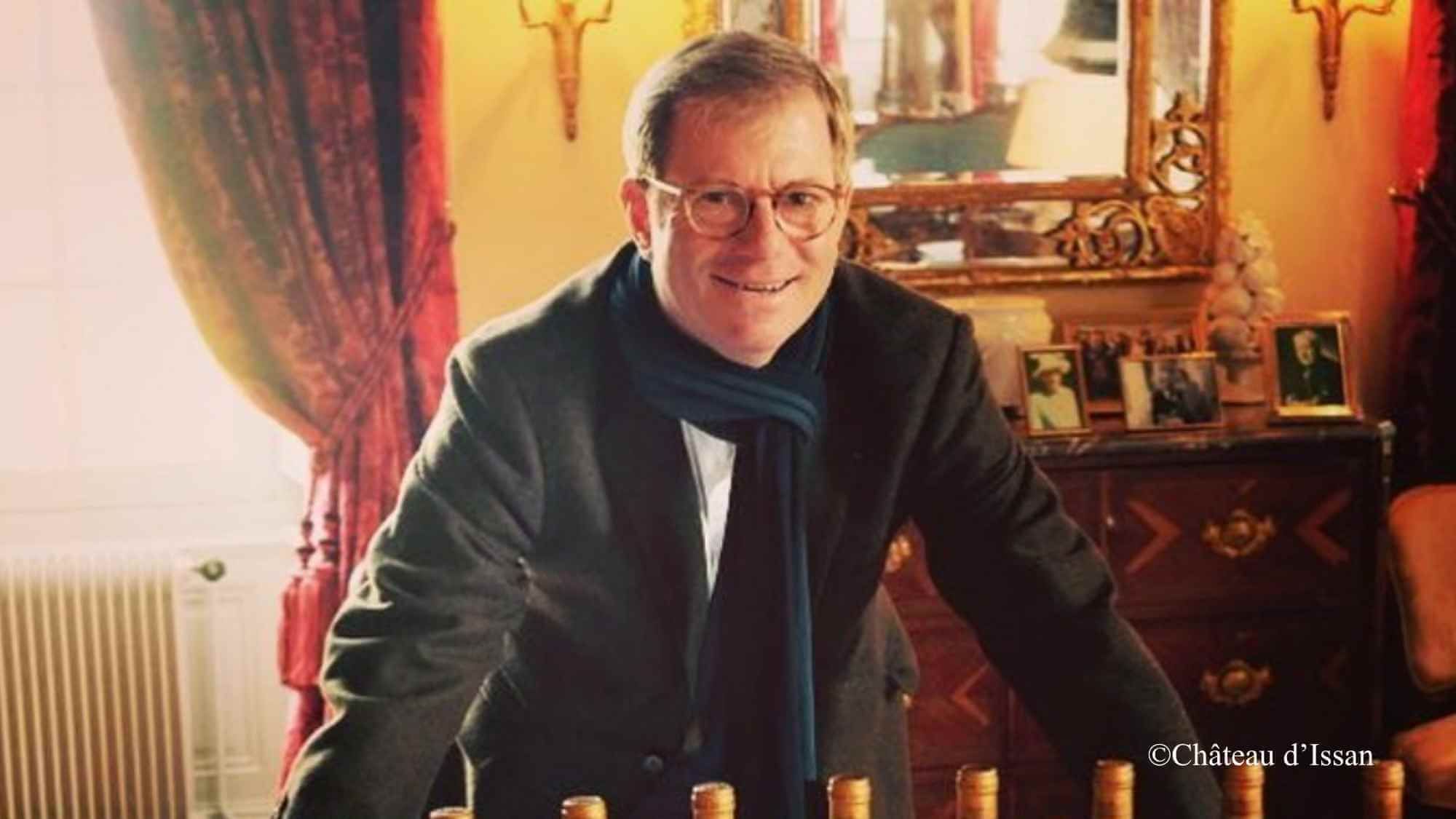
The Cruse Family: Giving Château d’Issan a New Lease of Life
Let’s pick up where we left off in the château’s history. Despite its illustrious connection to a royal wedding, Château d’Issan did not always enjoy such a fortunate existence.
Between the two World Wars, the estate gradually fell into decline. When the Cruse family took over in 1945, only two hectares of vineyard remained in production. In the decades that followed, Lionel Cruse and other family members set about restoring the château, replanting the vineyards and gradually modernizing the winemaking facilities.
In the 1990s, Emmanuel Cruse began working at the estate, officially taking over its management in 1998, a position he continues to hold today. After assuming responsibility for the family property, he introduced more detailed soil studies, improved drainage, renewed the vineyards and renovated the cellars. Little by little, he refined and elevated the legacy passed down by the previous generation. Within the Bordeaux wine community, there is a broad consensus that Château d’Issan owes much of its present-day success to his efforts.
In 2013, Jacky Lorenzetti acquired the 50% stake held by one branch of the Cruse family, becoming a co-owner alongside the family branch represented by Emmanuel.
A significant change in the blend came in 2020. In 2019, through a combination of acquisition and leasing, Château d’Issan incorporated approximately seven hectares of vineyards from the neighbouring Château Pontac-Lynch. For the first time in many years, grapes grown outside the historic walls of Clos d’Issan could now be included in the Grand Vin.
To me, this is one of the key reasons behind the refinement of Château d’Issan’s style in recent years.
68 Hectares of Vineyards, Three Distinct Expressions
Before going any further, there is one important point to clarify: not every wine bearing the Issan name comes from the same vineyard.
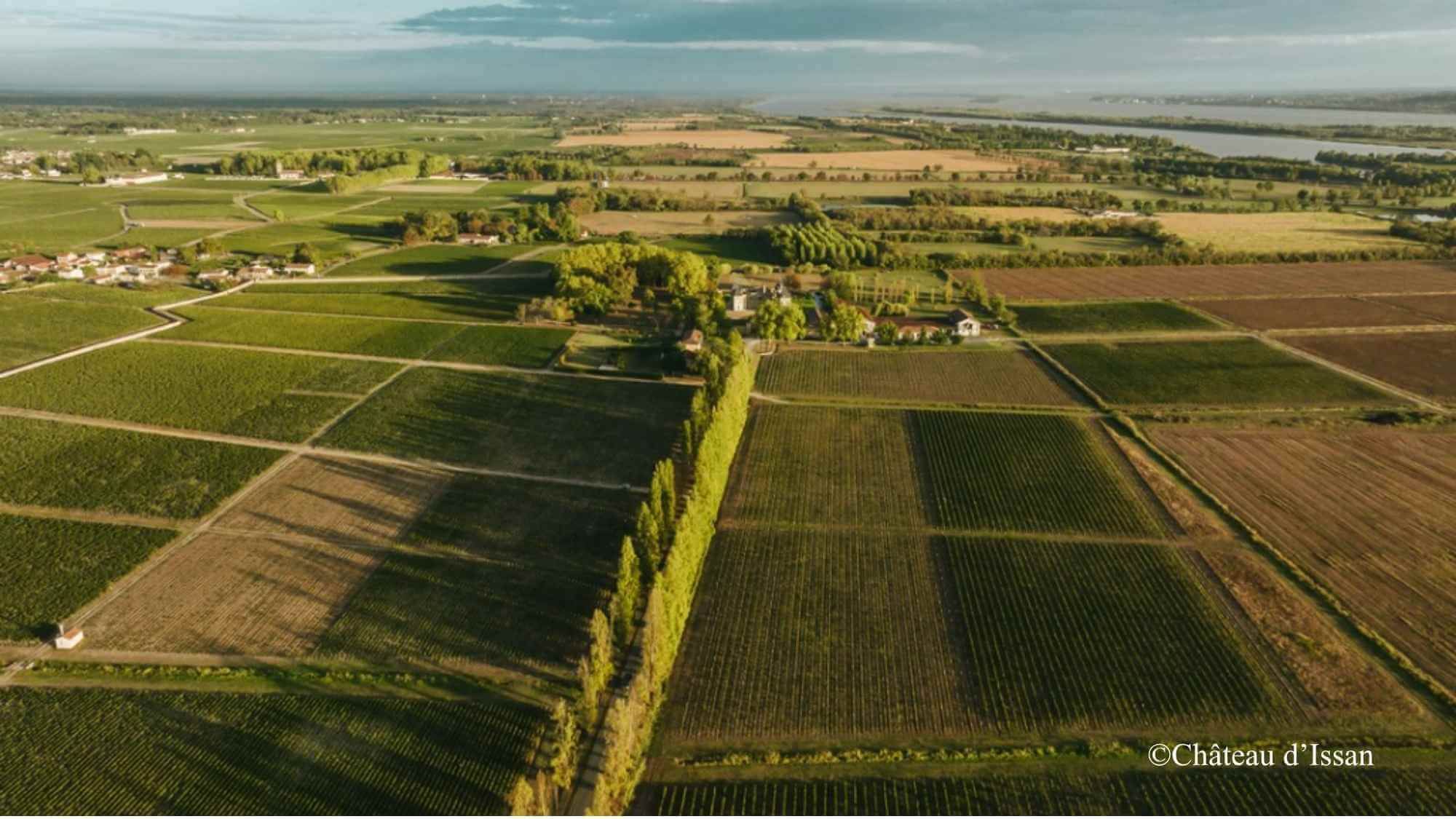
The estate owns a total of 68 hectares of vineyards spread across three appellations: Margaux, Haut-Médoc and Bordeaux Supérieur. Take a walk through these different parcels, and you will soon understand why wines sharing the Issan name can display such remarkably different personalities.
-Haut-Médoc-Le Haut-Médoc d’Issan
Let’s begin to the west, in Arsac, about five kilometres from the château. Here, five hectares of vineyards fall within the Haut-Médoc appellation. Planted with Cabernet Sauvignon and Merlot, these vines produce Le Haut-Médoc d’Issan.
-Bordeaux Supérieur-Moulin d’Issan
Now turn towards the Gironde Estuary, where another eight hectares belong to the Bordeaux Supérieur appellation. The soils here are predominantly clay and limestone, making them particularly suitable for Merlot. As a result, Merlot typically accounts for around 90% of the blend in Moulin d’Issan.
-Margaux-Château d’Issan
The remaining 55 hectares lie within the Margaux appellation. But to understand the essential character of the Grand Vin, we need to return to the château itself and explore Clos d’Issan, the historic vineyard enclosed by stone walls.
Those familiar with my articles are about to encounter an old friend once again: Terrasse 4, the Fourth Gravel Terrace.
The heart of Château d’Issan’s terroir consists of gravelly rises and ancient alluvial terraces, with relatively gentle slopes reaching more than 15 metres above sea level at their highest point. Such a modest elevation may seem insignificant when walking through the vineyards, but its importance becomes much clearer when it rains. The slopes allow rainwater to run off, the gravel encourages water to drain through the soil, and together with the estate’s artificial drainage system, these conditions help keep the vine roots from becoming waterlogged during the growing season.
Beneath the gravel of Terrasse 4 lies a layer of clay, which retains a certain amount of moisture. This provides deeply rooted vines with access to water even during particularly hot and dry vintages.
Just 600 Metres Away: Château d’Issan’s Natural Thermostat
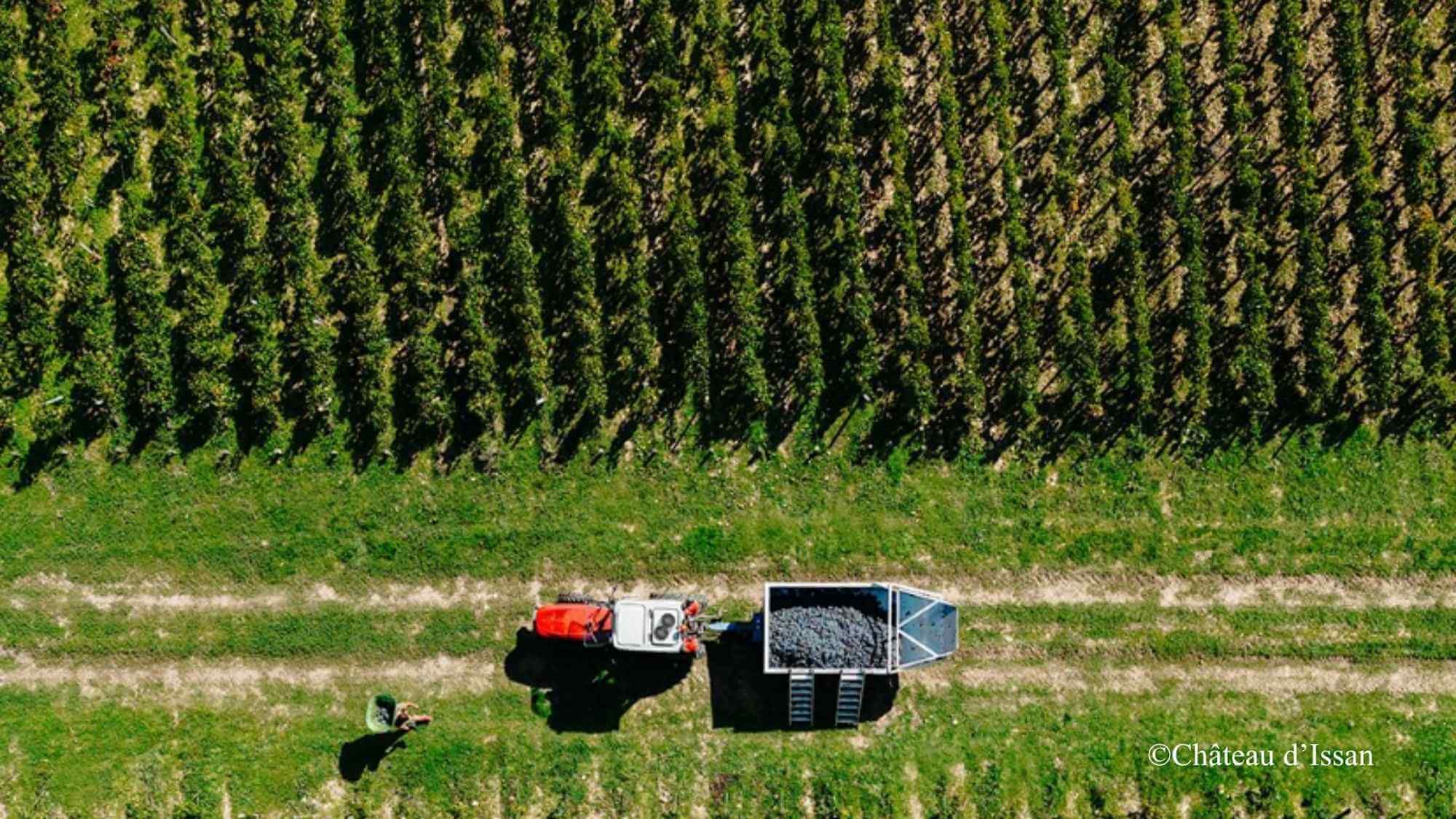
The core vineyards of Château d’Issan lie only about 600 metres from the Gironde Estuary. Nearby, there is even a small port named after the estate: Port d’Issan.
Large bodies of water warm up and cool down more slowly than land, helping to moderate temperature fluctuations in the surrounding area. In my view, this particular microclimate plays a crucial role in preserving the delicate contours and graceful character of Château d’Issan.
In certain exceptional vintages, this microclimate can even determine whether the grapes survive at all.
The clearest example is 2017. In late April that year, Bordeaux was struck by severe frost, but Clos d’Issan escaped the damage thanks to its favourable location near the estuary and the protection offered by its microclimate.
Judging from my own tastings, the 2017 is every bit as impressive as some of the more widely celebrated vintages. And if you can enjoy comparable quality for around 60% of the price of a great vintage, what’s not to like?
The Winemaking Philosophy: A Gentle Soak and Plenty of Patience
I’ve taken part in the harvest at Château d’Issan several times, so this is a part of the process I know quite well.
One thing I noticed was that about a week before the harvest, the vineyard team would already be out among the vines, tasting the grapes. They would assess the likely ripeness of each parcel and assign the appropriate fermentation vats well in advance.
All grapes are harvested by hand, with a team that includes both local workers and Danish students. Given that the Cruse family’s ancestors came from Denmark, this particular mix of harvest workers has become something of an Issan tradition.
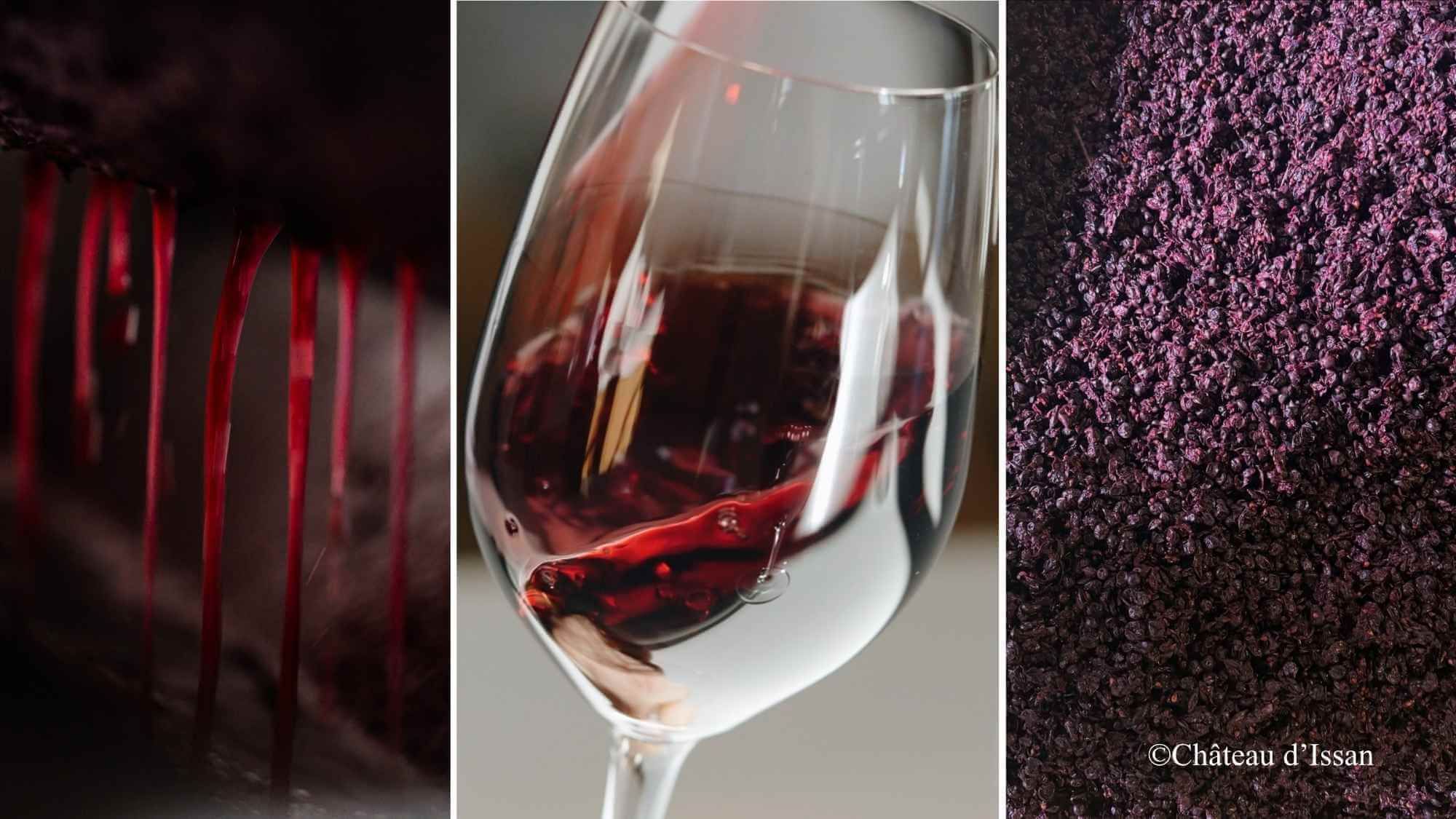
Once the grapes arrive at the winery, the bunches are sorted first, followed by destemming and a second sorting of individual berries. The fruit is then carried upwards by an elevator conveyor belt before being transferred into the vats by gravity.
The estate currently has 53 temperature-controlled stainless steel vats, ranging in capacity from 22 to 200 hectolitres. This allows the team to vinify different parcels separately, according to their individual characteristics and the condition of the fruit.
To me, however, the most revealing explanation for Château d’Issan’s elegant style lies in its approach to extraction.
If I had to sum it up in a single word, it would be: soaking.
Fermentation and subsequent maceration generally last between 18 and 24 days in total. Technical Director Éric Pellon once told me that the team tastes the wines from almost every parcel on a daily basis, adjusting the intensity and frequency of pump-overs according to how each wine is developing.
A little more extraction might increase concentration, but it could also make the tannins coarser, introducing unwanted edges into d’Issan’s naturally flowing texture. A little less extraction might produce a fresher, more seamless wine, but at the risk of losing some of the backbone that defines a classic Médoc.
So while Château d’Issan may taste effortlessly graceful, producing it is anything but effortless. Behind that apparent simplicity lies an extraordinary amount of painstaking work, much of which we will never see.
The Final Touch Lies in the Blend
The Grand Vin is generally aged in oak barrels for approximately 18 months, with around 50% new oak. The remainder consists mainly of one-year-old barrels.
When the time comes to assemble the final blend, Emmanuel Cruse, Éric Pellon, the cellar team and renowned consulting oenologist Éric Boissenot gather to taste and discuss the different lots. Together, they decide which wines deserve a place in the Grand Vin and what proportions will best express the character of Château d’Issan in that particular vintage.
In recent years, I’ve also noticed another change. In the past, the proportion of production selected for the Grand Vin was generally close to 50%. Over the last decade, that figure has fallen to around 45%. And when I tasted the 2025 En Primeur, I saw that it had dropped to just 35%.
Of course, vintage conditions play a part in these decisions. But looking at the evolution of the wines over the years, I can clearly feel that the estate has become increasingly selective about what goes into its Grand Vin.
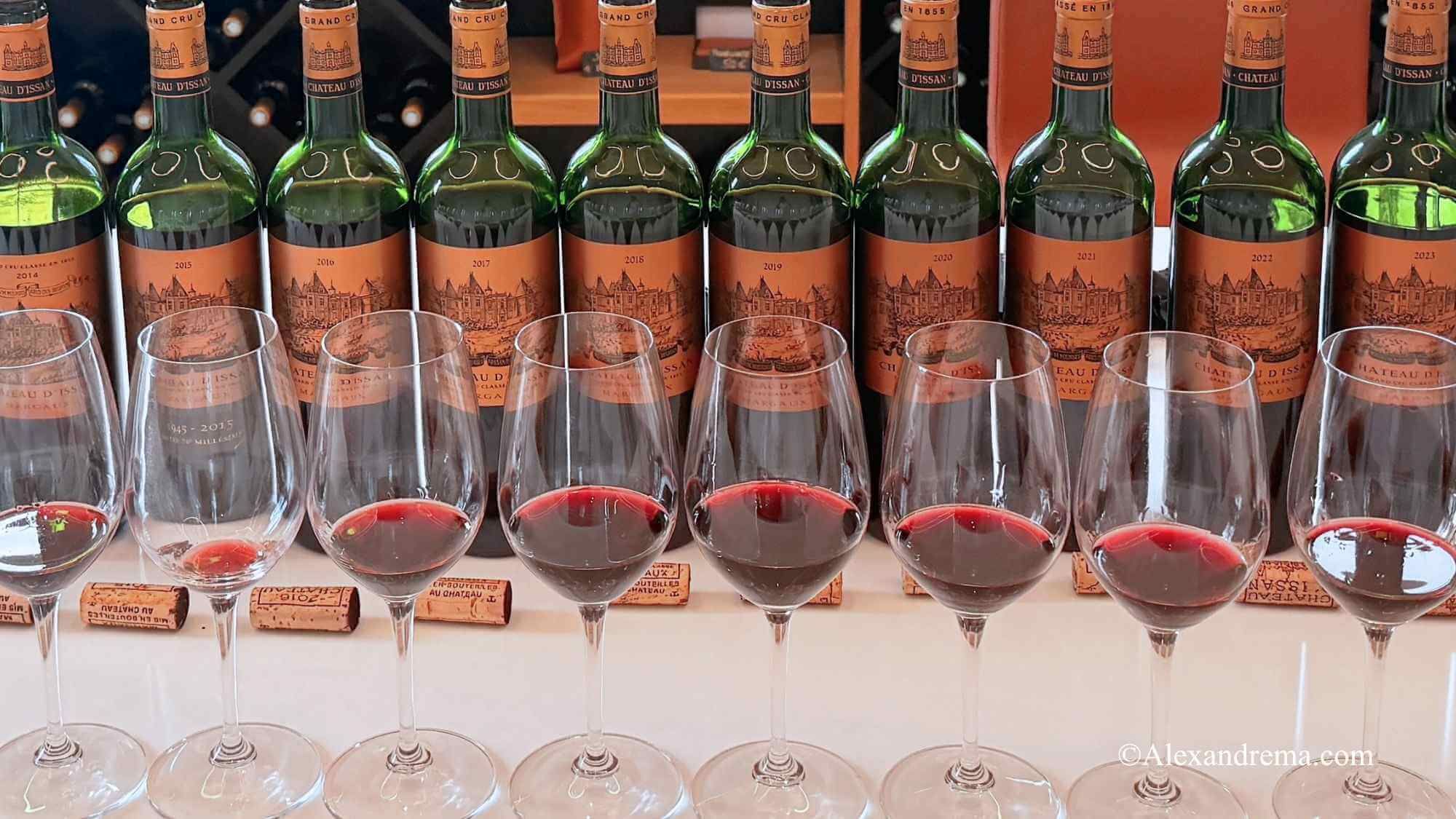
Now that we’ve explored all of this, you can probably understand why I wouldn’t particularly recommend tasting Château d’Issan alongside a long line-up of rich, powerful wines. Its gentle personality can all too easily be overshadowed by louder voices.
But give it a little time, and you’ll discover that this quiet, reserved character is remarkably demanding when it comes to the finer details. Whether in the nuances of its aromas, the texture of its tannins or the precision of its finish, Château d’Issan takes every detail seriously and makes no compromises when it comes to imperfections.
So the next time you open a bottle of Château d’Issan, don’t rush to take that first sip. Allow the aromas of cedarwood and a cold fireplace to unfold slowly. Wait for that graphite-like character to emerge deep on the palate, and you will discover the unmistakable, flowing tenderness that makes Château d’Issan so special.
And of course, if you could enjoy an old bottle of Château d’Issan from your birth year while looking through your wedding photographs, well, that would make the moment even more perfect…