
AMA Vertical Tasting
Château La Clotte
(2003-2023)
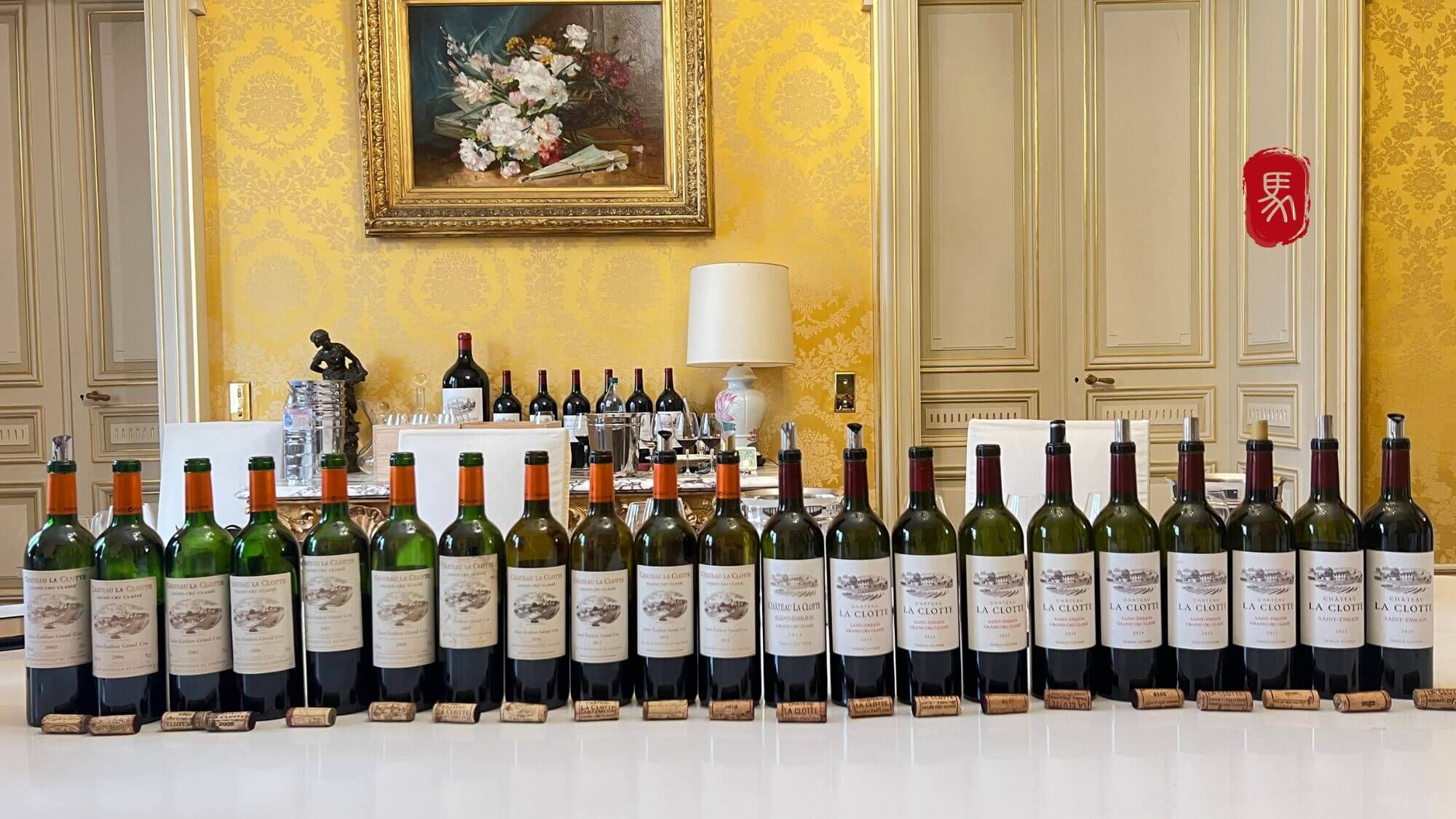
Today, I would like to introduce a Saint-Émilion estate that is truly hidden in plain sight.
Just how well hidden is it? To be honest, even if you travel there yourself, you might not find the château at all without someone guiding you.
For that very reason, unless an importer has a particularly deep understanding of Bordeaux, or a seasoned consumer has long followed the region’s top estates, very few people are truly aware of the real strength of Château La Clotte.
Yet anyone who has seriously tasted its wines tends to react the same way I did, almost instinctively: How can this be so good? This is incredible.
Among the various estates owned by the Vauthier family, the role of Château La Clotte is remarkably clear. From the perspective of terroir, it has every right to stand alongside Château Ausone; in terms of quality, it is also the estate that comes closest to Ausone within the family’s portfolio.
The difference lies in their stylistic focus. Château Ausone is a benchmark for the expression of Cabernet Franc, while Château La Clotte places its emphasis on the character of Merlot-led blends. In many ways, they are the twin stars of the Vauthier family, together shaping the family’s wine universe.
Speaking of my connection with the Vauthier family, the story is actually quite an interesting one.
I first met Edouard Vauthier while we were both studying for our Master’s degree in Bordeaux. That year happened to be just one year before the Vauthier family acquired Château La Clotte.
Edouard’s first impression is one of quiet reserve. He speaks little and never tries to draw attention to himself. Yet among friends he becomes a completely different person. Whenever we worked on group assignments together, he would occasionally drop a line of classic French dry humor out of nowhere, landing perfectly on everyone’s sense of amusement.
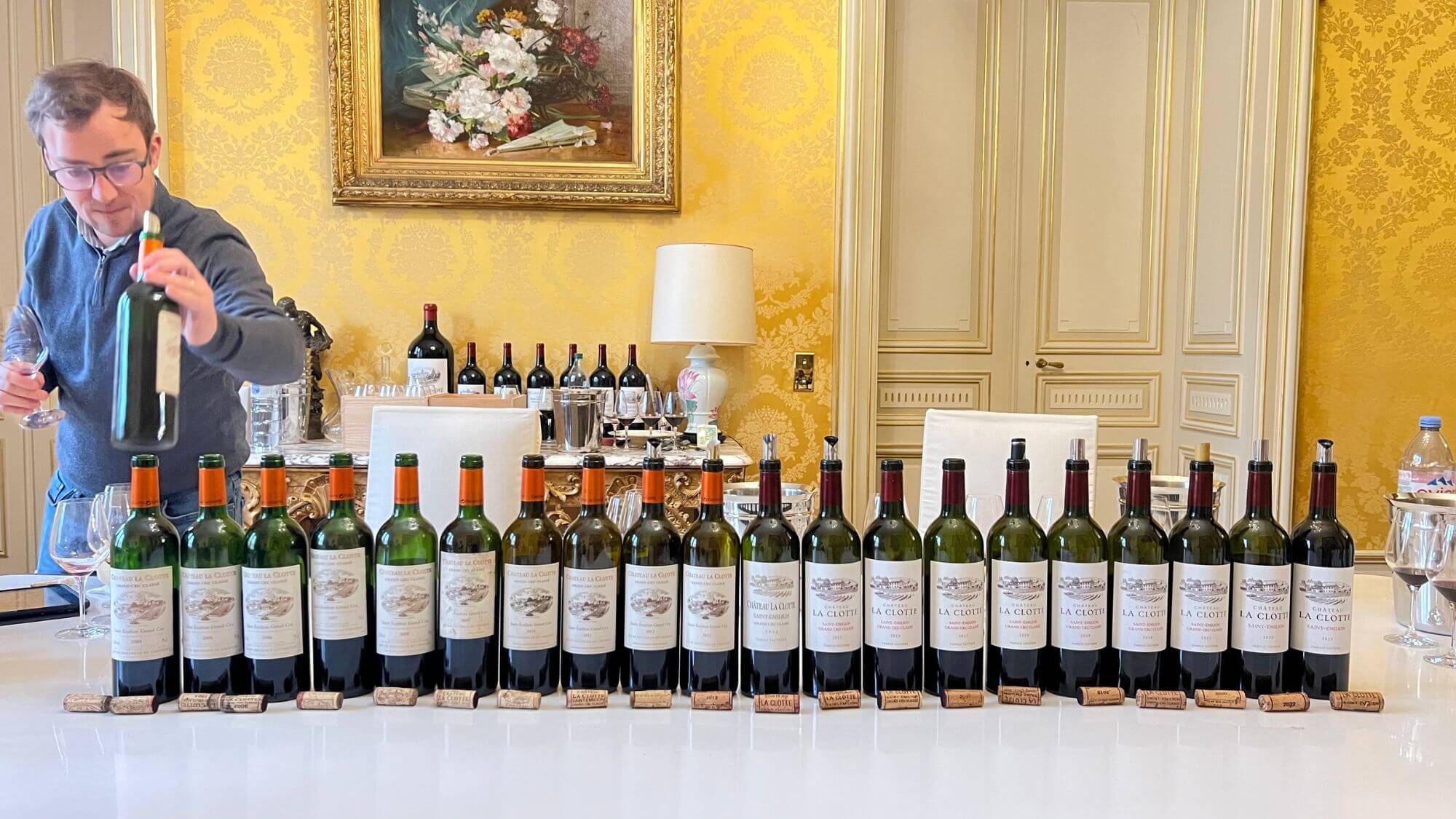
There was another coincidence as well. My wife, Phydiasse, and Edouard’s wife, Camille, were also classmates of ours back then. So I often joke with Edouard that during the time at school, the real task was not studying at all, but searching for our future wifes.
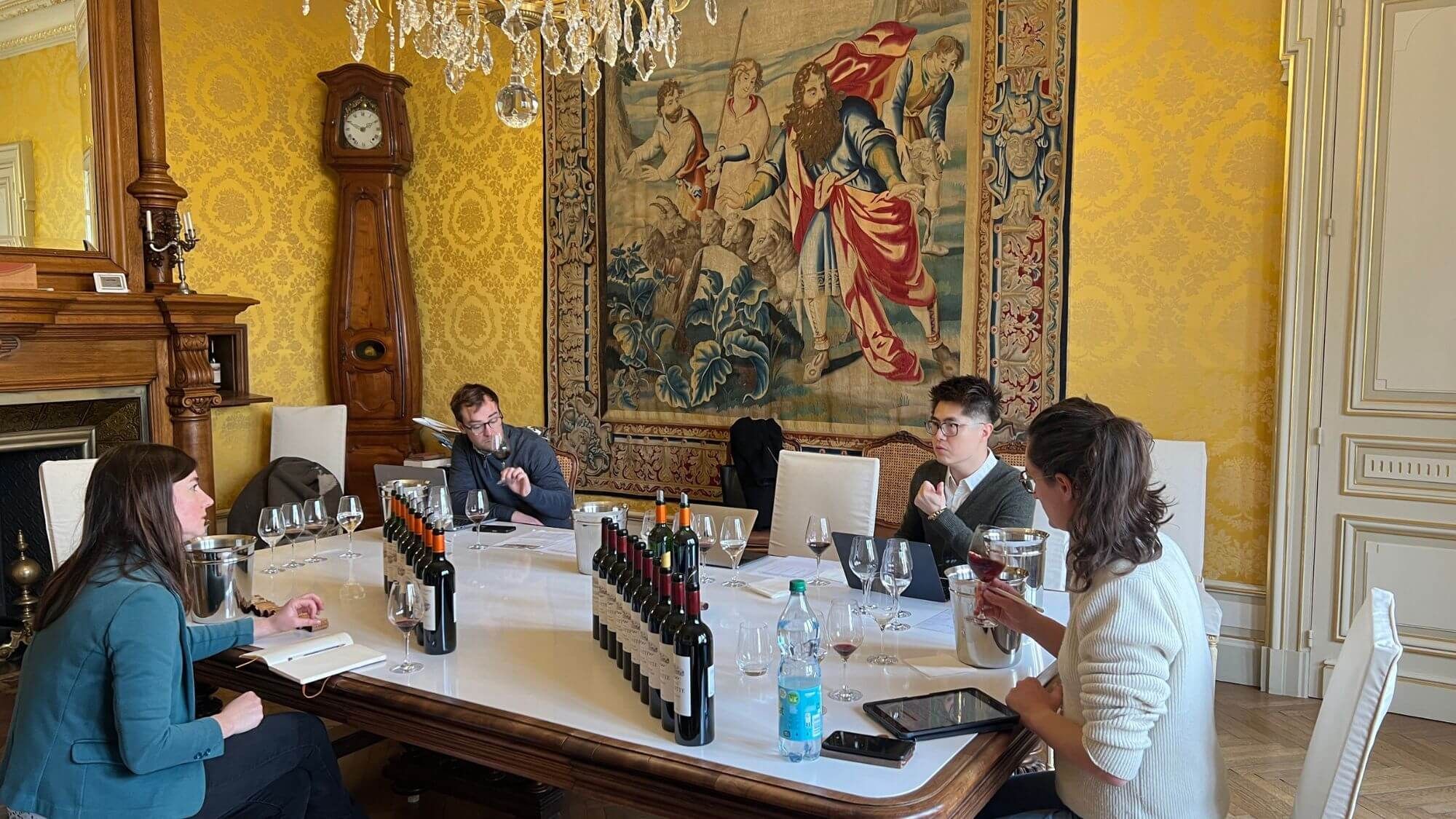
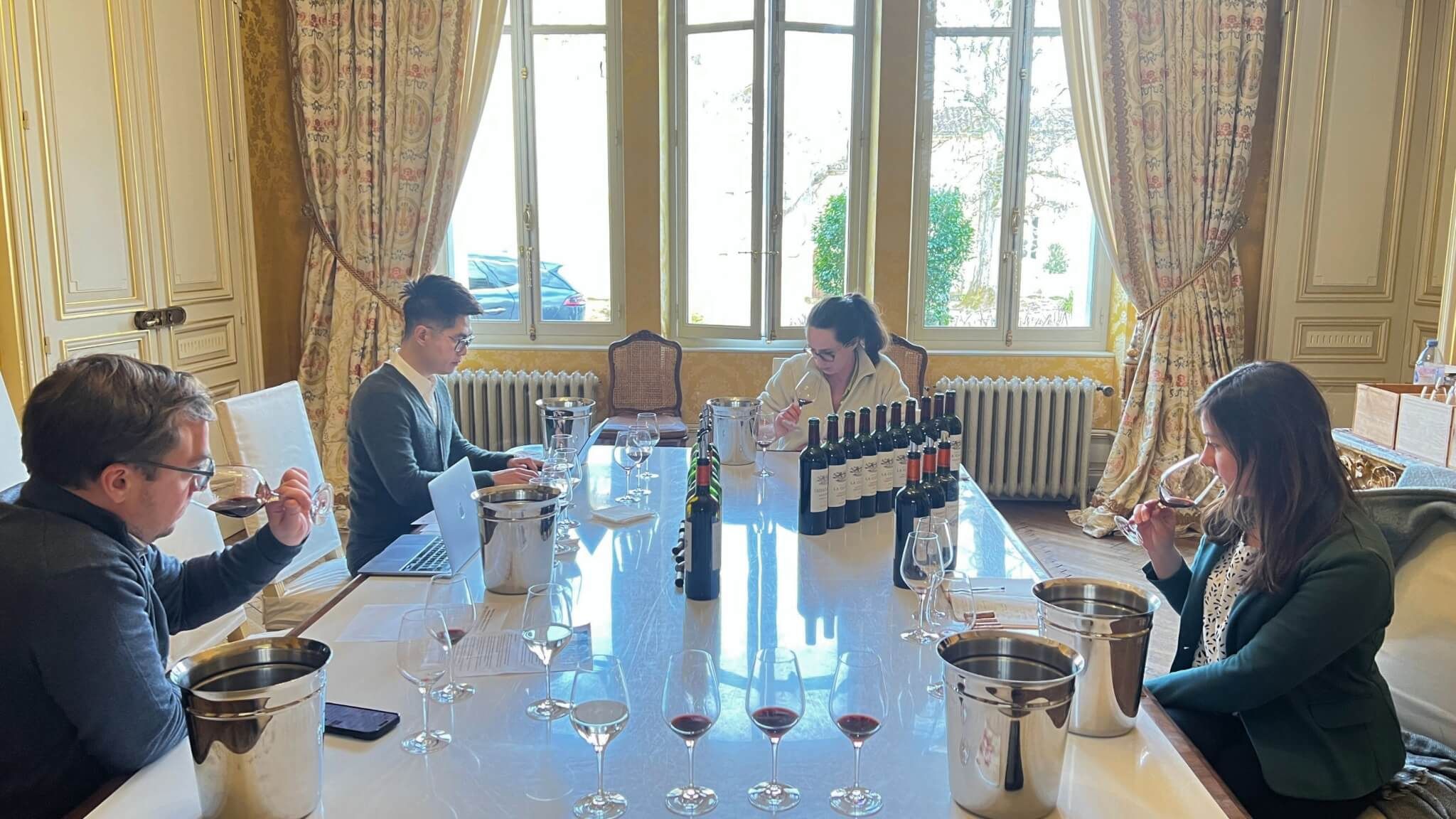
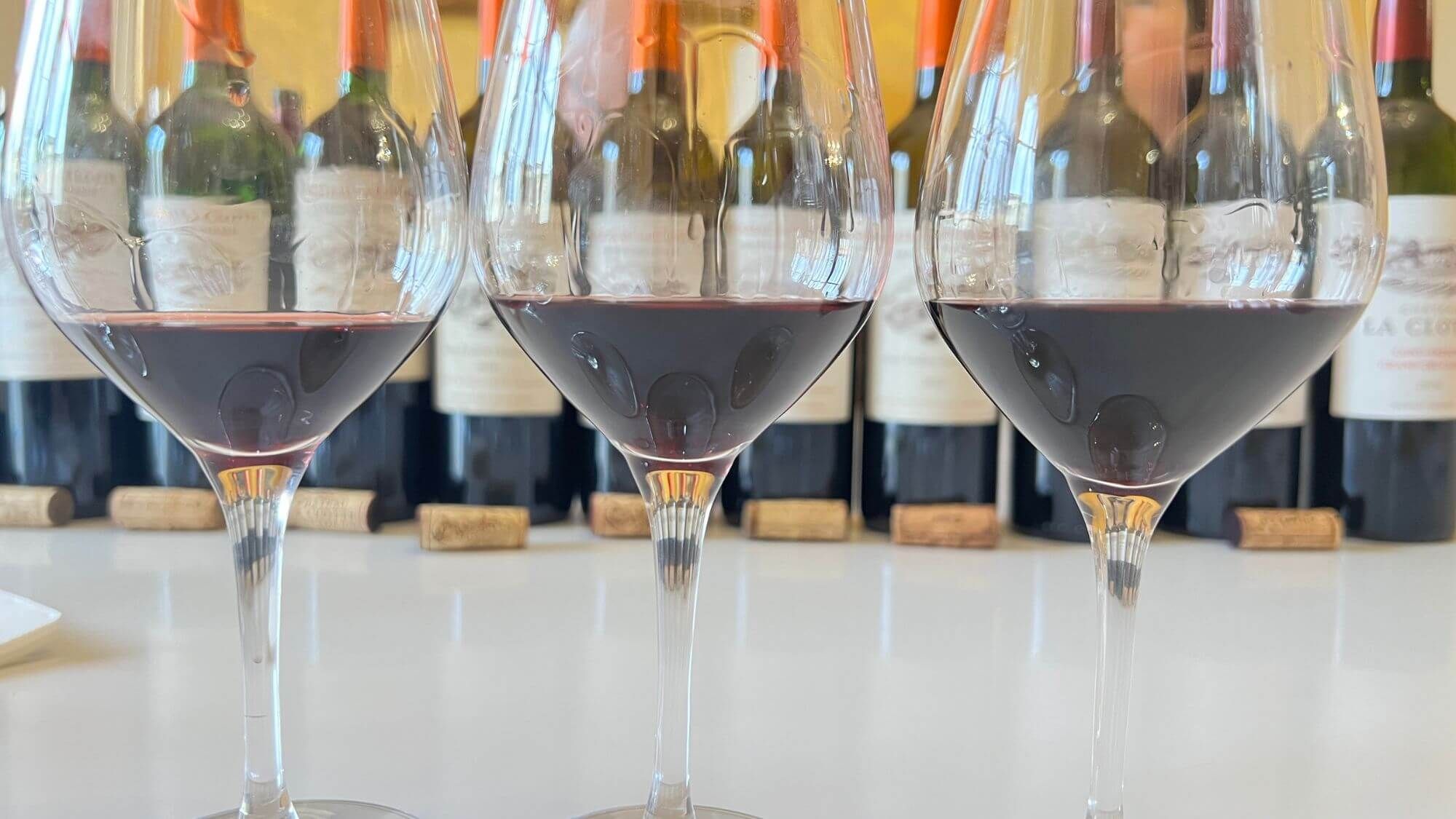
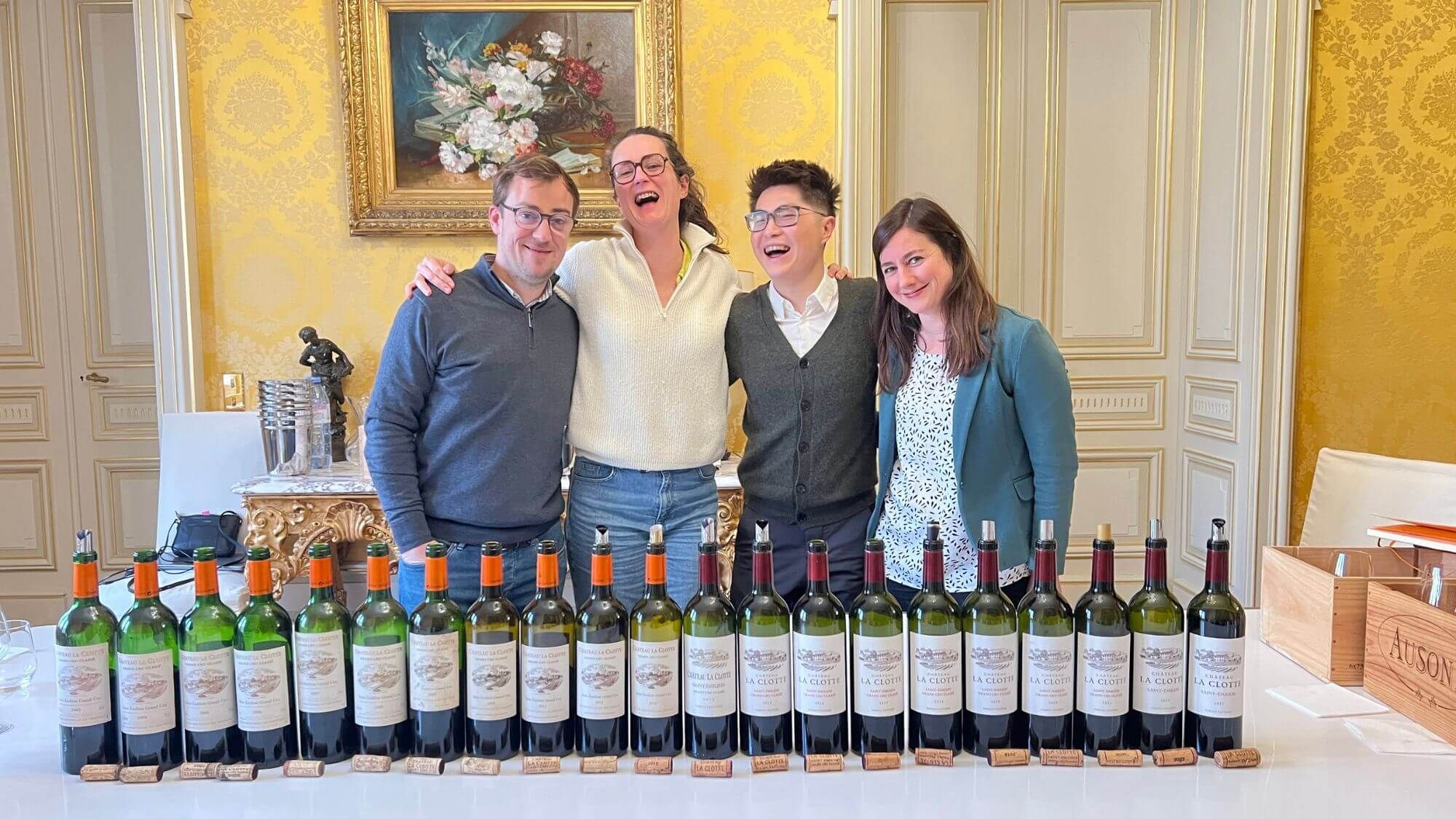
Time has flown by. Thirteen years later, when the four of us old classmates found ourselves together again for a vertical tasting of Château La Clotte, we had all already become parents. Time and experience have left their different marks on each of us. Yet when we raised our glasses once more, that long-familiar feeling returned almost instantly.
At that moment, I suddenly realized that time may change many things, yet certain sincere bonds, once the glitter has faded, reveal themselves to be even purer and more precious.
Vertical Tasting Experience
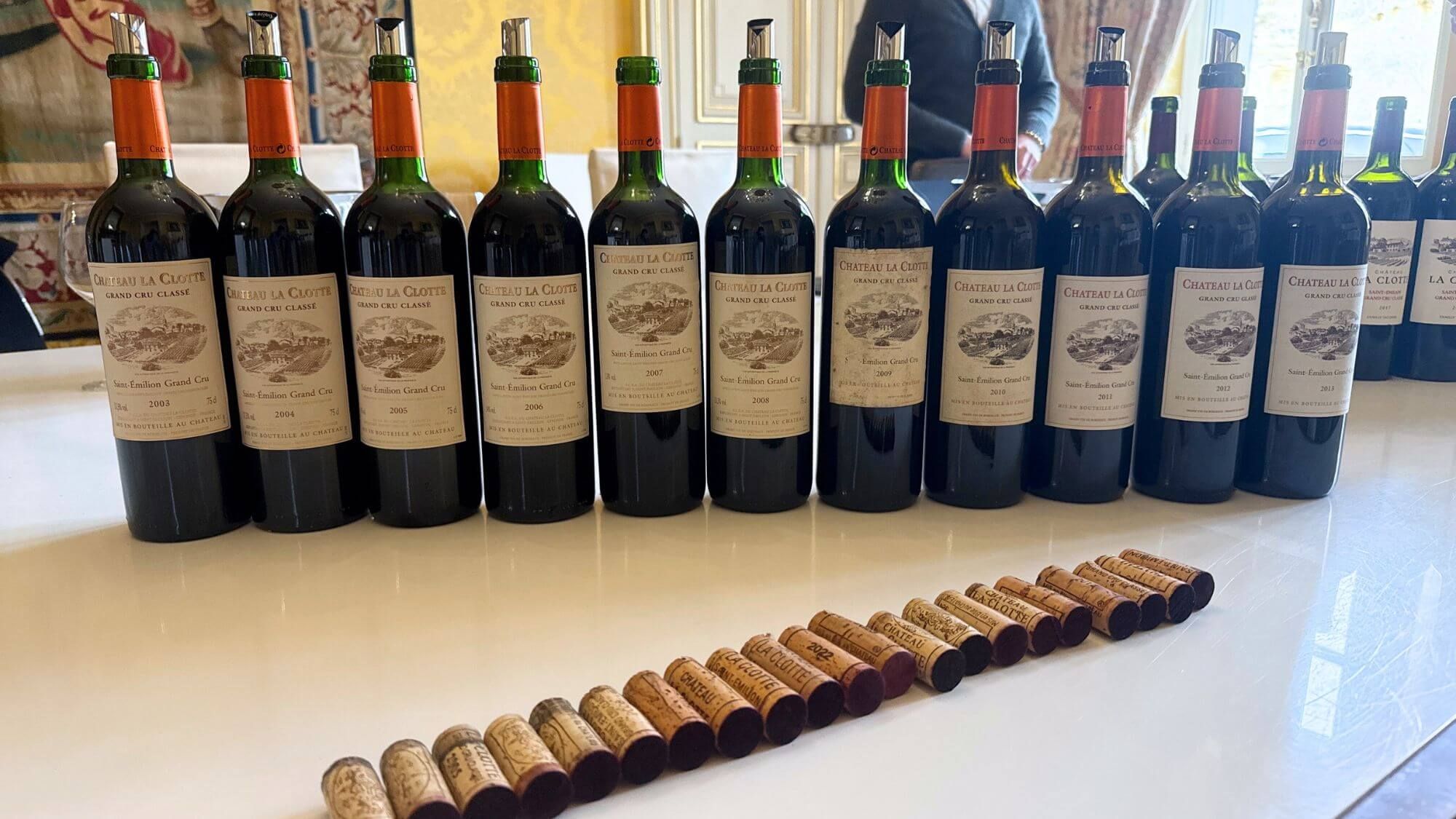
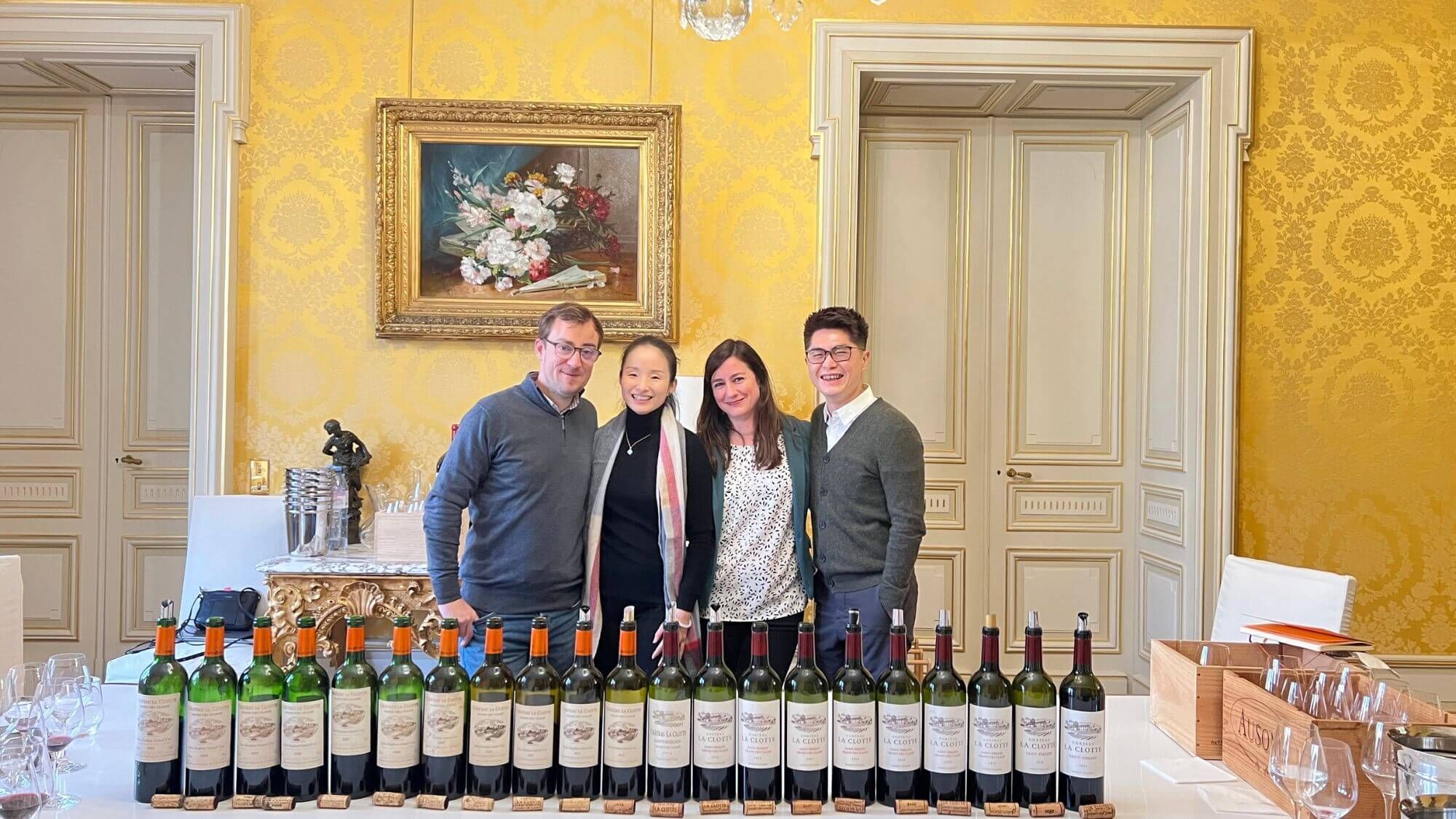
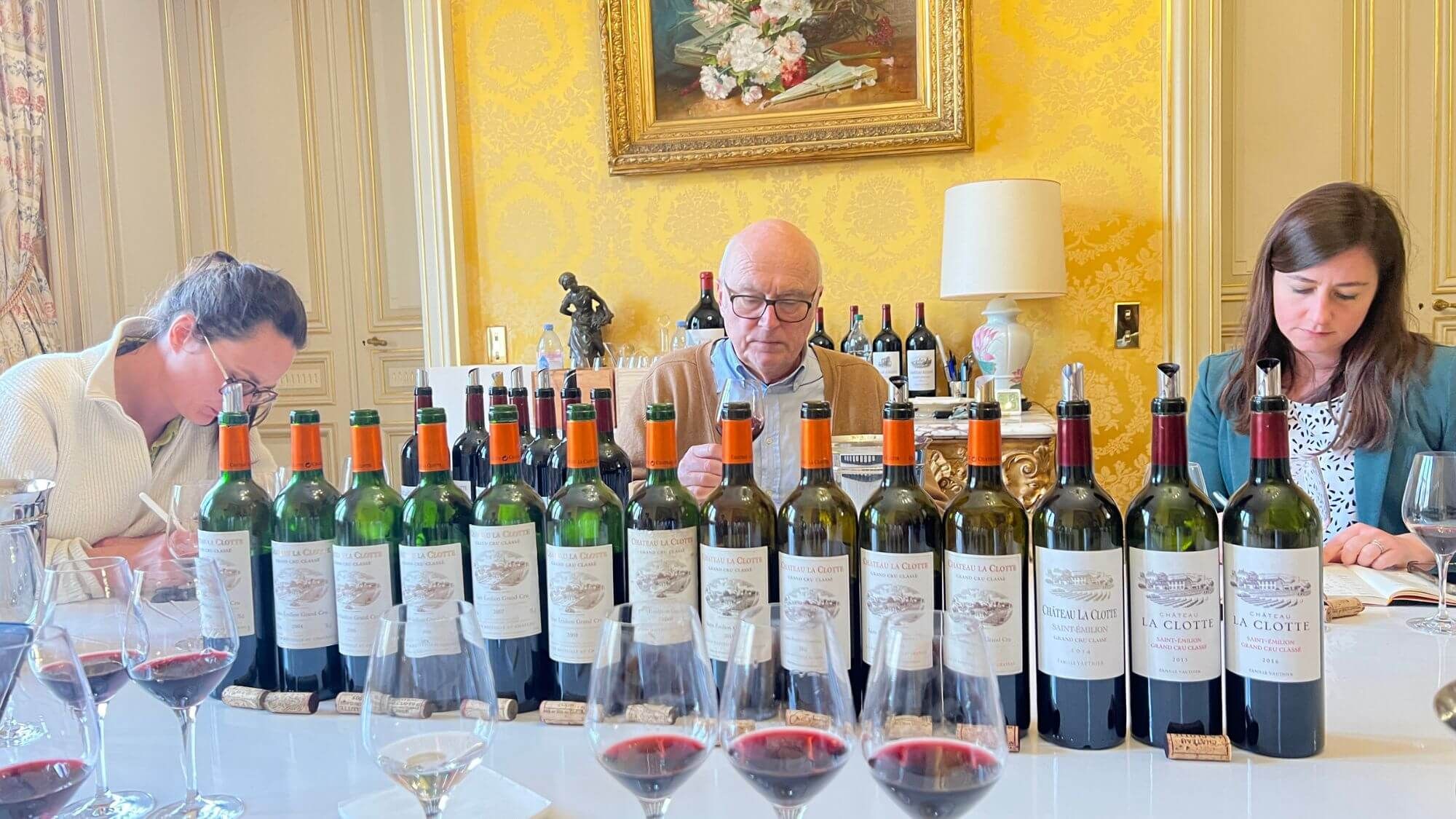
For this vertical tasting, the Vauthier family showed remarkable generosity. Not only did they present ten older vintages from the era of the previous owner, they also assembled every vintage from 2003 to 2023 in one complete lineup. Even Edouard Vauthier and Constance admitted that such a comprehensive vertical tasting of Château La Clotte is rarely seen, even within the family itself.
Since the opportunity was so exceptional, I decided to organize the most distinctive insights from this tasting into a concise guide, helping you understand this quietly formidable estate in the shortest possible time.
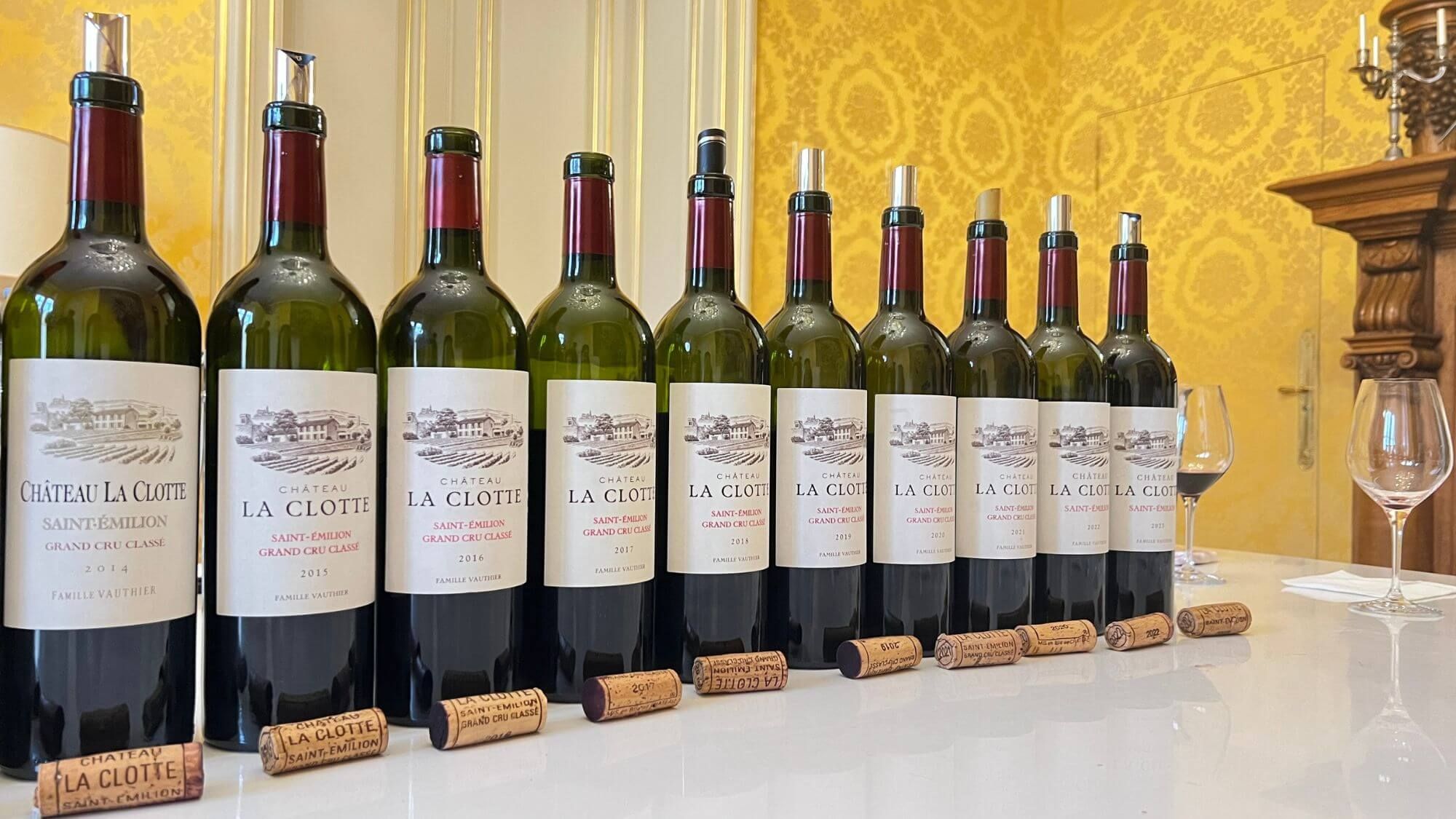
AMA SNAPSHOT of Château La Clotte
1. Black Truffle Is Not an Accident, but a Certainty
At Château La Clotte, black truffle aromas tend to emerge after about 10–15 years of aging. What makes it even more intriguing is that this mature note, typically associated with warmer vintages, appears here almost every year. Even in relatively cooler vintages such as 2004 and 2006, the truffle character rises immediately after the bottle is opened, quickly filling the glass.
2. The Salinity of Limestone: A Whisper Hidden in the Finish
The limestone signature of La Clotte never rushes to make its presence known. The saline note does not appear at the first sip. Instead, it hides quietly behind the wine’s rounded texture and gentle sweetness, only revealing itself near the finish. Subtle and understated, it adds a quiet but unmistakable sense of layered complexity.
3. 2005–2012: A Sudden Rise in Structure
From 2005 to 2012, the structural backbone of La Clotte clearly intensifies. Even in cooler vintages such as 2007 and 2008, the architecture remains remarkably defined. My impression is that extraction during this period was slightly stronger, as if the winemaking team aimed deliberately to craft wines with a more imposing structure.
4. After 2014: Finer Texture and More Lively Acidity
After 2014, the wines became noticeably more refined in texture while maintaining the same depth and concentration. The tannins grew finer and smoother, creating a sensation across the palate that feels almost “ironed out.” At the same time, acidity gained precision and energy, bringing a greater sense of movement to the palate and allowing the finish to unfold with more ease.
5. 100% New Oak, But All It Needs Is a Little Patience
Before 2014, when the estate was under the stewardship of the Moueix family, the proportion of new oak was around 50%. After the Vauthier family took over, aging shifted to 100% new oak barrels. In their youth, the wines of Château La Clotte may show fairly pronounced toasted notes. Yet with just 3–5 years of aging, these elements integrate seamlessly into the wine. The aromas become clearer, the palate more transparent, and any overt oak impression gradually disappears.
6. From 2015 Onward: The Era of Clarity and Purity
Starting with the 2015 vintage, the aromatic profile of La Clotte becomes extraordinarily precise, almost as fine as strands of hair. More importantly, every vintage since 2015 carries a striking sense of purity, nearly ethereal in character. Even in a challenging year such as 2021, it is remarkably difficult to find any flaws.
7. 2020: Removing Cabernet Sauvignon, Letting Cabernet Franc Speak
In 2020, the estate removed all Cabernet Sauvignon from the vineyard. The result is that the elegance of Cabernet Franc becomes even more pronounced. One could describe the style in a single sentence: a Merlot blend that tastes like Cabernet Franc. This character is especially evident in the 2023 vintage.
8. Most Recommended Vintages
Benchmark of the traditional style: 2010
Peak vintages in the Vauthier era: 2016, 2022, 2023
As mentioned earlier, many visitors come to Saint-Émilion without ever realizing where Château La Clotte actually lies. In fact, you may already have walked right past its entrance without even noticing.
Leaving the village and heading downhill along the small path toward the Fongaban valley, the road gradually narrows. Vines, exposed limestone, gardens and fig trees mingle together in a seemingly casual arrangement. Standing there, you will see a small house built directly against the exposed limestone hillside. From its roof rises a small Neo-Gothic turret, quietly gazing over the little valley below.
At that moment, you may begin to wonder: where exactly is the entrance to the estate?
In fact, there is no conventional driveway leading to it. The entrance feels less like a road and more like a narrow passage carved directly into the hillside itself.
Hiding the Wine Inside Limestone | The Heart of the Estate Lies Underground
There is, in fact, a reason why Château La Clotte is so difficult to find. The estate was originally a quarry. At some point, the growers had a simple but brilliant idea: instead of abandoning the site, they built the wine cellar directly inside the old quarry.
The name “La Clotte” itself comes from the Gascon dialect of southwestern France and refers to a small cave dwelling. In terms more familiar to us, it is essentially a troglodyte home carved into the rock.
Because of this, whenever I taste the wines of La Clotte, I always have a very vivid impression. The wine feels as though it has leapt straight out of the stone itself. After Edouard Vauthier explained the cellar to me, I realized that this description was not quite precise enough. The wine of La Clotte is not merely born from stone. From the very beginning, it has never left the embrace of limestone. Every breath it takes, every expression it reveals, seems to carry the imprint of the rock that surrounds it.
Edouard told me that because the entire cellar is enclosed within the limestone hillside, the temperature remains naturally stable at around 13°C throughout the year, while humidity stays close to 100%. As a result, there is no need for artificial climate control. This not only saves a considerable amount of energy, but also minimizes evaporation during the aging process.
The limited space inside the cave also means that large modern equipment simply would not fit here. Instead, the estate customizes several small stainless steel fermentation tanks according to the yield of each individual parcel. Extraction is carried out almost entirely through gentle manual foot treading. Once alcoholic fermentation is complete, the wine is immediately transferred into new oak barrels, where malolactic fermentation begins, followed by approximately 18 months of barrel aging.
For that reason, if you observe the estate only from the outside, it would be almost impossible to imagine that such a modest limestone hillside could conceal a winery of such remarkable quality. With an annual production of only around 15,000 bottles, the wines remain known mainly to a small circle of the most devoted wine enthusiasts.
Terroir | Three Distinct Personalities Hidden Within Just 4 Hectares
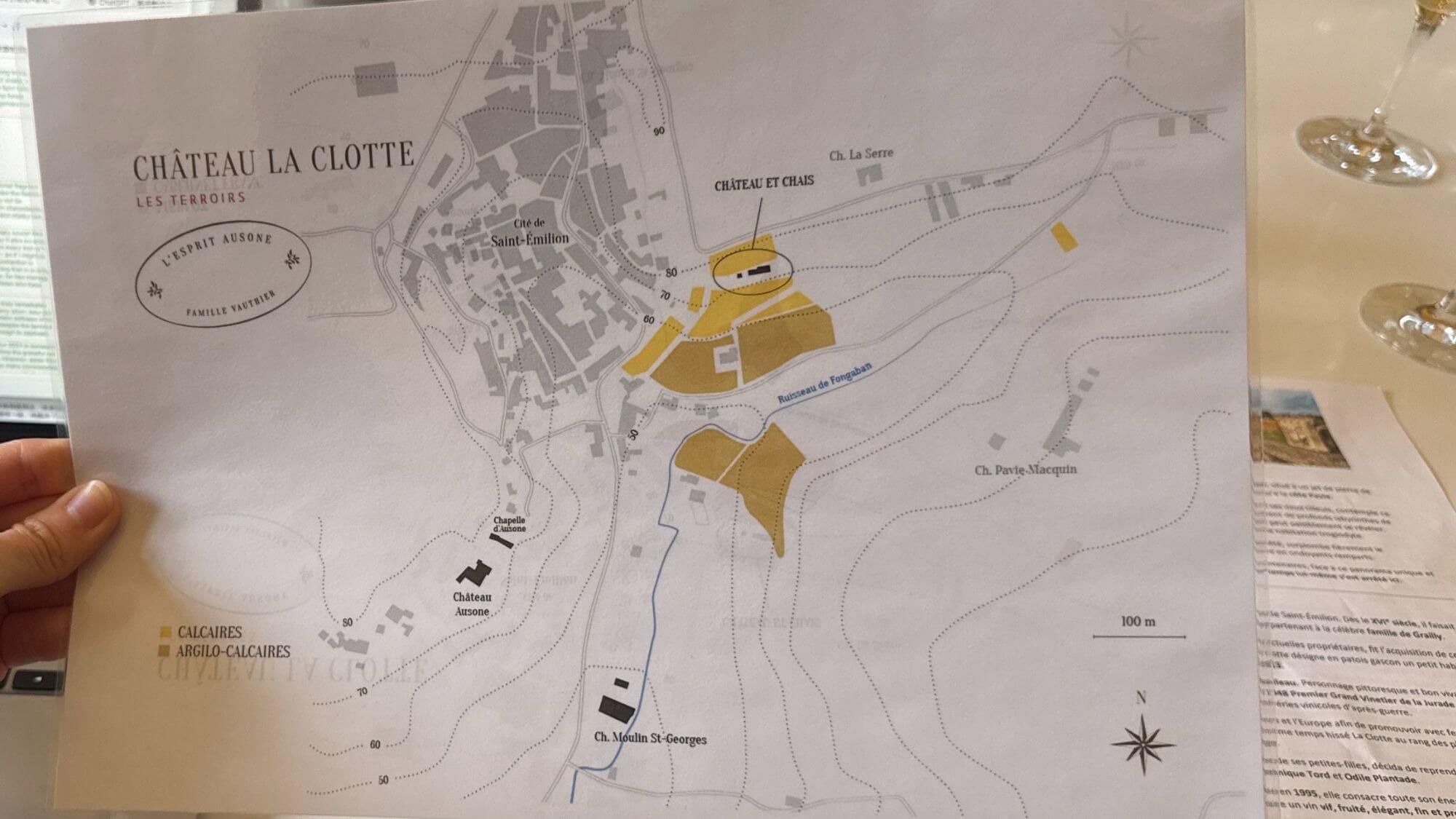
The vineyard of Château La Clotte covers only 4 hectares. Yet when you look more closely, you quickly realize that it is anything but simple.
The entire vineyard can broadly be divided into three terraces.
Two terraces on the north side of the Fongaban stream face south. With greater sun exposure, the grapes here tend to ripen earlier, producing wines that are fuller and more layered in style. On the southern side of the stream lies another parcel that faces northwest and sits at a slightly lower elevation. Ripening here occurs later, resulting in a character that is naturally more restrained.
If we unfold these parcels on a map from north to south, three very clear yet complementary expressions emerge:
• The limestone terrace at 80 meters altitude
Here the structural backbone is the most pronounced, with the most distinctive salinity and lingering finish. It acts like the spine of the wine, supporting the overall architecture of the blend.
• The clay–limestone terrace between 60 and 80 meters
This parcel shows greater finesse and tension while maintaining excellent concentration. It draws the wine’s power inward, giving the palate a more compact and focused shape.
• The lower terrace at 50–60 meters, with higher clay content
Ripening here comes later. Yet once fully mature, the fruit contributes a marked sense of roundness and richer aromatics, adding flesh and generosity to the blend.
When I introduce Château La Clotte to fellow wine lovers, I often say: what you first notice is the gentle roundness and approachability typical of Saint-Émilion. Then, gradually, the limestone terroir begins to reveal itself, bringing a mineral backbone and a chalky salinity that quietly frames the wine. And the secret behind this layered expression lies precisely within these three terraces.
A Merlot Blend That Lets You Touch the “Ausone Spirit”
Before writing this article, I had thought about asking Edouard Vauthier why his father had chosen to acquire Château La Clotte. But by the time I reached this point in the story, I realized I already had my own answer.
There are simply too many parallels between Château La Clotte and Château Ausone. Both are built directly into limestone hillsides. Both sit on exceptional limestone terroir. And both choose to interpret the essence of Saint-Émilion through methods that are natural and deeply traditional. The difference lies mainly in their focus. Ausone is renowned for its interpretation of Cabernet Franc, while La Clotte follows the same philosophy to reveal the essence of Merlot.
To me, they are both gifts from the Vauthier family, each bottle carrying within it a fragment of what I would call the “Ausone spirit.”
As the tasting was drawing to a close, Edouard and Camille spoke with me about their vision for the renovated estate. Once the project is complete, they explained, it will be possible to stand at the windows of Château La Clotte and see all the estates of the Vauthier family, with the Dordogne River stretching out in the distance. Just imagining tasting La Clotte with that landscape before us already feels wonderfully inviting.
So perhaps we can end this article with a bold question. One day, when the new estate is fully realized, as the Vauthier family continues to pursue its unwavering philosophy and as the quality of La Clotte keeps rising, might Château La Clotte one day reach the same heights as Château Ausone?
The answer, I suppose, will be revealed in time.
Appendix | Ownership History of Château La Clotte
1. Early History | The de Grailly Family
• The vineyard’s history can be traced back to before the mid-18th century, when it formed part of the estates of the de Grailly family.
• In 1886, Marquis Gaston de Grailly formally established the family’s long-held vineyard as an estate under the name La Clotte de Grailly, preserving the family name within the property’s identity.
2. The 1910s | Transfer to the Chailleau Family
• Between 1912 and 1913, the de Grailly family sold the estate to Sylvain Chailleau, marking the beginning of the Chailleau family’s stewardship.
• During this period, the estate’s name was gradually simplified, eventually becoming the Château La Clotte that we know today.
3. 1931 | Georges Chailleau Takes Over
• In 1931, Georges Chailleau, the son of Sylvain Chailleau, assumed management of the estate.
• Under his direction, the château gradually established a stable reputation for quality and went on to become one of the respected Saint-Émilion Grand Cru Classé estates in the appellation.
4. The 1990s | A “Honeymoon Period” Between the Chailleau Family and Moueix
• Around 1990, the management of the estate passed to Georges Chailleau’s descendants. His great-granddaughter Nelly Moulierac, together with Dominique Tord and Odile Plantade, jointly oversaw the property, continuing the tradition of family stewardship.
• During this period, the estate entered a long and close partnership with Jean‑Pierre Moueix:
• JP Moueix was responsible for vineyard management and winemaking, receiving roughly three-quarters of the production.
• The remaining quarter was mainly sold through the Chailleau family’s own restaurant, Logis de la Cadène.
• The restaurant was later sold to Château Angélus and eventually developed into a Michelin one-star establishment.
5. From 2014 to Today | The Vauthier Family Era
• In June 2014, the Vauthier family, owners of Château Ausone, acquired a controlling stake in Château La Clotte through their company, opening a new chapter for the estate.
• Upon taking over, the family not only restructured the vineyard management system but also became deeply involved in the winemaking. They purchased the 2013 vintage still aging in barrel and, after reassessment, downgraded certain lots that did not meet their new standards before reassembling the blend.
• From a technical perspective, 2014 was the first vintage in which the Vauthier family participated directly in the winemaking. However, 2015 can be considered the first vintage entirely crafted under their full direction.
• After a period in which Alain Vauthier and his daughter Pauline Vauthier jointly oversaw the estate, the property is now run by siblings Edouard Vauthier and Constance Vauthier.
• In 2022, both Château La Clotte and Château Ausone withdrew from the Saint-Émilion classification system. As a result, vintages produced after that year will no longer carry the designation “Grand Cru Classé” on the label.