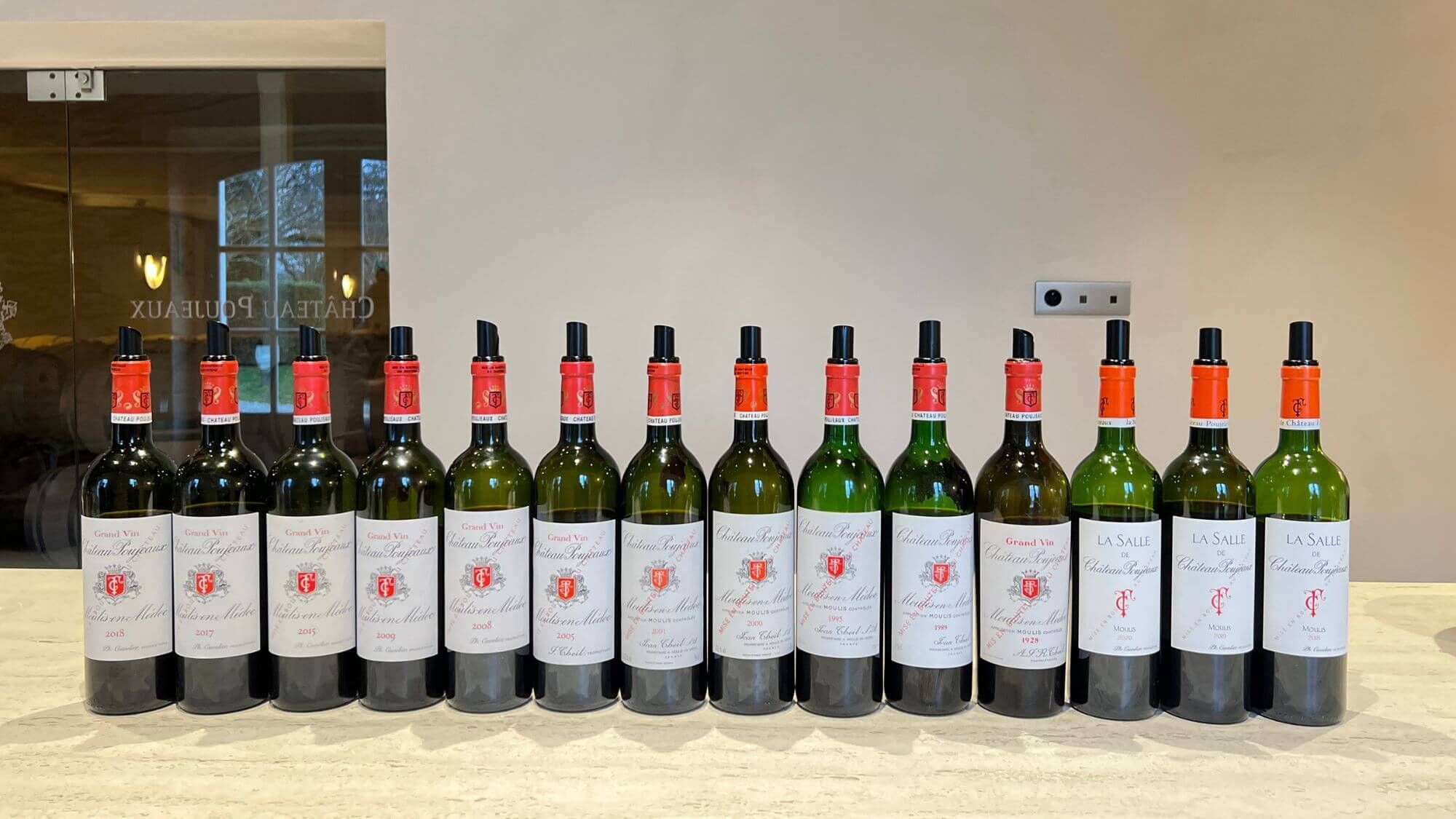
AMA Vertical Tasting
Château Poujeaux
(1928-2020)
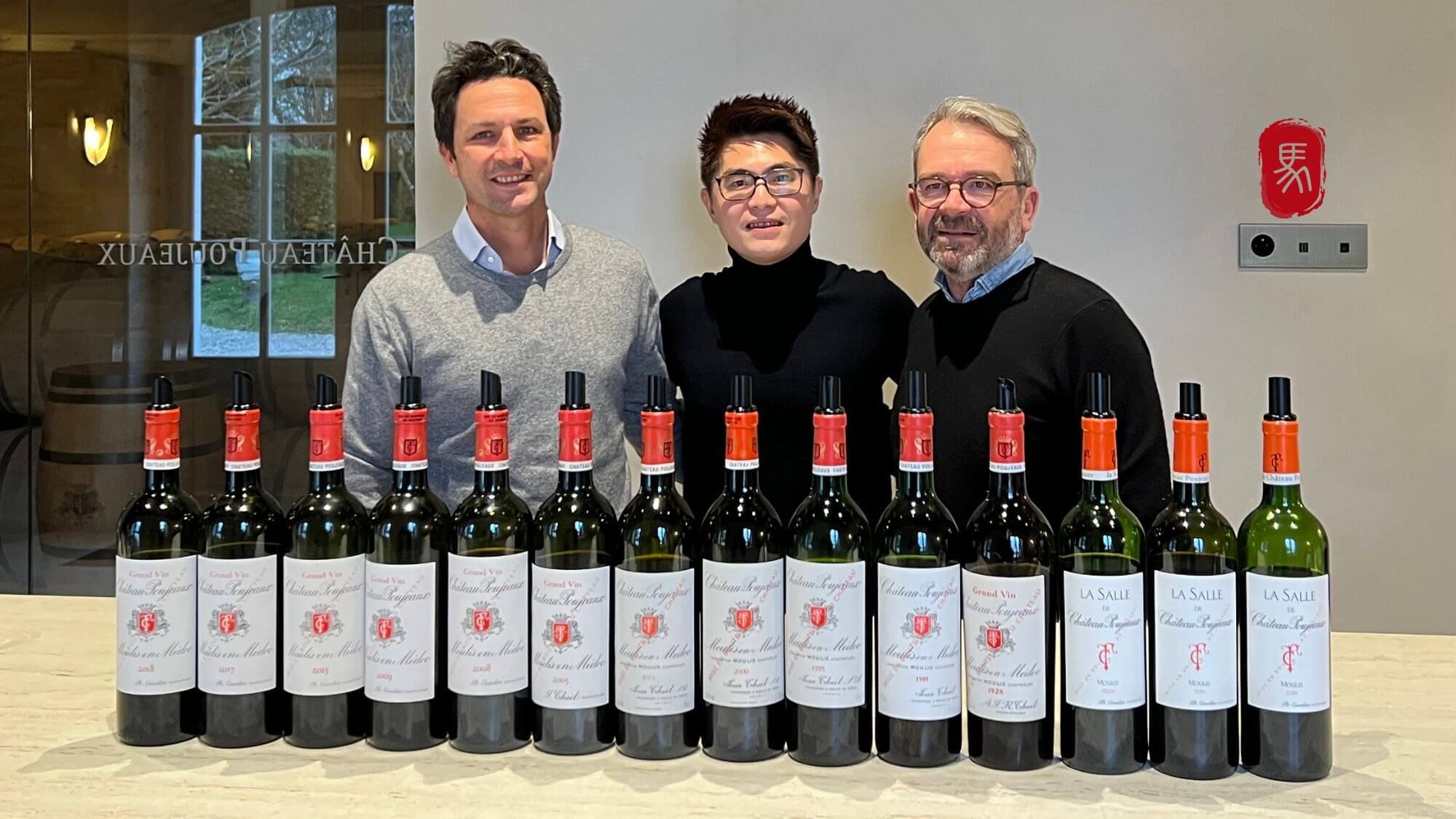
Over the years, whenever friends in China ask me, “Is there a Left Bank wine that offers consistent quality at a truly approachable price?” Château Poujeaux is always among my recommendations.
The first time you taste it, it may not strike you as immediately dazzling. Yet after a few encounters, you begin to find it quietly returning to your thoughts. There is a reassuring sense of completeness and consistency in Château Poujeaux, along with a calm, unhurried manner of expression that makes it feel deeply dependable. It is exactly the kind of wine I can pull from my cellar at any moment and share with friends without hesitation, a true everyday companion.
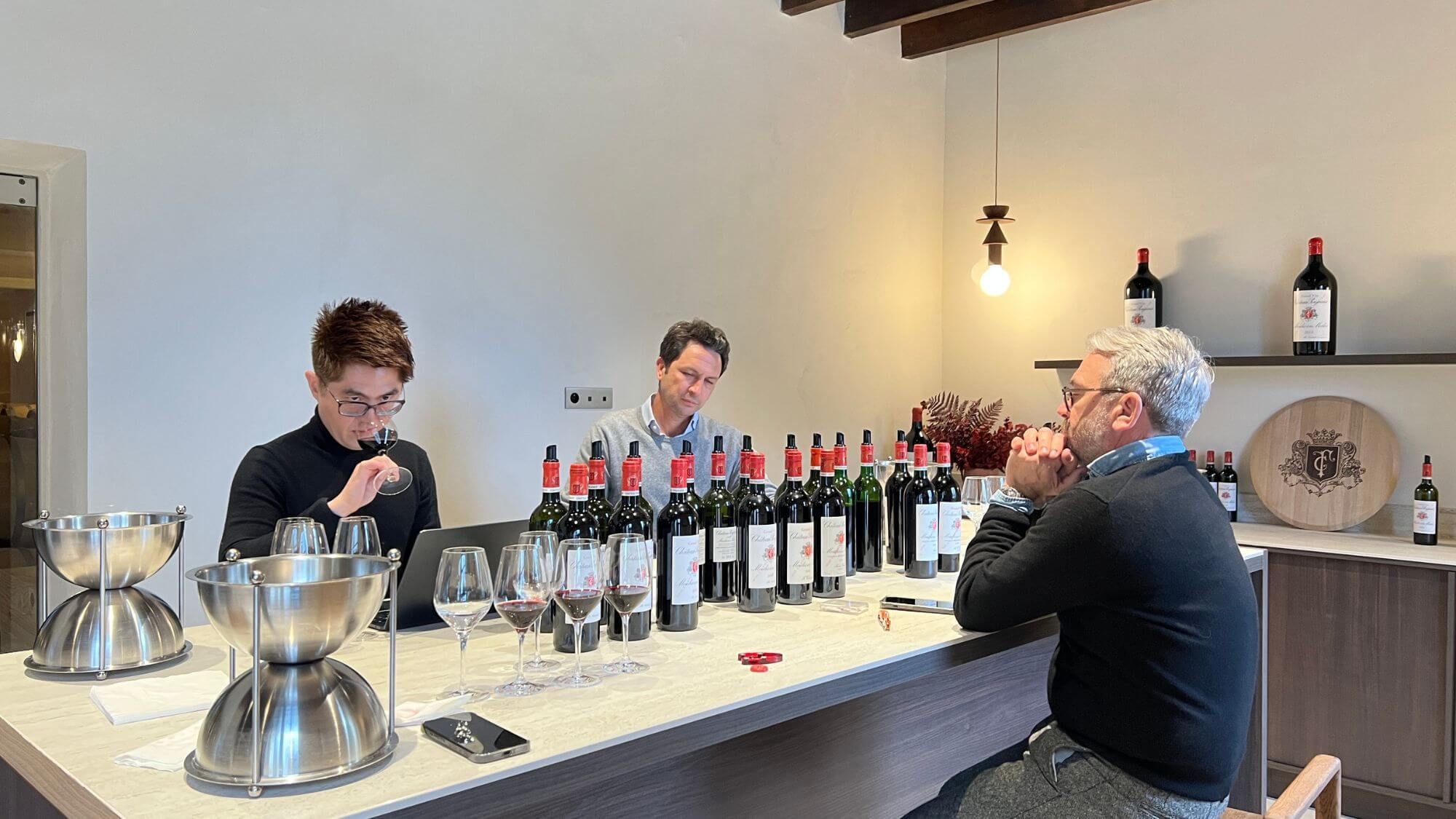
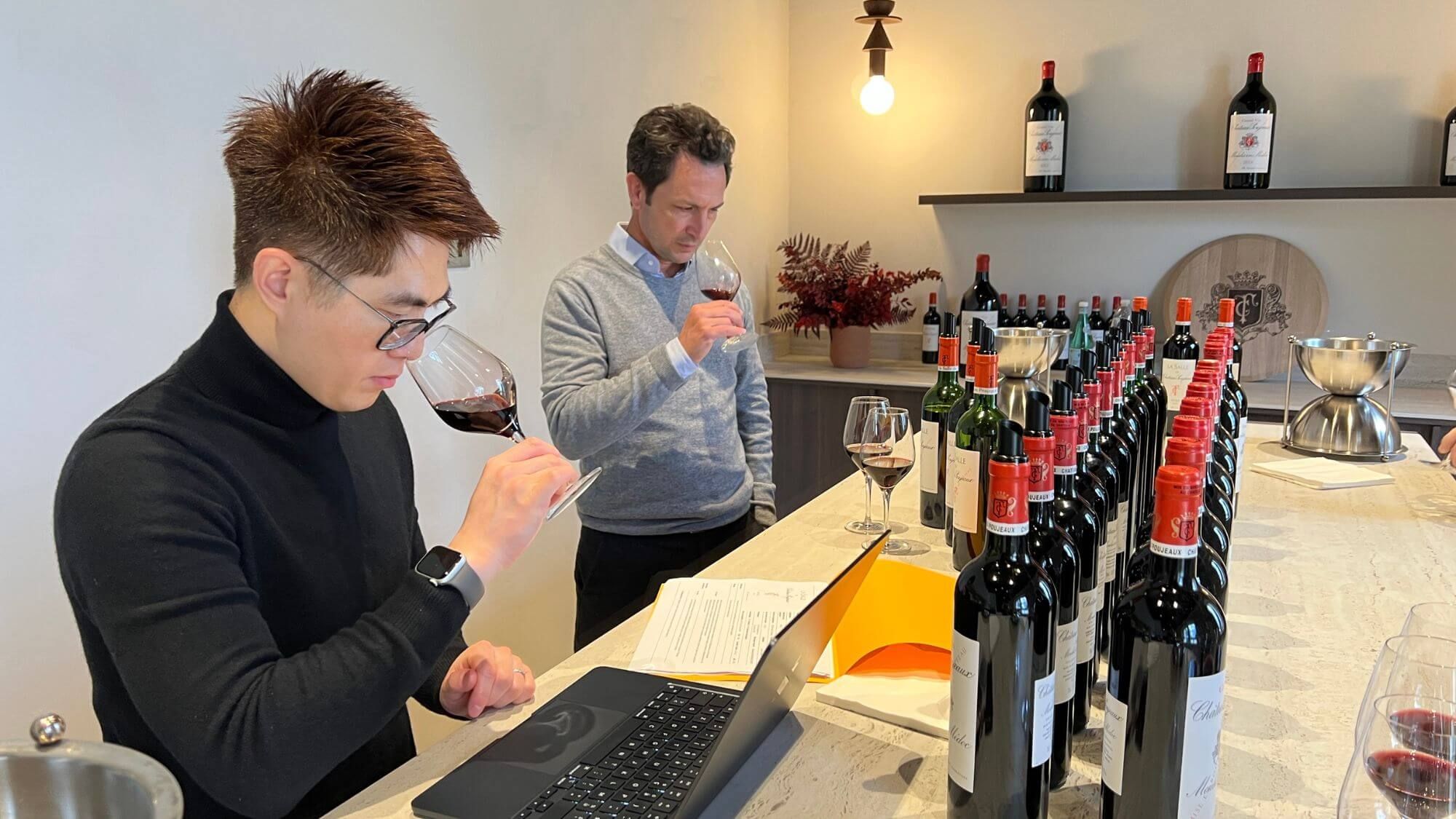
This time, at the invitation of the estate’s director, Matthieu Cuvelier, I finally had the opportunity to sit down for a full vertical tasting.
Rather than simply accepting an invitation, it felt more like making up for something long overdue. I had always wanted to understand for myself why Château Poujeaux manages to retain such poise and consistency across vintages, and how it continues to sustain such steady success in the European market.
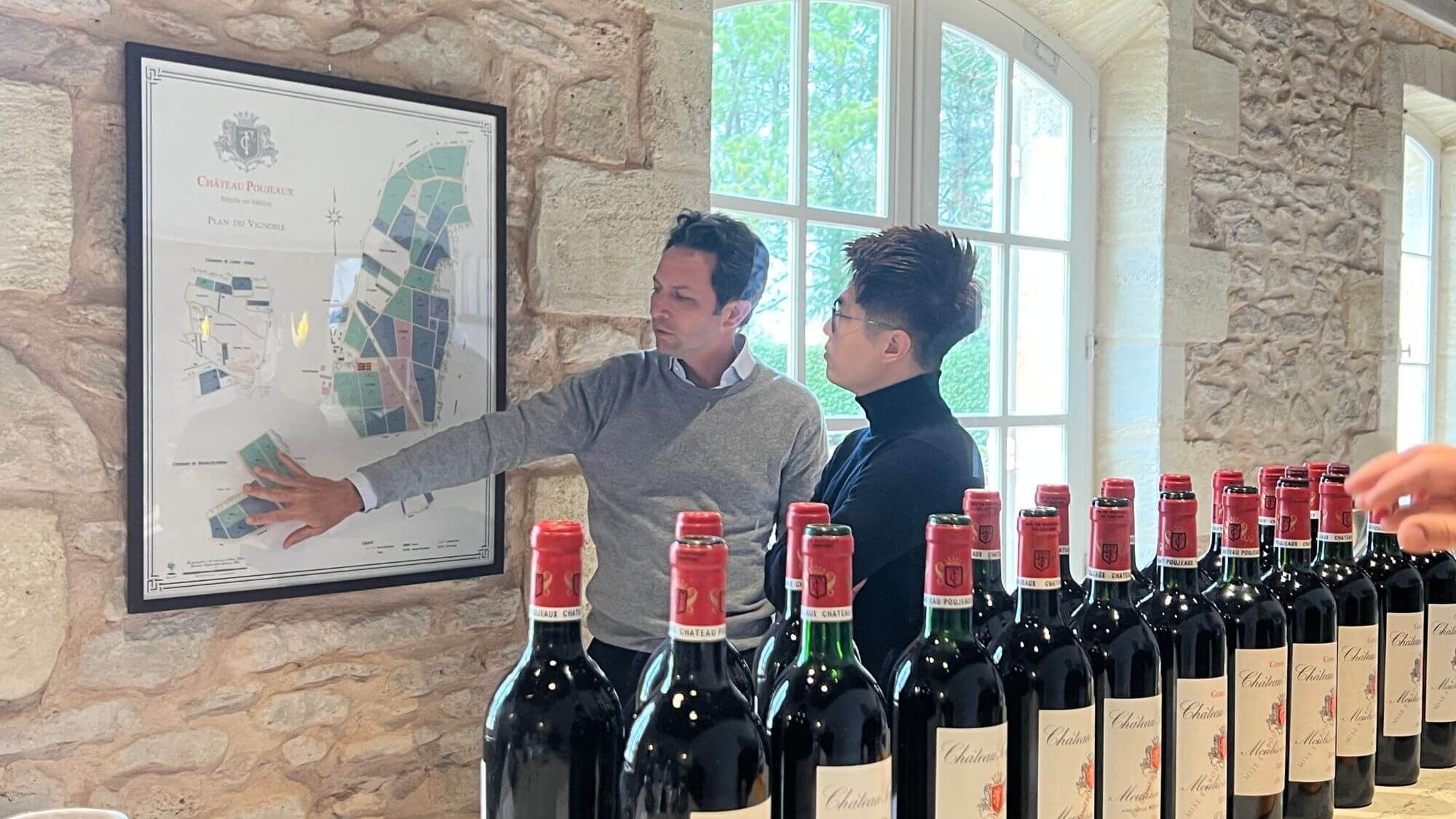
AMA SNAPSHOT of Château Poujeaux
As always, let’s begin with the most immediate impressions from this vertical tasting.
1. Supple texture as the defining thread
Softness runs through every vintage. The tannins never seek attention. You are barely aware of them, yet the structure is clearly present. The wine is juicy, fluid, and seamless, with almost no sharp edges from entry to finish. Whether in warm or cooler vintages, the tannins consistently retain this supple character.
2. A touch of reduction in youth
During the first three years after bottling, the wine can feel somewhat restrained, at times even slightly closed. Yet with two hours of decanting, or simply a few years of patience, that veil gradually lifts. The aromatics expand, and the palate opens with greater ease.
3. No radical shifts, only refinement within an established framework
After tasting across nearly four decades of vintages, I am convinced that the style remains remarkably balanced and consistent. There is no desire to reinvent or overturn the identity of the wine. Instead, adjustments are made with precision, refining details within an already well-defined structure.
4. Increasingly gentle extraction
Particularly from the late 2000s onward, the edges of the wines have become cleaner, the tannins finer in grain, and the aromatic expression more dimensional and articulate.
5. Interpreting Merlot’s sweetness through a Médoc lens
In theory, 40% Merlot can easily push alcohol levels higher. Yet Poujeaux consistently keeps alcohol below 14%. While preserving the roundness and natural sweetness of Merlot, it integrates the structure and depth imparted by the Left Bank’s gravel soils, achieving a poised equilibrium.
6. Greater clarity and lift from 2009 onward
From the 2009 vintage onward, I repeatedly find notes of pinecone, pine resin, and even a touch of eucalyptus-like freshness. This cool-toned aromatic lift brings greater clarity and vibrancy to the overall expression.
7. Approachable in youth, resilient with age
In its youth, the tannins are never forceful, often remarkably gentle. With age, however, the structure holds firm, never loosening or collapsing. The 1928 vintage, in particular, was striking for its upright, almost architectural poise, one of the most memorable moments of this tasting.
8. Recommended vintages
2023, 2022, 2020, 2019, 2009, 1989
A Château Taken Apart in Three Pieces, Then Brought Back Together
In the Middle Ages, this land was not yet an independent estate but part of the holdings of Château Latour. By the late nineteenth century, it had been divided into three separate parcels, much like many estates in the Médoc, fragmented, transferred, and reshaped through the passage of time.
In the early twentieth century, one of these parcels was acquired by the Theil family. Rather than expanding hastily, they chose a more patient path, gradually reassembling the scattered plots. By the 1950s, the three once-divided vineyard sections were finally reunited. It was during this period that the foundations of Château Poujeaux were firmly established.
In 2008, the Cuvelier family, owners of Clos Fourtet, acquired Château Poujeaux. Many consider this a turning point, yet from my conversations with Matthieu Cuvelier, it is clear that they did not seek to rebuild from scratch. Instead, they continued the core philosophy of the previous owners: to work with nature, and to follow its rhythm.
It is also worth noting that Christophe Labenne is the grandson of the former owning family. He began working at the estate in 1999, and chose to remain after the Cuvelier family took over. Today, he has been there for 27 years. In my view, this continuity in both team and philosophy is a key reason why the style of Château Poujeaux has remained so consistent over time.
The Core Terroir of Moulis
The vineyards of Château Poujeaux lie on one of the finest terroirs on the eastern side of Moulis-en-Médoc: the Grand-Poujeaux plateau. Around 80% of the soils here are sandy gravel, corresponding closely to what many classified growths refer to as the “Terrasse 3” gravel terrace.
What makes it even more compelling is what lies beneath. Deep below the gravel, layers of limestone are often present. This means that while the ზედ gravel ensures excellent drainage and heat retention, the underlying limestone can provide precious water reserves during hot and dry vintages. Such a combination allows Cabernet Sauvignon to achieve full ripeness, while preserving fine linearity and a balanced freshness. It is also, in my view, one of the key reasons why Château Poujeaux consistently maintains its signature sense of softness.
The estate covers around 70 hectares, with vineyards that are largely contiguous. Planting density reaches 10,000 vines per hectare, and the average vine age exceeds thirty years. According to the château’s official figures, the vineyard is planted with 50% Cabernet Sauvignon, 40% Merlot, 5% Cabernet Franc, and 5% Petit Verdot. However, Cabernet Franc does not appear in the final blend every year. As Matthieu explained, all Cabernet Franc vines were uprooted in 2025. In the blends of the 2023 and 2024 vintages, I noted 10% and 15% of Petit Verdot respectively.
The Understated Second Wine: La Salle de Poujeaux
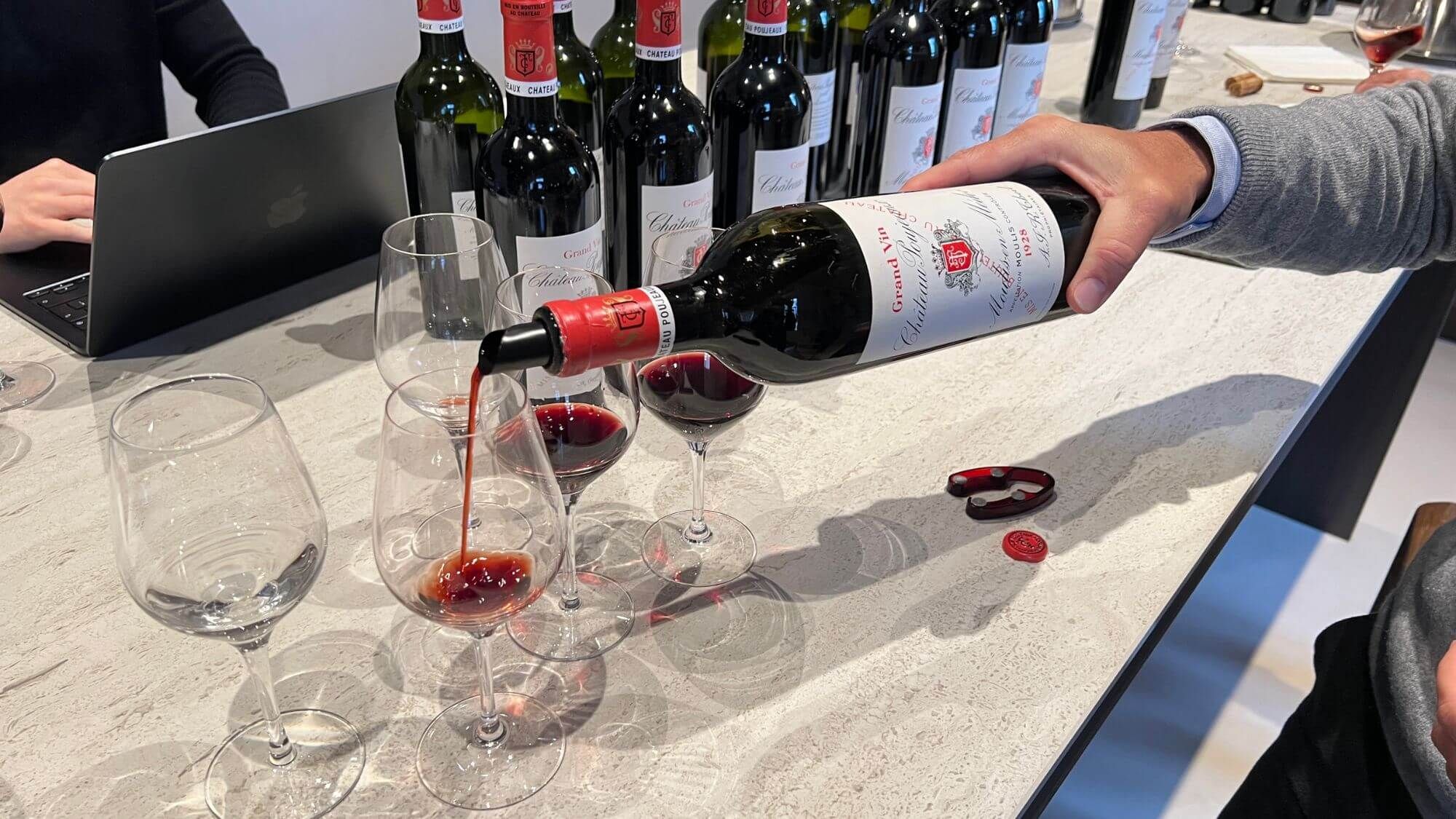
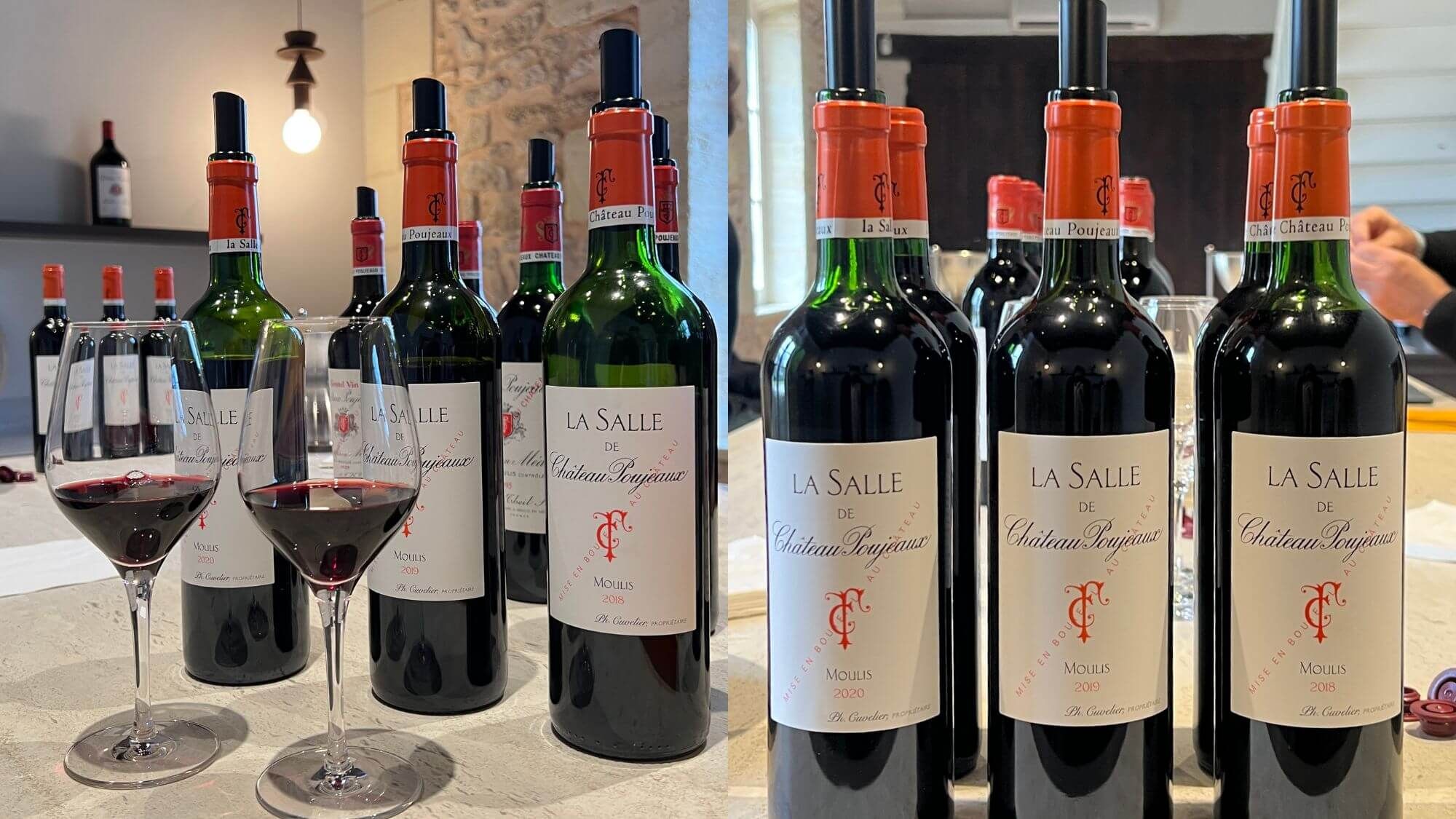
On the eastern side of the estate, near the forest, lie sandy parcels that ripen earlier and express a gentler profile (the blue-marked vineyards on the eastern side in the map). The Merlot from these plots is often used for the second wine, La Salle de Poujeaux.
Here, extraction is handled with greater delicacy, and the wine is aged entirely in used oak barrels. It does not seek to build a grand structure, nor does it emphasize long aging potential. Instead, its expression is more open, approachable, and immediately charming.
It is not a “simplified” version of Château Poujeaux. The Médoc backbone is still present, only rendered in a softer, more relaxed manner.
I tasted three vintages on this occasion, with the 2020 standing out in particular.
Before closing, I can finally share the little anecdote hinted at in the title. It is said that during an official dinner hosted by French President Georges Pompidou, Baron de Rothschild of Château Lafite was among the guests. When the wine was served, the Baron assumed he was drinking the 1953 Lafite. The president replied, “This is not Lafite, the real Lafite is still in the decanter.” When the sommelier revealed the bottle as Château Poujeaux, the guests were visibly surprised.
So what gives this estate the confidence to sit at the same table as classified growths? Well… the president chose it, after all.
On that note, Château Poujeaux is an estate that believes in the long term, delivering steady quality with remarkable accessibility. If you have the chance, do give it a try, especially recent vintages such as 2019, 2022, and 2023.
That wraps up this vertical tasting.
Cheers!