AMA Vertical Tasting
Clos Apalta
(1999-2023)
Over the years, whenever I have needed a top-quality Carménère blend for a course or tasting, Clos Apalta has almost always been my first choice.
Anyone who knows Carménère, especially those familiar with Chilean wine, will know that this is not an easy grape to handle. Pick it too early, and those green, bell-pepper notes can become very pronounced. Pick it too late, and it can easily become overripe, tasting almost like chocolate left melting in the sun. Yet Clos Apalta, with Carménère at the heart of its blend, rarely gives me either impression. It rarely shows unpleasant greenness, and even when the alcohol reaches 15%, the wine seldom shows any obvious heat. For a wine obsessive like me, that was more than enough to send my curiosity through the roof! I had wanted to do a proper vertical of Clos Apalta for a long time, simply to understand why they manage Carménère so well.
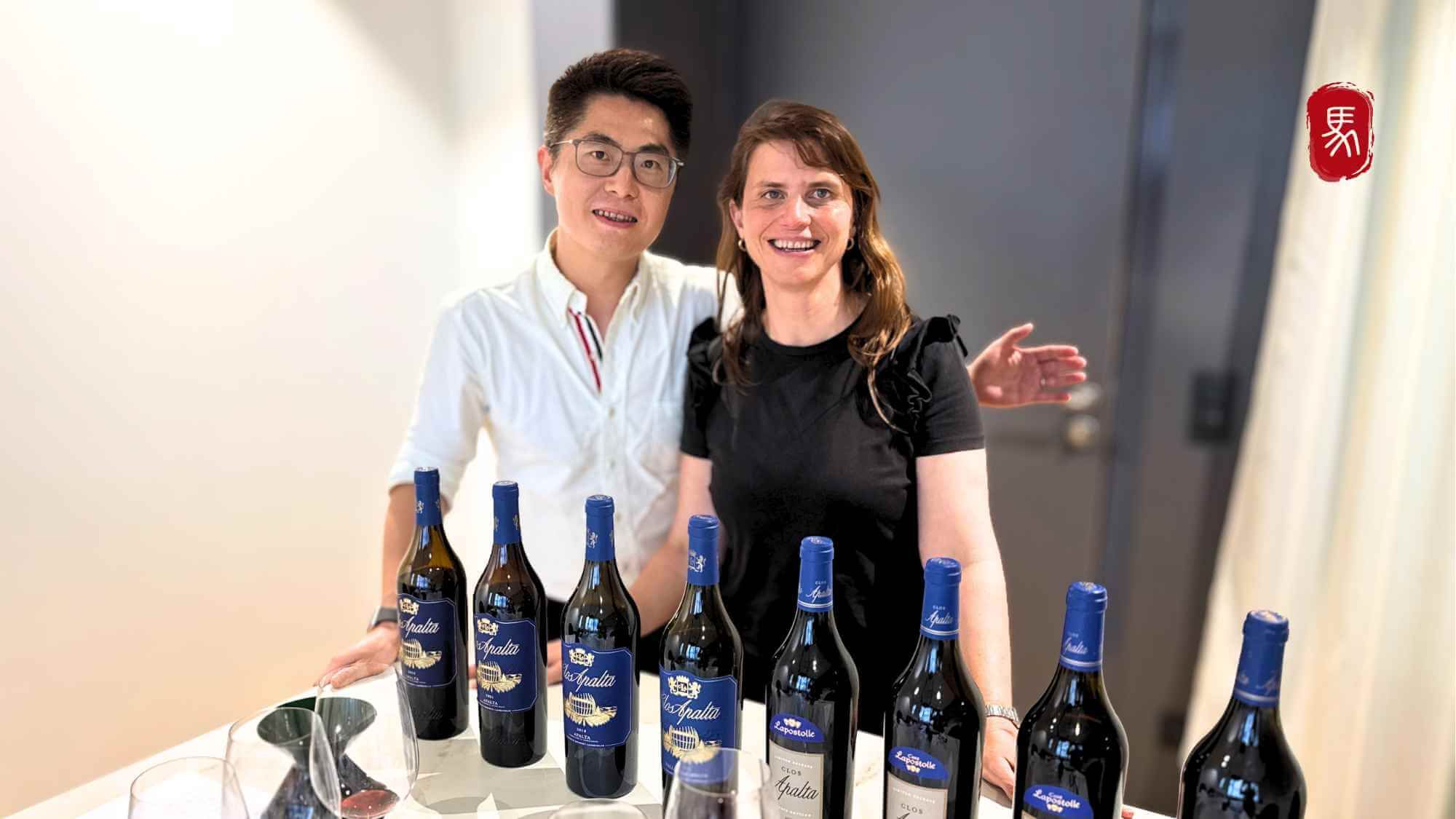
This March, during the Chengdu Food & Drinks Fair, I was invited by my dear friend Hillary to a Clos Apalta vertical tasting dinner.
We had a great evening, with plenty of mature vintages in the lineup. But as you know, a dinner is hardly the ideal setting for a professional wine critic to really get to work. So that evening, I went straight to the owner, Charles-Henri de Bournet, and suggested that we needed to organise a proper vertical tasting.
I did not expect it to happen quite so soon. 🙂
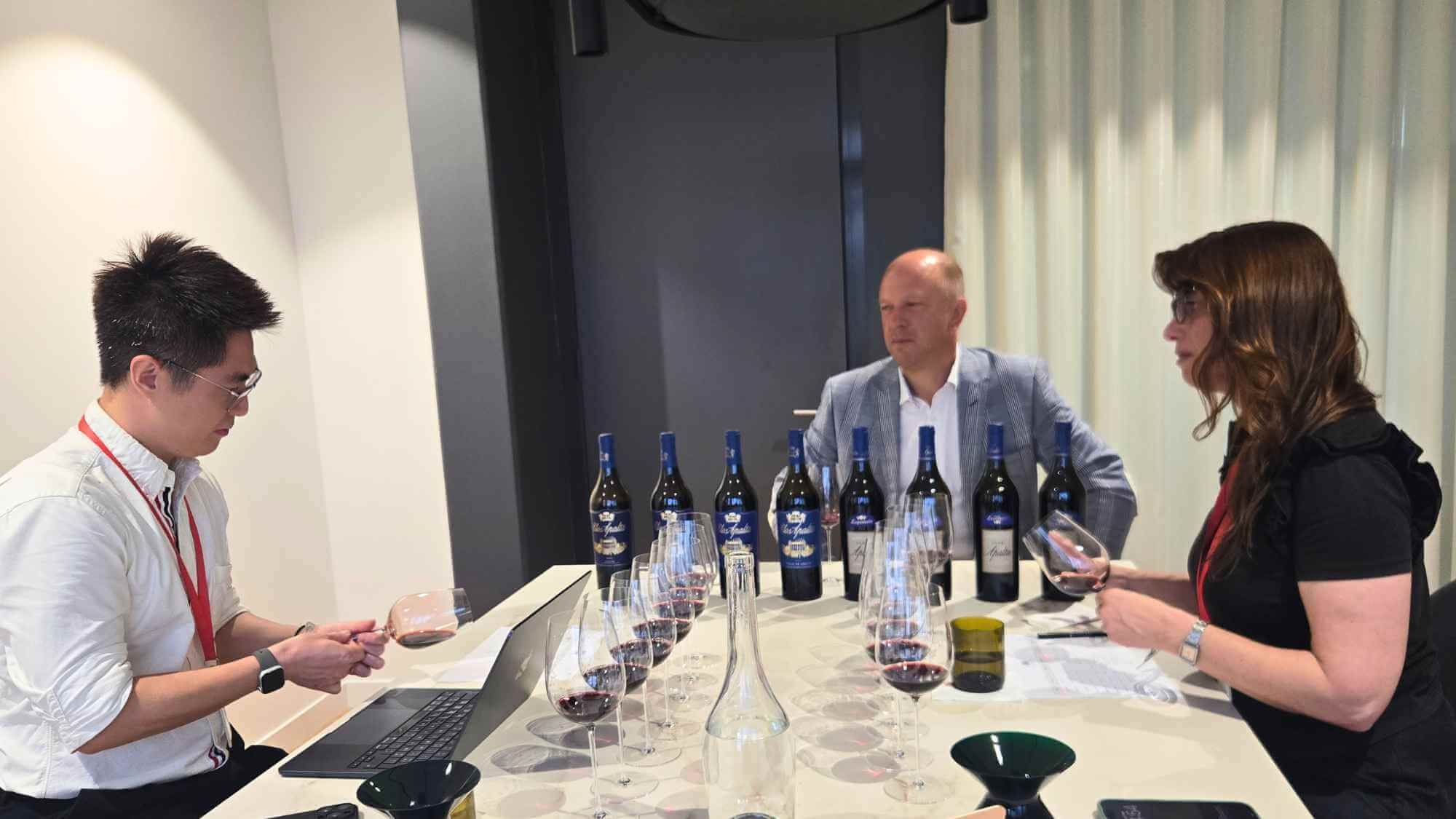
At the end of August, after returning to Bordeaux from China, Clos Apalta became my very first tasting.
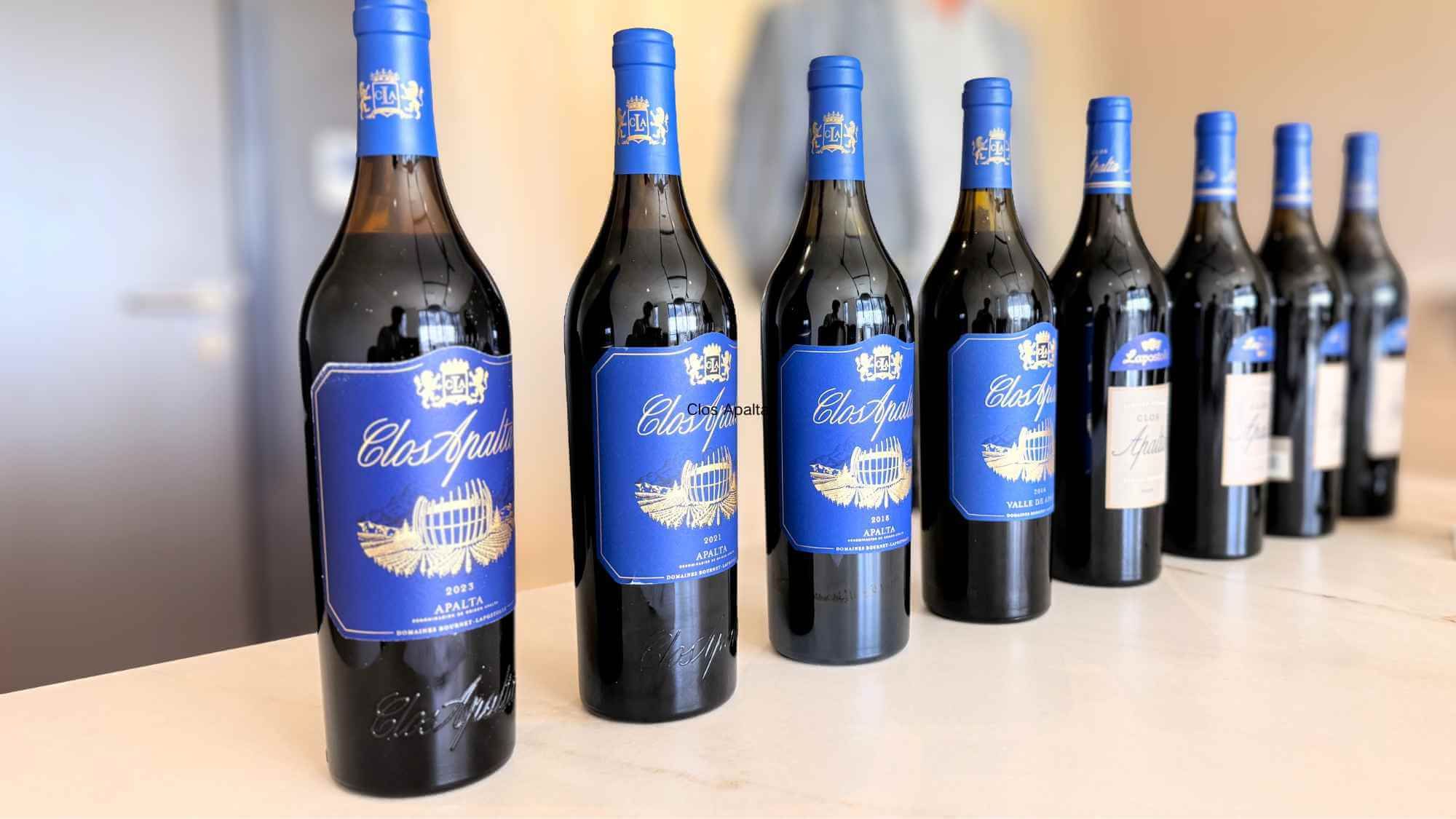
The moment I walked in and saw eight vintages lined up across the table, including the soon-to-be-released 2023 and 1999, only the second vintage in the estate’s history, I have to admit I was more than a little excited.
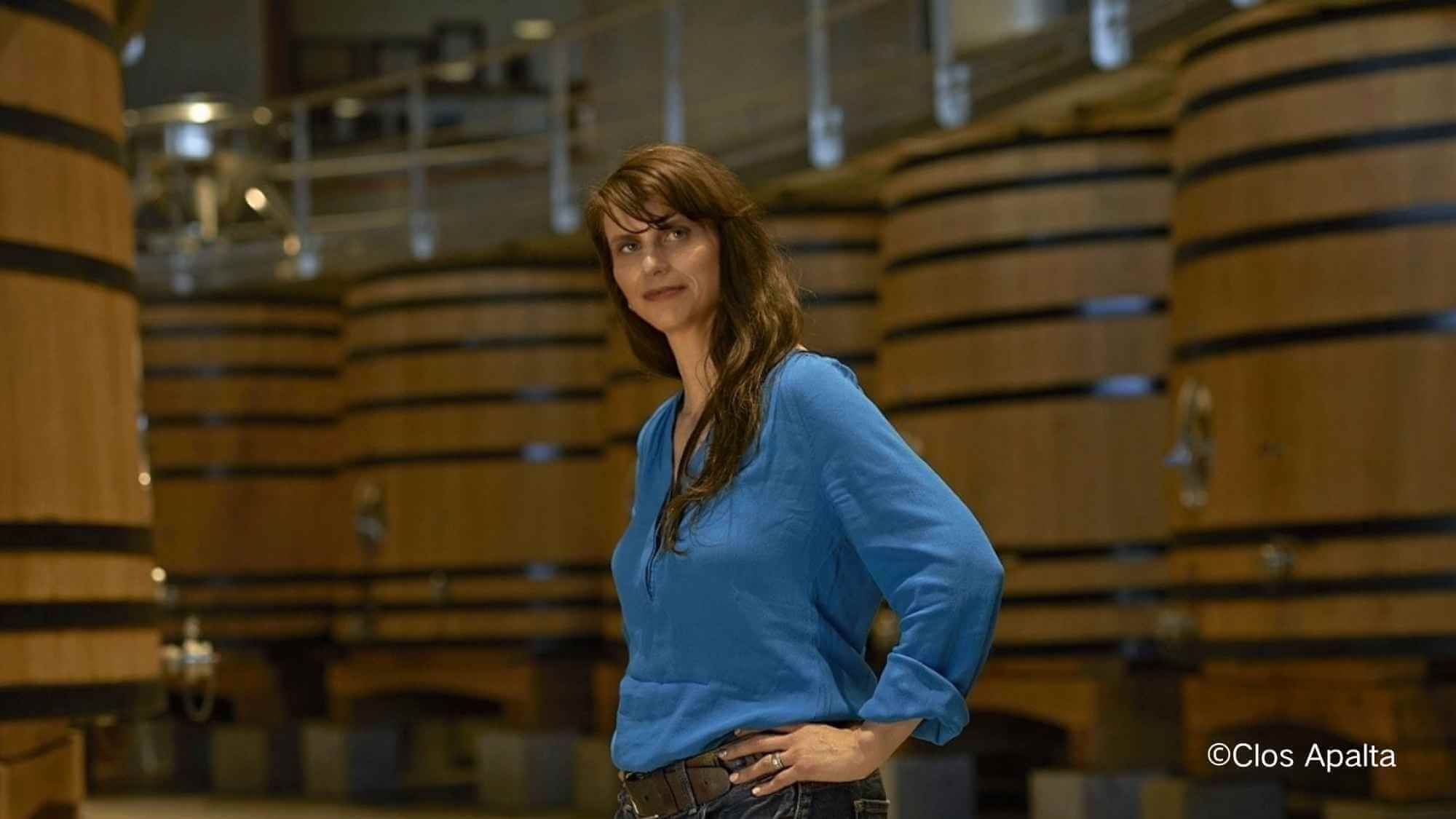
With winemaker Andrea, the conversation moved from old vines to hillside vineyards, from Carménère to water management, and then from fermentation temperatures all the way to changes in oak ageing. Before I knew it, we had tasted and talked until the team at CVBG was almost ready to call it a day.
I came away from this tasting with a great deal to think about. So let’s begin with what these eight vintages revealed.
__________
AMA SNAPSHOT of Clos Apalta
1. Carménère is the undisputed star, yet it almost never shows any unpleasant greenness.
2. The alcohol is genuinely high, but Clos Apalta always seems to find a clever way of hiding the heat.
3. For me, 2005 was the vintage when Clos Apalta truly began to show what it was capable of.
It was not just a clear step forward in ripeness, structure and complexity. The new gravity-flow winery also played an important role.
4. The aromas are generous, but never overly exuberant.
Many Chilean wines like to push their abundance of ripe aromas straight to the foreground. Clos Apalta, however, knows how to maintain a certain distance even while expressing full ripeness. For me, this sense of restraint is precisely one of the qualities that gives the wine its sophistication.
5. A clear step forward in refinement after 2018.
The most obvious change is extraction. The structure no longer feels as forceful, while the tannins and body have become increasingly seamless. The power is still there; it is simply expressed with greater maturity and finesse.
6. Choose carefully in cool, rainy El Niño vintages.
Cooler, later-ripening El Niño years such as 2002 and 2016 can noticeably limit Clos Apalta’s aromatic expression, so these vintages require a little more care when choosing.
7. Want to know what early Clos Apalta tasted like? Try the 1999.
Extreme drought, low yields and high concentration, combined with the unapologetic use of new oak typical of that era, give the wine a very distinctive imprint of its time.
8. 2023 points towards a new direction for the future.
This hot, dry vintage showed me another possibility for Clos Apalta in the face of global warming. There is no shortage of ripe black fruit or concentration, yet the wine still retains clear acidity and freshness.
A French Spirits Family Making Wine in Chile?
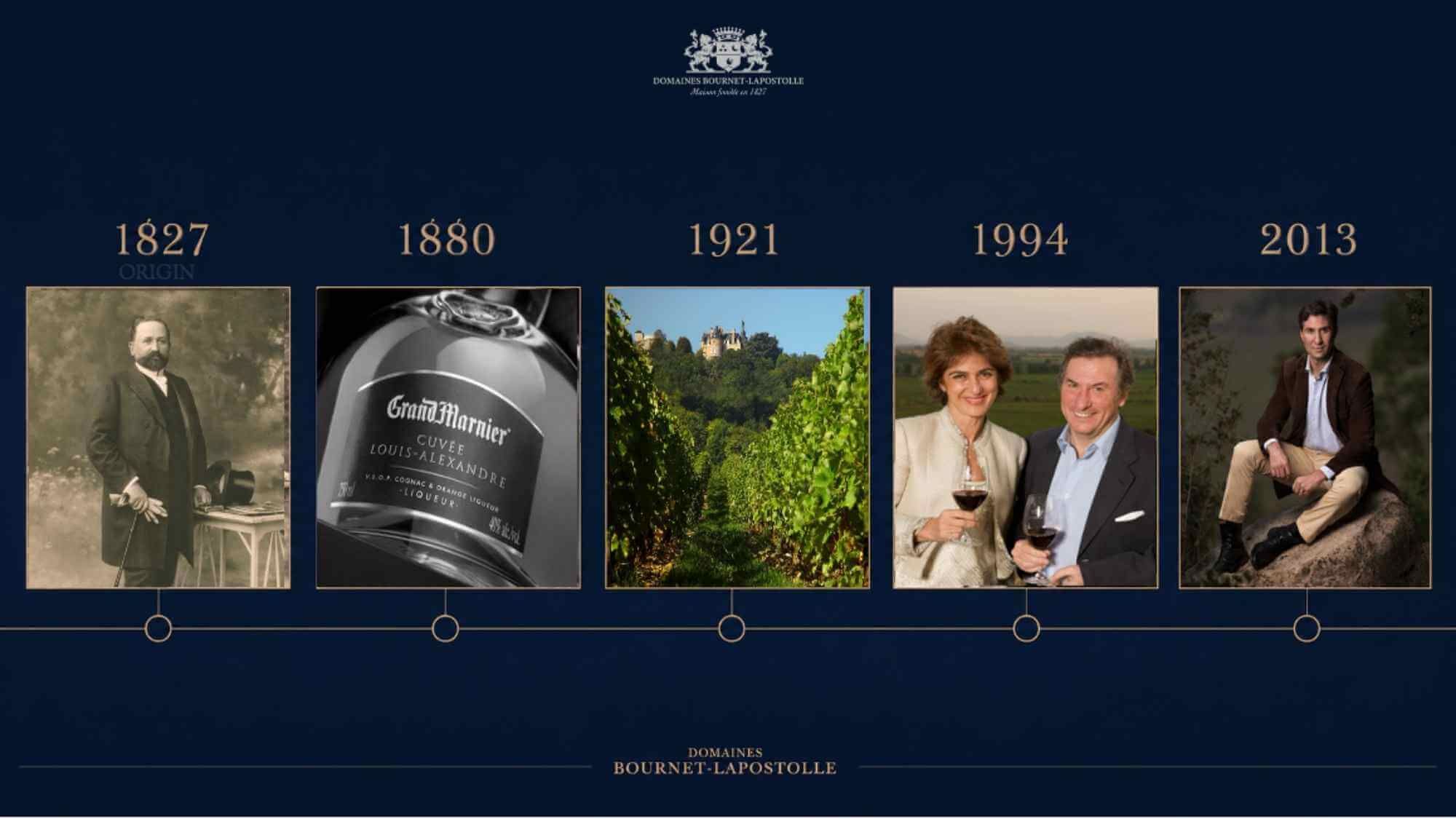
The Marnier-Lapostolle family behind Clos Apalta was also the family behind the once hugely popular Grand Marnier.
In 1880, Louis-Alexandre Marnier Lapostolle combined Cognac with bitter orange to create the French liqueur that would later become famous around the world. For many of my friends in China, Grand Marnier may not be an especially familiar name. But if you used to spend much time in nightclubs, this bottle will probably look pretty familiar. 🙂
In 1994, Louis-Alexandre’s great-granddaughter, Alexandra Marnier Lapostolle, travelled to Chile with her husband, Cyril de Bournet.
From the very beginning, their goal was to find a place in Chile truly capable of producing world-class wine.
In the early years, the team followed an approach that was quite typical in Chile at the time: sourcing the most suitable grapes from different sub-regions and bringing them together in the final blend. But as they continued their work, they gradually realised that Apalta itself might be the closest thing to their vision of a world-class Chilean wine.
The Apalta valley is not particularly large, yet the diversity within it is remarkable. Differences in altitude, exposure, soils, sunlight and ripening times intersect across the valley, creating an exceptionally varied mosaic of terroirs.
Gradually, the estate’s focus began to shift. Instead of searching across different regions for the right grapes, they put down roots in Apalta, working parcel by parcel to understand the secrets of this valley and its terroir.
40 Hectares of Old Franc de Pied Vines
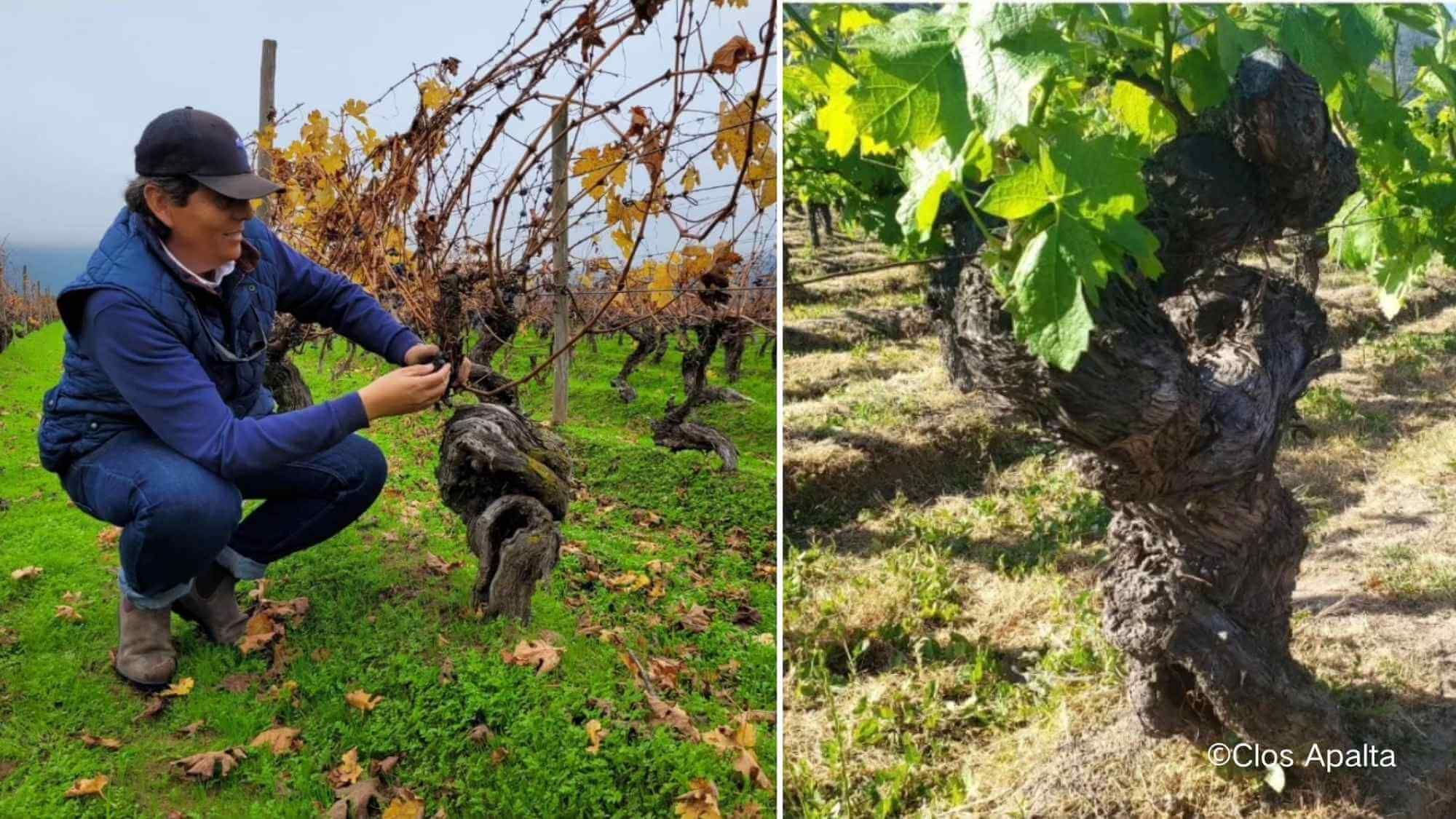
There was another very important reason why the Marnier-Lapostolle family was drawn to this place: its exceptionally old vines.
The oldest vineyards here were planted around 1915 to 1920, with origins that can be traced even further back to vines brought from France to Chile in the late 19th century. Even more remarkably, around 40 hectares remain *franc de pied* to this day, with an average vine age of approximately 80 years.
Just think about that: one estate with 40 hectares of “franc de pied” vines averaging around 80 years old.
I actually stopped writing for a moment to think about it. Looking around the world, I’m not sure it would be easy to find another example quite like this.
Why Did Apalta Become a D.O. of Its Own?
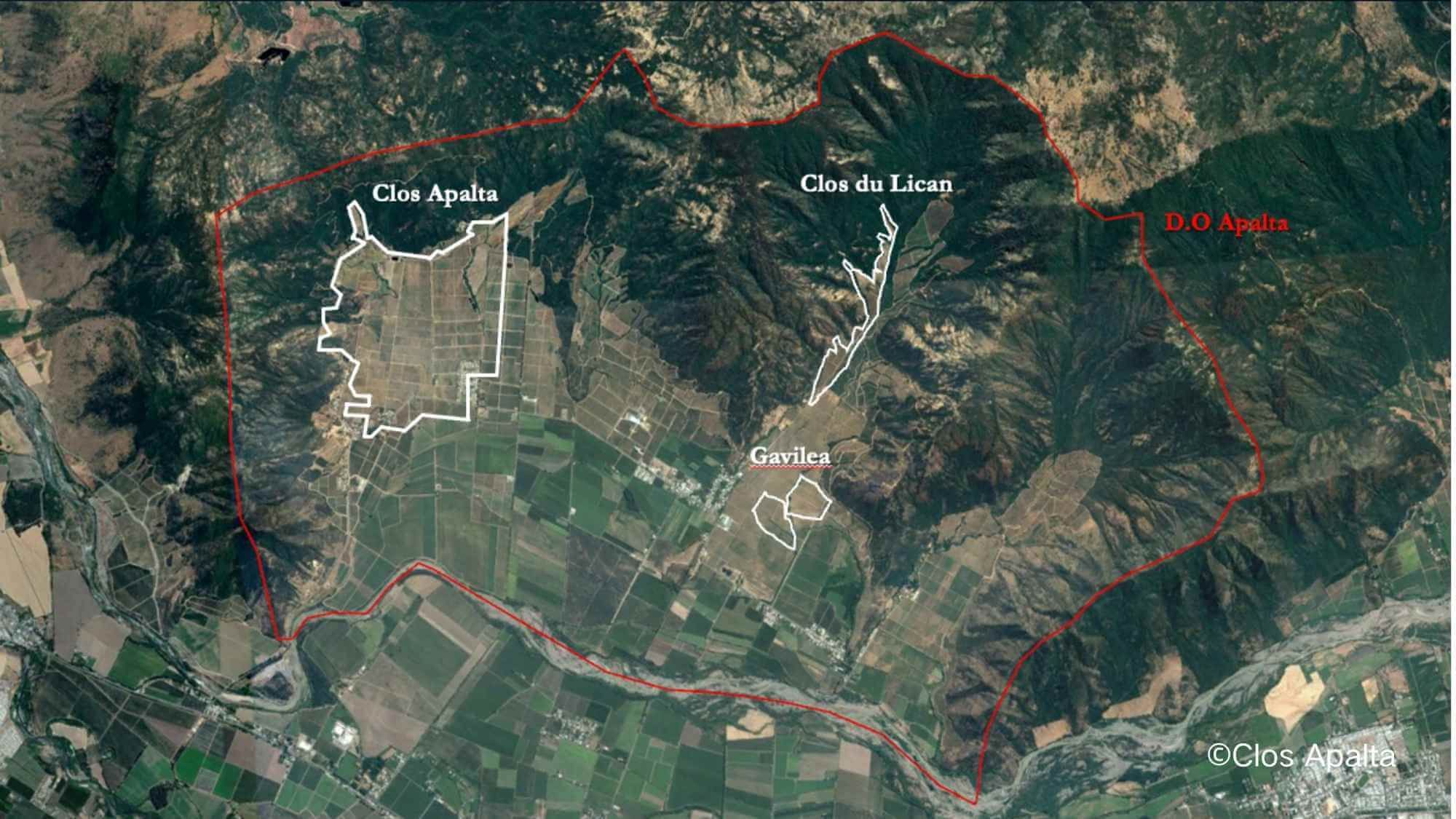
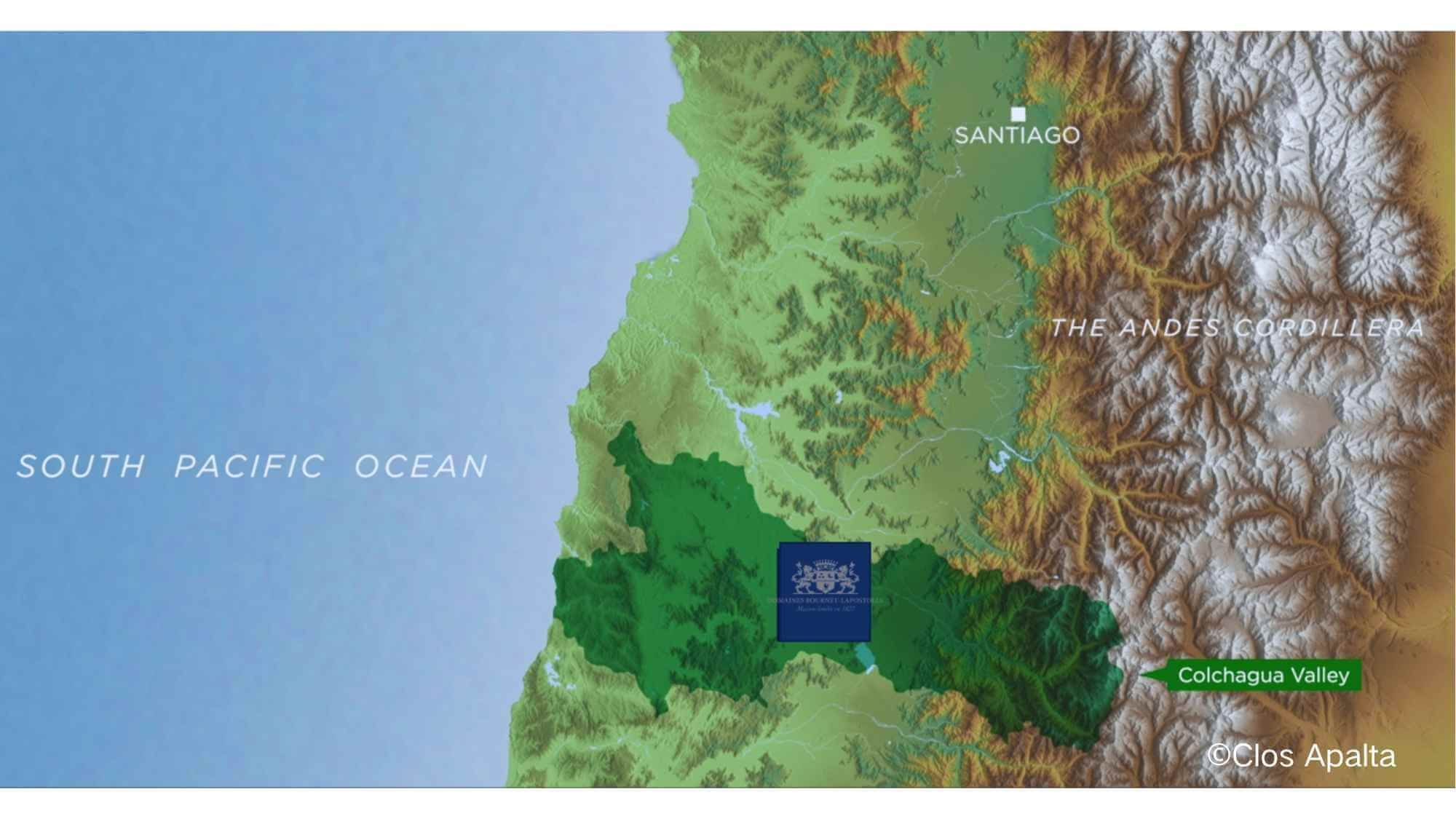
In 2018, Apalta was further distinguished from the Colchagua Valley and officially recognised as a D.O. in its own right: D.O. Apalta.
The entire appellation covers only around 800 hectares, of which Lapostolle owns approximately 200 hectares of vineyards. In addition to Clos Apalta, the family also has two separate projects here, Clos du Lican and Gavilán.
So why was such a relatively small area able to become an appellation of its own?
Let’s start with the microclimate.
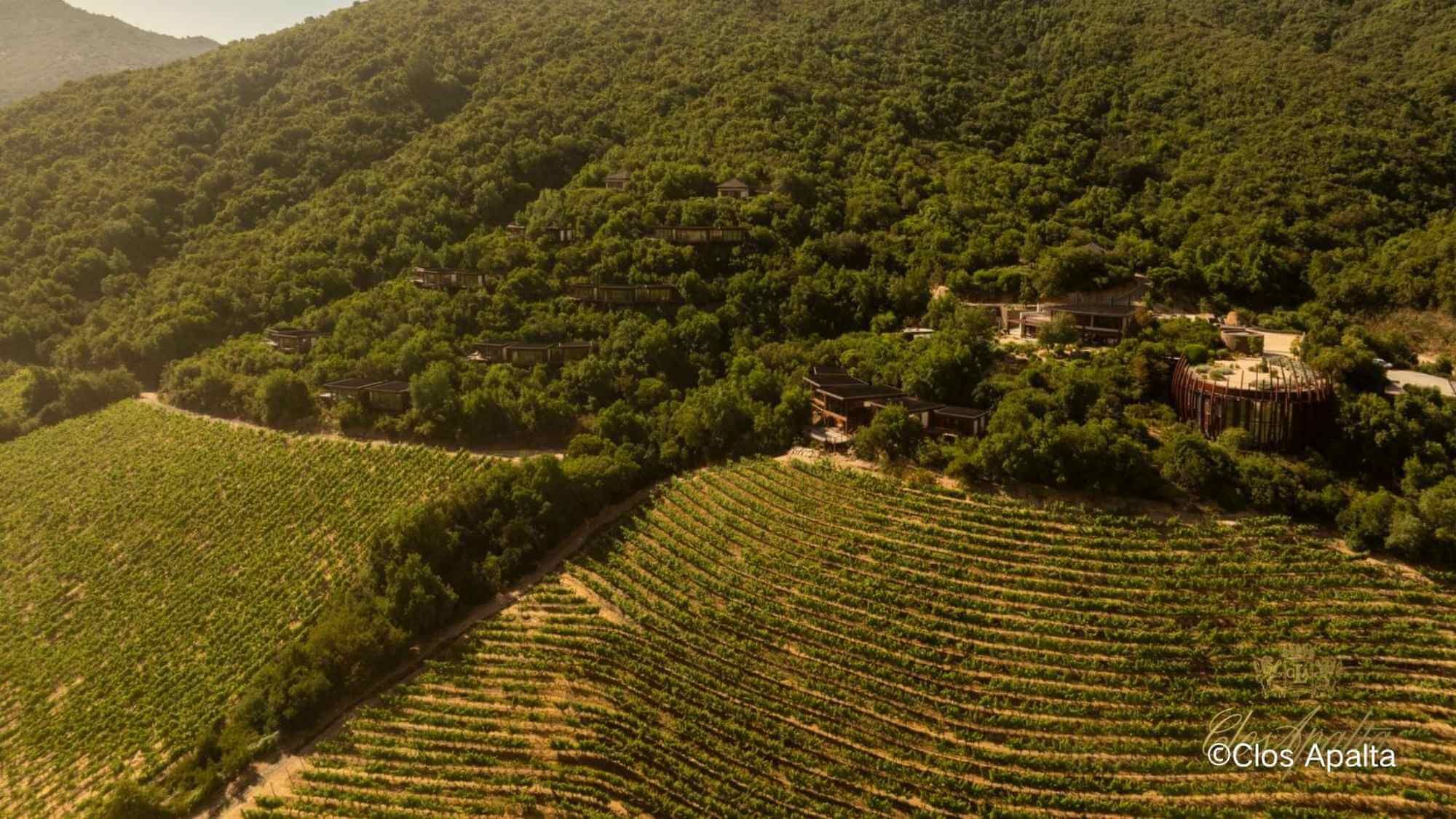
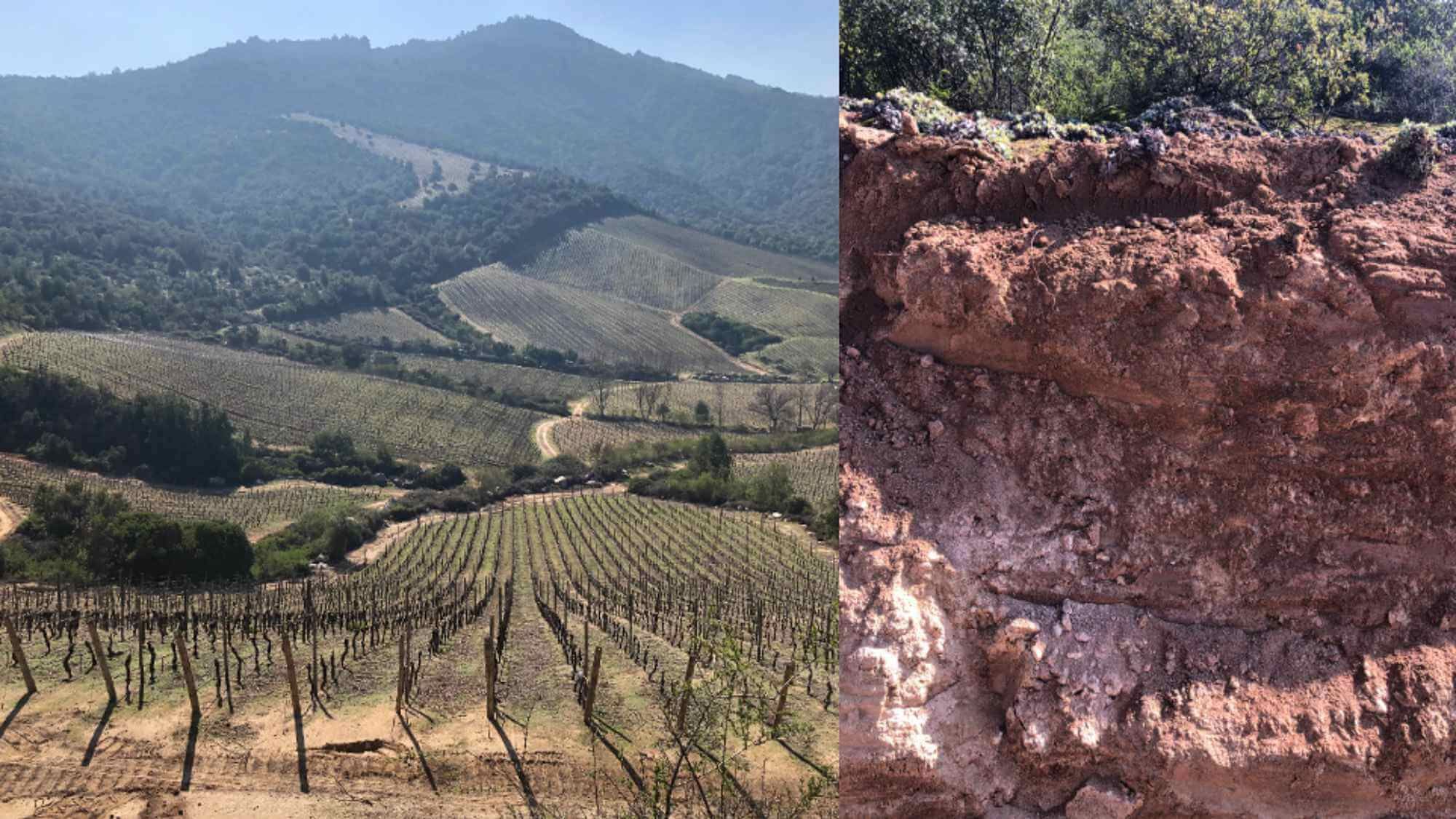
The Clos Apalta vineyards sit at the entrance to the Apalta Valley, with more than 60 hectares spreading across the hillsides like a natural amphitheatre. One particularly unusual feature is that most of these slopes face southeast. And remember, we are in the Southern Hemisphere. A southeast-facing slope receives less intense and less prolonged direct sunlight. In a country like Chile, where sunshine is already abundant, being on the cooler side of the slope can actually be an advantage. The grapes still receive enough warmth to ripen fully, but they are not exposed to relentless sunshine from morning until evening. In the afternoon especially, the surrounding hills gradually shield the vineyards from the strongest western sun, reducing the risk of sunburn and dehydration during the hottest part of the day.
Then there is altitude.
Clos Apalta’s vineyards lie between approximately 200 and 375 metres above sea level. Once differences in altitude, exposure and topography are combined, the pace of ripening can vary enormously. Andrea told me that within the same estate, some parcels can already be harvested by mid-March, while others have to wait until the end of April. That is a difference of almost a month and a half.
The Tinguiririca River at the foot of the hills, together with the natural protection provided by the foothills of the Andes, further helps to moderate the growing conditions.
So Apalta is not quite as hot as we might imagine a Chilean wine region to be. What makes it special is that within an environment where overall ripeness is naturally high, differences in exposure, altitude and topography create a remarkably wide range of ripening rhythms.
For the winemaker, this means that within a single valley, it is possible to harvest grapes with very different aromatic profiles, levels of acidity, structures and textures. For an estate whose identity is built around blending, that is a tremendous advantage.
More Than Just Granite
Whenever I used to think of Clos Apalta, the first thing that came to mind was granite. But after sitting down and talking properly with Andrea, I realised the story was far more complex than that.
Across Clos Apalta, around 15 different soil types can be identified. Looking at the soil map, they can broadly be divided into two groups: soils formed from weathered granite bedrock on the hillsides, and alluvial soils deposited by the river on the gentler land below in the valley.
But once you look more closely, the variations multiply.
Some areas have darker, slightly deeper soils formed from weathered granite; elsewhere, the soils are extremely shallow, with clay mixed into the granite.
Some parcels contain high levels of quartz, while others are characterised by colluvial soils formed through the long-term erosion and accumulation of material from the surrounding hillsides.
Clos Apalta, then, is more like a mosaic of many small and distinct terroirs. Add in all the variations in microclimate mentioned earlier, and you can probably imagine just how many cards the winemaker has to play when it finally comes time to sit down at the blending table.
Why Has Charles-Henri Been So Focused on the Vineyard Since Taking Over?
At the dinner in Chengdu earlier this year, I asked Charles-Henri a question: after taking over the family business in 2013, what did he personally most want to bring to Clos Apalta?
I had expected him to talk about winemaking. Instead, almost everything he spoke about came back to the vineyard.
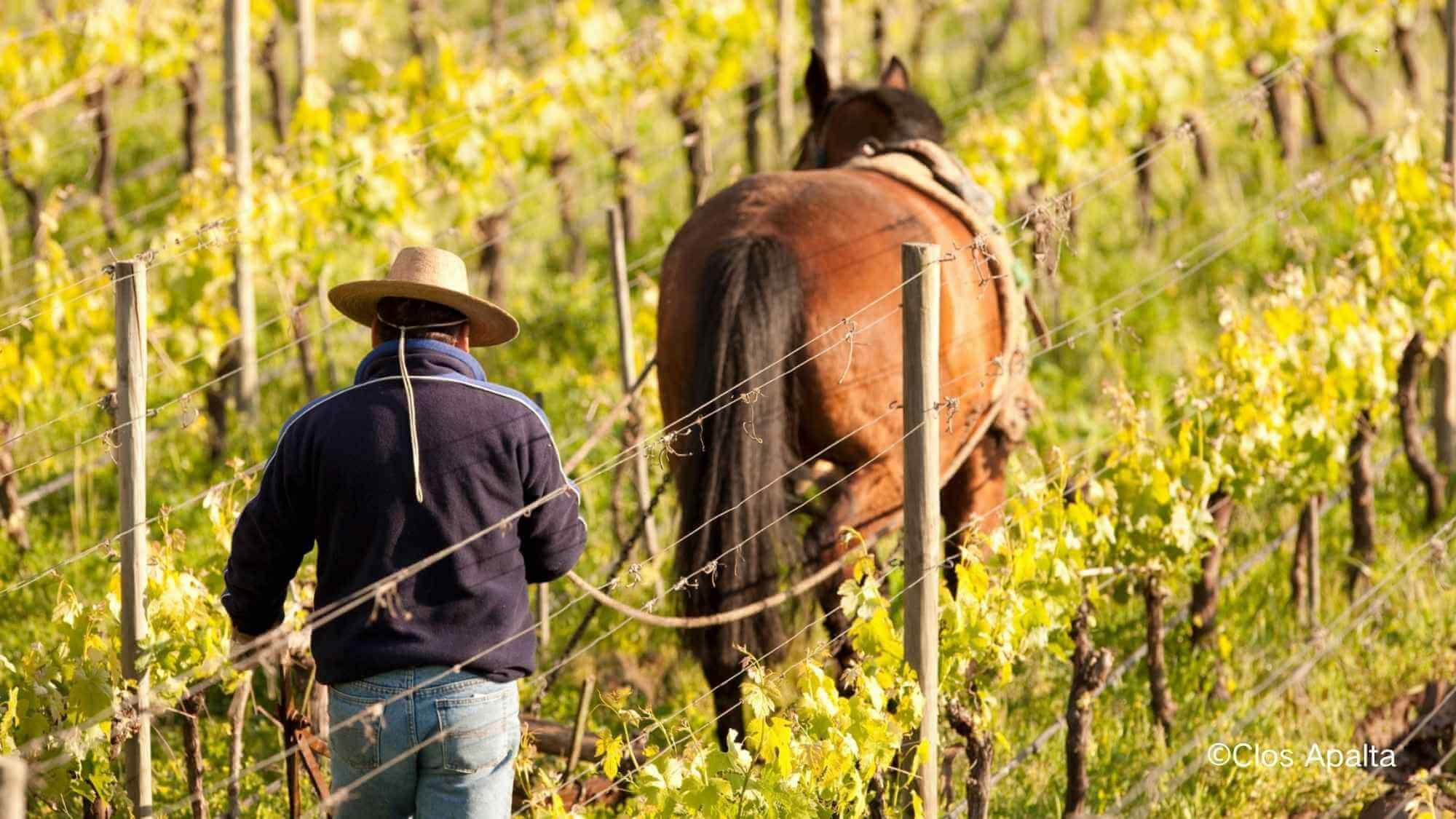
From organic farming and making their own compost to using cover crops to improve soil structure, and even preserving the large areas of native vegetation surrounding the estate, many of the ideas shared by Charles and winemaker Andrea ultimately serve the same purpose: how to keep this vineyard healthy and full of life for the long term.
Today, they face another challenge that is becoming increasingly real: water.
From late October through to March the following year, Clos Apalta often receives almost no rain throughout the growing season, which means a reliable source of water for irrigation is essential. In the past, the estate could count on relatively consistent snowfall in the Andes and the resulting snowmelt. But as the climate changes, water management is becoming increasingly important.
Andrea told me that the estate now combines soil-moisture sensors, satellite imagery, drones and spectral maps of vine growth to determine how individual parcels should be irrigated. Using water more efficiently will undoubtedly be one of the key priorities for the future.
Carménère, a “Beautiful Mistake”
Finally, we came to the part that interested me most. Many of you will have heard the story of how Carménère was once mistakenly identified as Merlot in Chile. Yet today, it has become the backbone of the Clos Apalta blend.
In most vintages, Carménère accounts for more than 50% of the blend, sometimes even reaching 70% to 80%. But there was one thing I had always wondered about: Carménère is already a very late-ripening variety, so why does Clos Apalta plant it higher up on the slopes?
Andrea’s answer was straightforward: because they are not looking for riper Carménère, but more elegant Carménère.
She explained that Carménère grown at the foot of the hills produces larger berries, with more pronounced ripe black-fruit flavours such as plum and black cherry. The wines are full-bodied and supple, making this fruit an important part of the Clos Apalta blend. But Clos Apalta could never be made entirely from these grapes.
Up on the poorer granite slopes, vine vigour is naturally restricted and the berries become smaller. Spice, floral notes and acidity begin to stand out more clearly, giving the wines a noticeably fresher and more vibrant character. This is where Clos Apalta finds its backbone and its essence.
Andrea added that today, the estate no longer thinks of Carménère simply as “one grape variety”. Carménère grown at different altitudes, on different exposures and soils, develops its own personality, with each expression playing a different role in the final blend.
I could not agree more.
The Vintage When Clos Apalta Truly Came Into Its Own: 2005
Tasting through the vintages from 1999 onward, one thing stood out very clearly to me: from 2005, Clos Apalta suddenly seemed to move up a level. Ripeness, structure, complexity and the overall harmony of the wine all showed a clear step forward.
For me, 2005 marks a major turning point in the history of Clos Apalta.
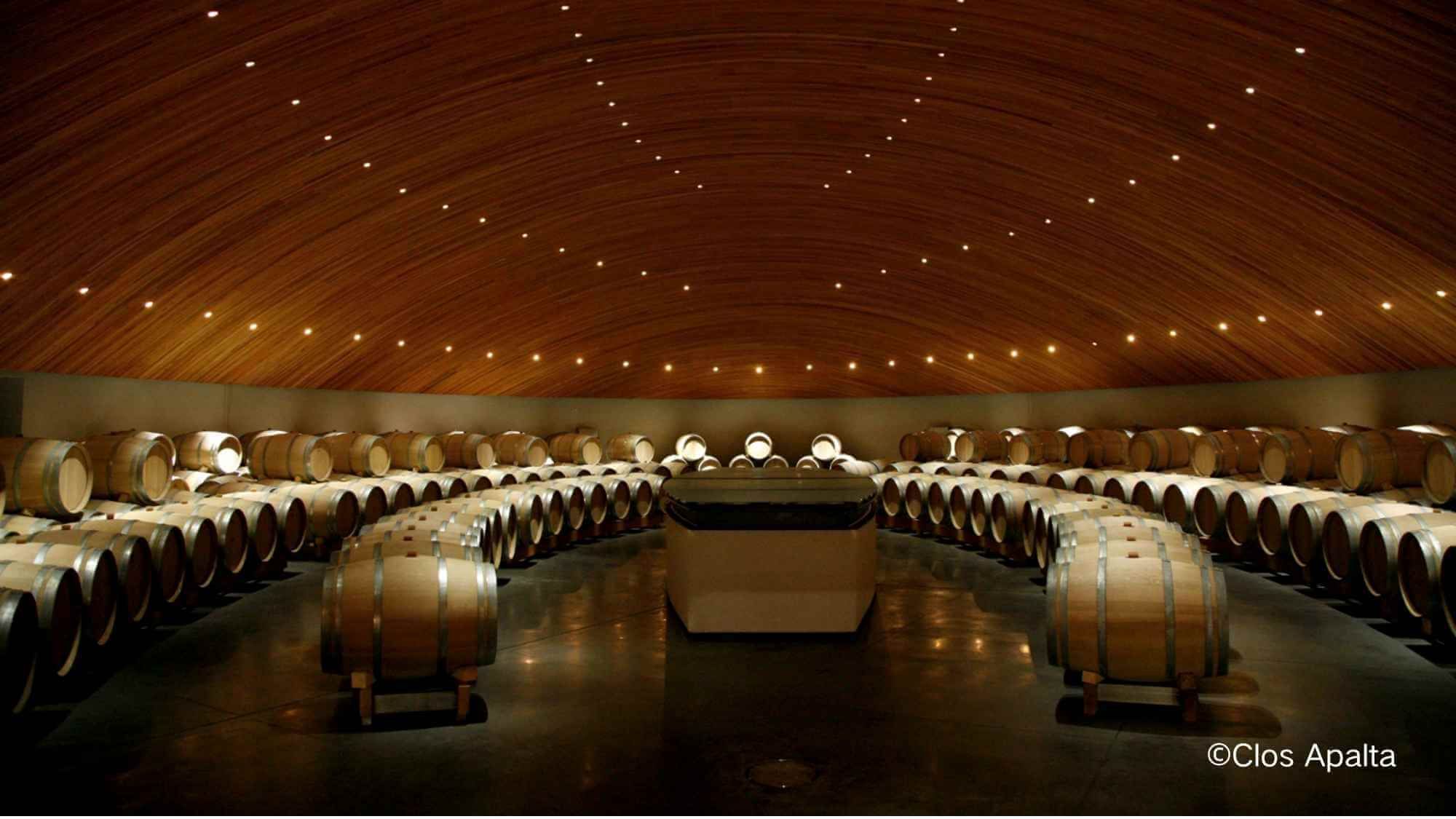
I later learned that 2005 was also the first vintage made in Clos Apalta’s new winery. Built over seven levels and designed entirely around natural gravity, the new facility finally allowed the team to separate an increasingly complex patchwork of vineyard parcels and handle each one with greater precision, while reducing unnecessary mechanical handling and excessive extraction.
From this point onward, more of the nuances they had discovered in the vineyard began to come through in the wine.
2023: A New Direction for the Future of Clos Apalta
2023 was one of the hottest vintages Clos Apalta has experienced in the past decade. Drought, high temperatures and noticeably smaller berries gave the wine plenty of concentration and structure from the outset.
And yet, just when I thought I was about to face a “little monster”, the wine surprised me with an unexpected sense of clarity. The ripe black fruit and concentration were all there, but the acidity remained bright, while the alcohol actually dropped from the usual 15% to 14.5%. Both extraction and oak were handled with remarkable restraint, leaving hardly any unnecessary trace on the wine.
According to Andrea, the team made a series of adjustments in 2023, from harvest decisions and extraction through to the final blend. Most strikingly, the proportion of Cabernet Sauvignon rose to 40% for the first time, compared with the usual level of less than 20%. In other words, this was a vintage in which Cabernet Sauvignon played a much more prominent role.
For me, 2023 showed that Clos Apalta can remain true to its own style even as the future grows increasingly warm. More importantly, it gave me a real sense of this winemaking team’s judgement and ability to adapt in the face of climate change.
As I reached the end of this article, I felt I had finally shared everything this tasting had taught me about Clos Apalta.
And just as I was about to bring this article to a close, I suddenly remembered a passage from the estate’s official materials that I had come across the day before:
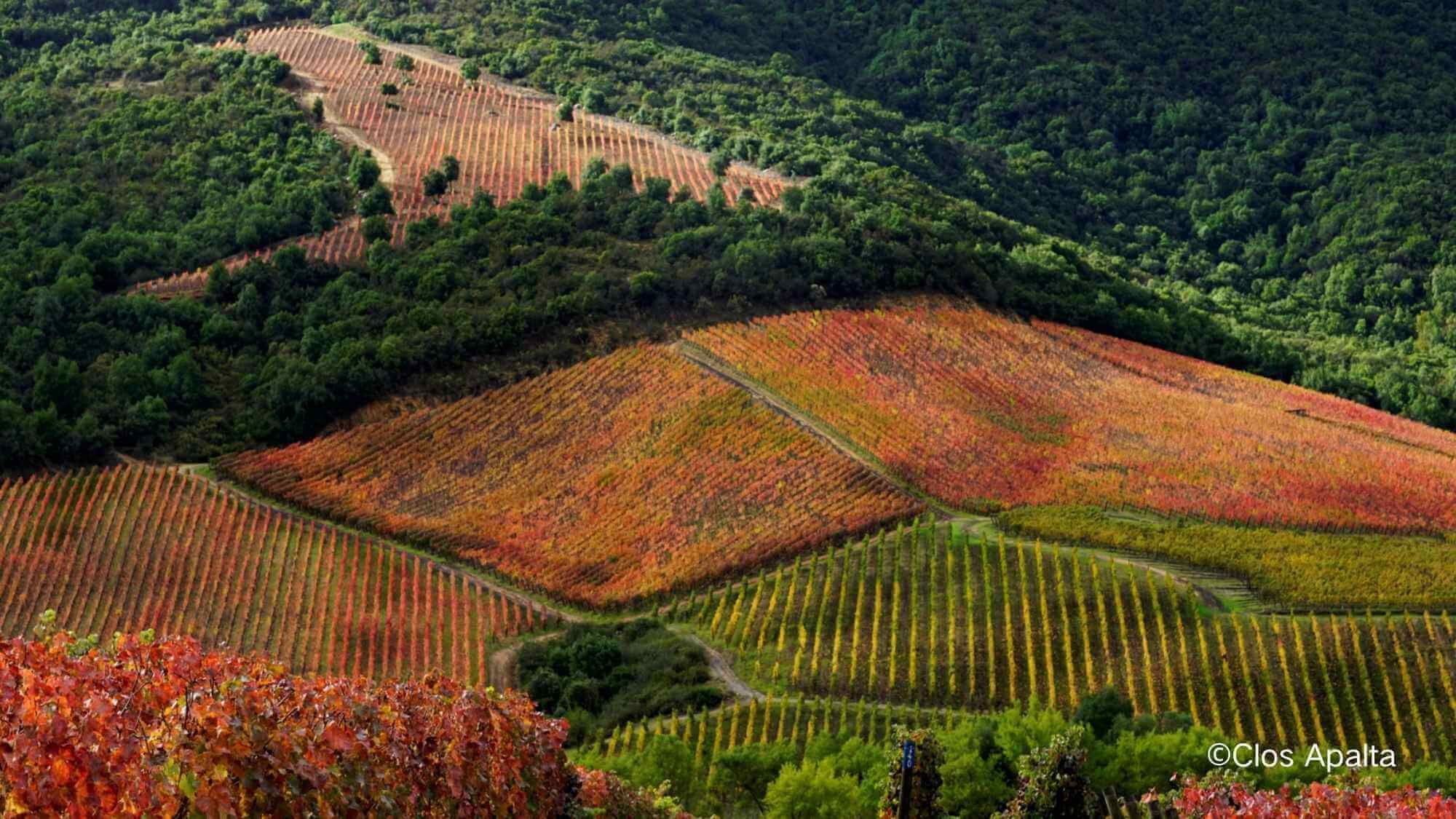
Autumn rain washes away the dust of summer.
The Merlot turns golden, while Carménère takes on shades of crimson.
The scent of wild thyme and rosemary drifts through the air.
In the distance, the Andes rise beneath their eternal snow, as condors glide across the open sky.
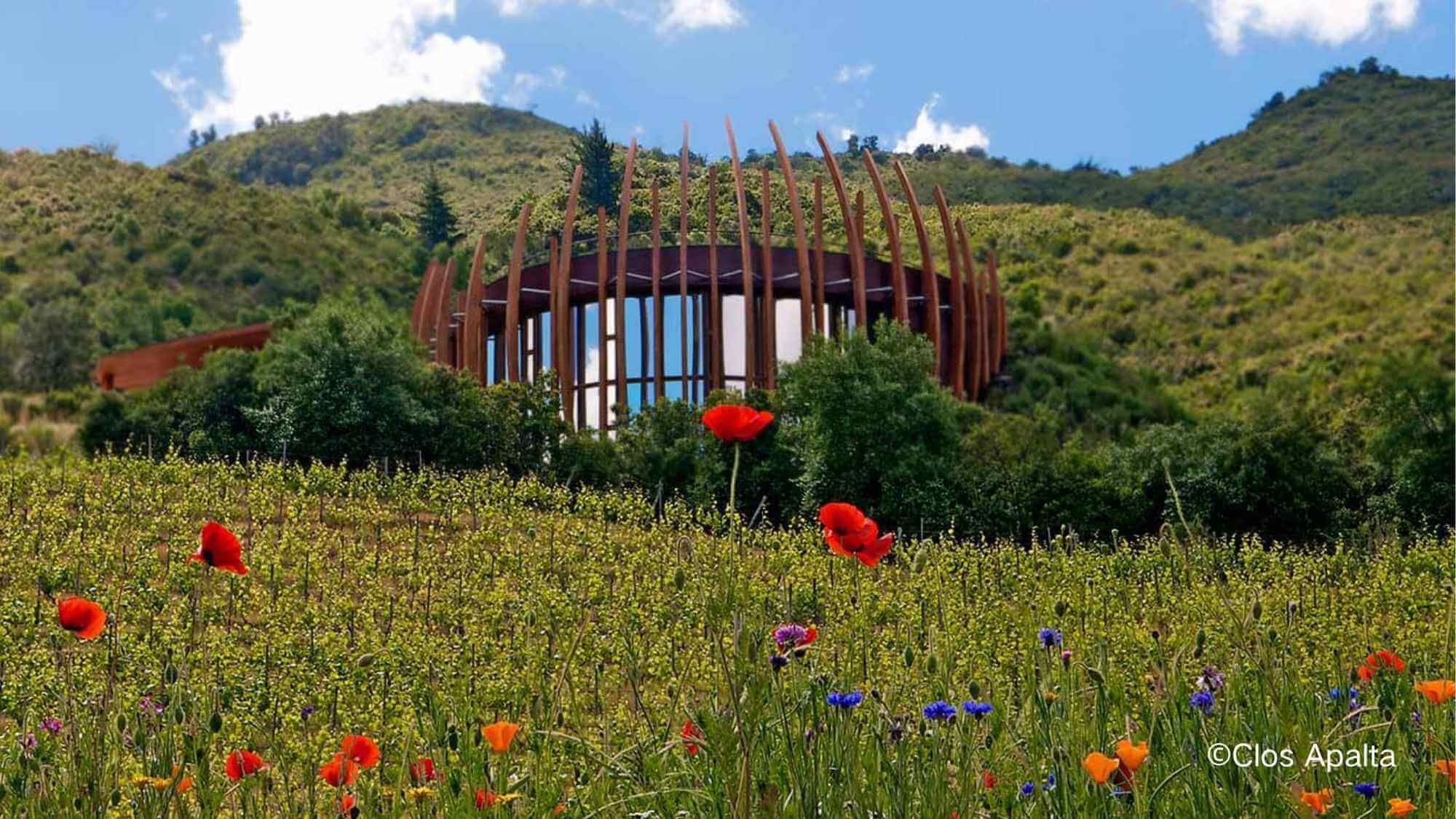
Then the sun slips behind the mountains and silence settles over the valley. From the deep blue of the night, the Milky Way slowly emerges, stretching across the sky above the winery.
Over the years, I have visited Clos Apalta many times through the wines in my glass. Yet I have never truly stood in that valley and seen Apalta in the harvest season with my own eyes.
I hope that one day, Phydiasse and I will stand together among the vines of Clos Apalta.
To see the valley after the autumn rain.
To see snow resting on the distant mountains, and the vine leaves turning red.
To watch the first few stars appear, one after another, until the Milky Way quietly spreads across the night sky of Apalta…
I look forward to that day.