AMA Vertical Tasting
Château Cheval Blanc-Le Petit Cheval-Le Blanc
(2019-2023)
The Spring Festival is just days away!
The Year of the Fire Horse (Bingwu) is approaching. At this moment when reflection and anticipation coexist, it feels especially fitting to share this article of “Cheval Blanc of Château Cheval Blanc.” 🤩
To create the white wine it envisioned, Château Cheval Blanc devoted a full ten years to the journey. Its success did not come from speed or explosive force, but from an unwavering belief in terroir, a steadfast commitment to direction, and a certain “foolishness”—the willingness to keep going and keep trying, even after repeated trial and error.
This, to me, is the spirit of the Horse Year: not about charging ahead at the front, but about the long-termism I believe in—after patience and persistence, success arrives naturally, in its own time.
In this era of profound change and uncertainty, I remind myself to stay optimistic. Because I firmly believe that only by moving steadily can one truly go far.
With the New Year just around the corner, I share this with you all.
May the Year of the Horse bring steady steps, long journeys, and, in the end, a resonant return.
I am quite familiar with the red wines of Château Cheval Blanc. But when it comes to the estate’s white wine, I must admit that I had never truly taken the time to explore it in depth. Then, June 2025, almost simultaneously, two importer friends independently reached out to ask me about Le Petit Cheval – Le Blanc. It was the first time I began to seriously consider a question that had never quite taken shape before: what would a top-tier white wine made by Chââteau Cheval Blanc actually look like?
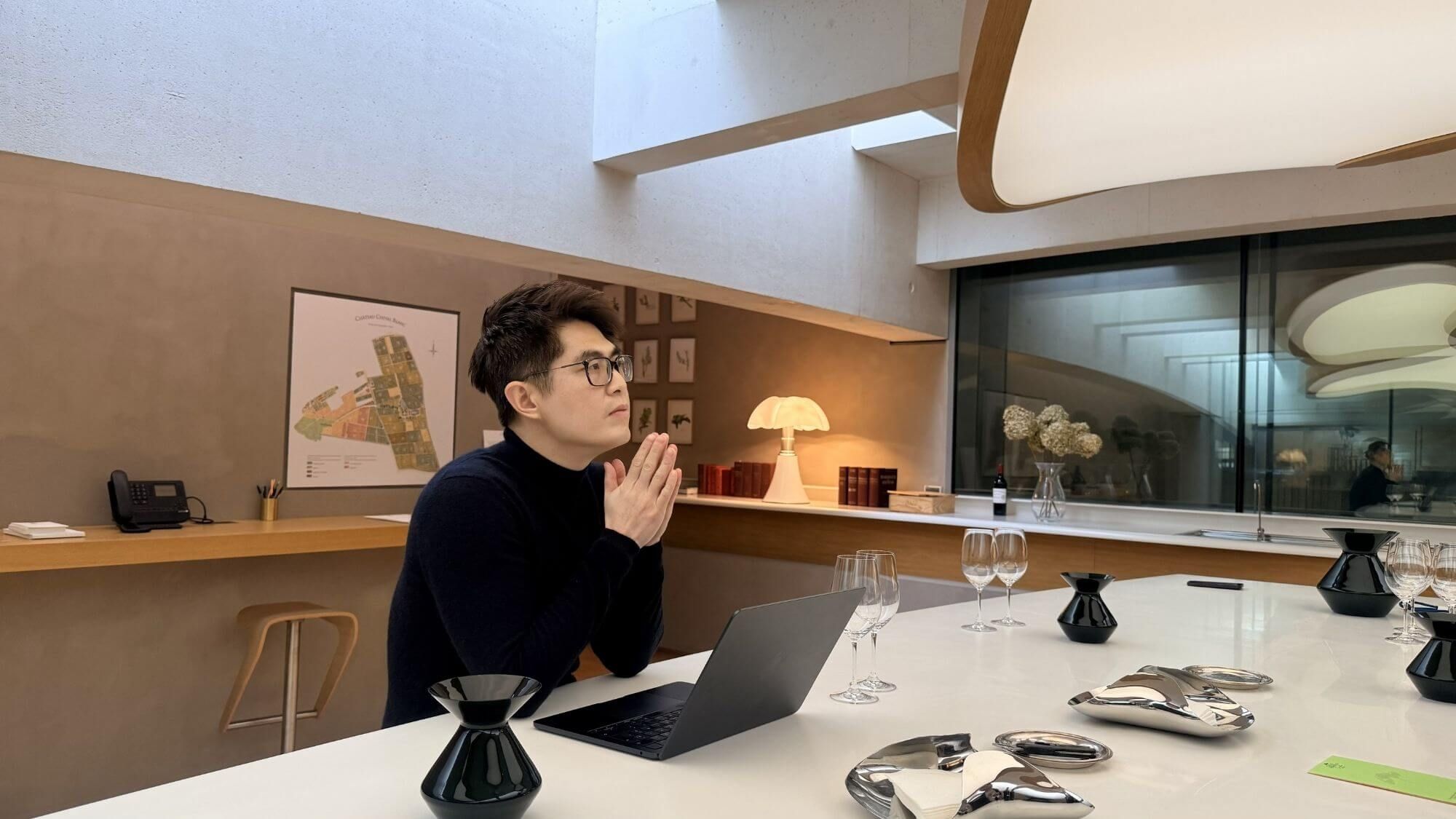
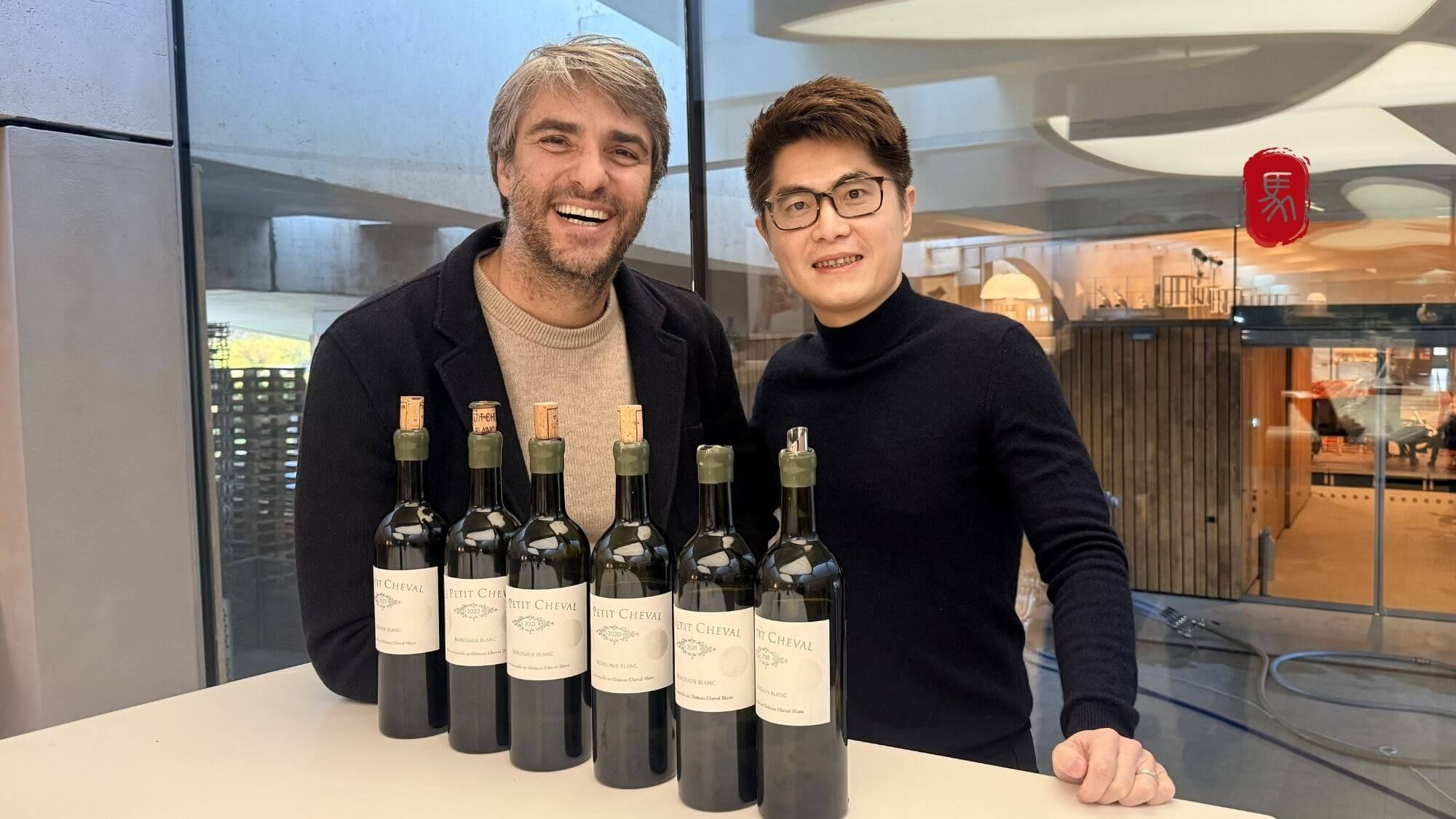
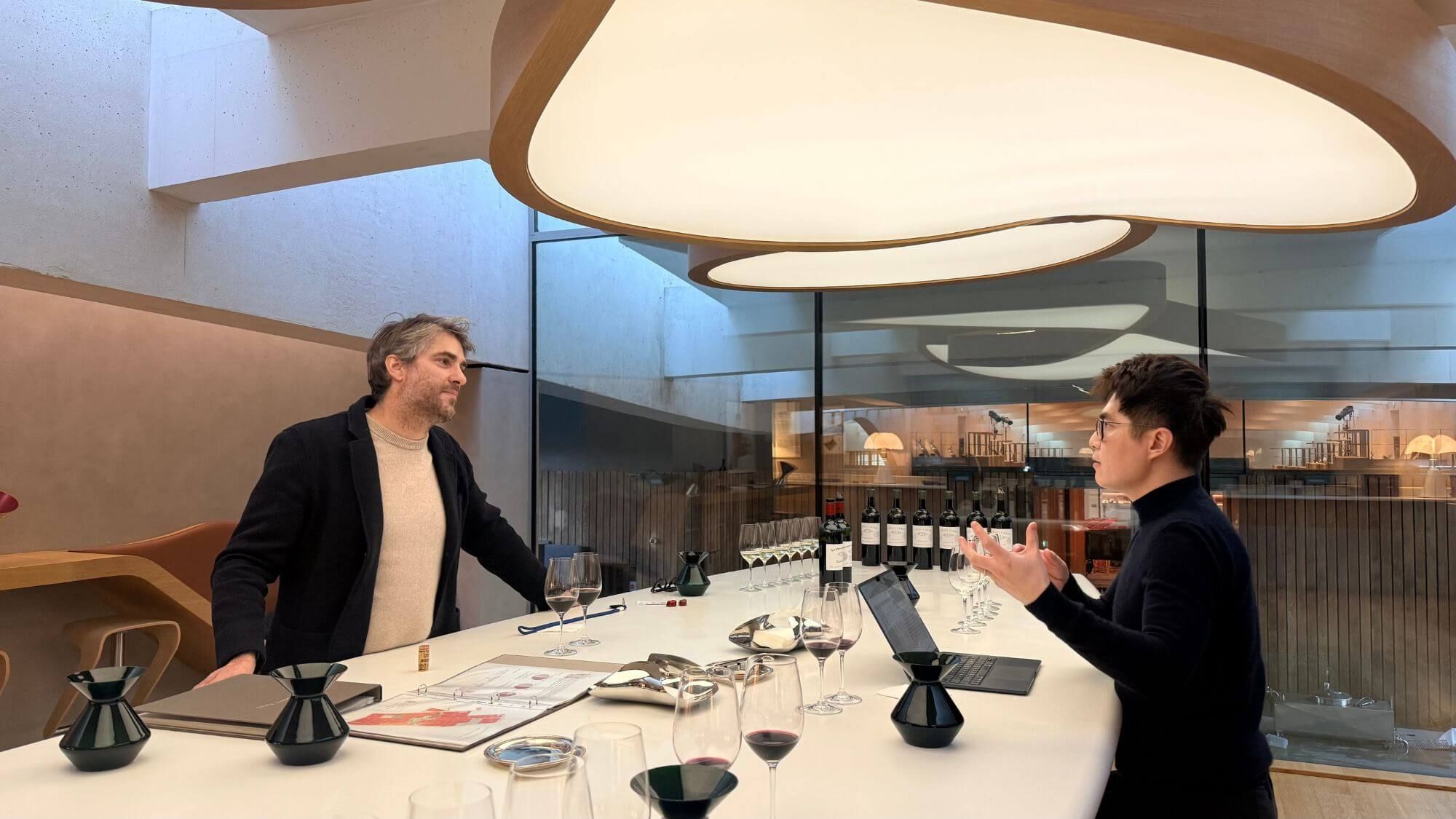
With that question in mind, I made a dedicated visit to the estate not long ago, where I joined Cheval Blanc’s General Manager, and a winemaker I have long admired, Pierre-Olivier Clouet, for a vertical tasting we had arranged two months earlier. What I initially expected to be a straightforward learning experience focused on Cheval Blanc’s white wine turned out to be something far more thought-provoking.
As the tasting unfolded, it repeatedly led me into deeper reflections, even extending to broader considerations about the future of white Bordeaux. In the following, I would like to share, step by step, the impressions and insights from this tasting, and I hope you will enjoy them.
AMA SNAPSHOT OF LE PETIT CHEVAL-LE BLANC
As usual, let me begin with the most immediate impressions from the vertical tasting itself:
1. Remarkably slow colour evolution
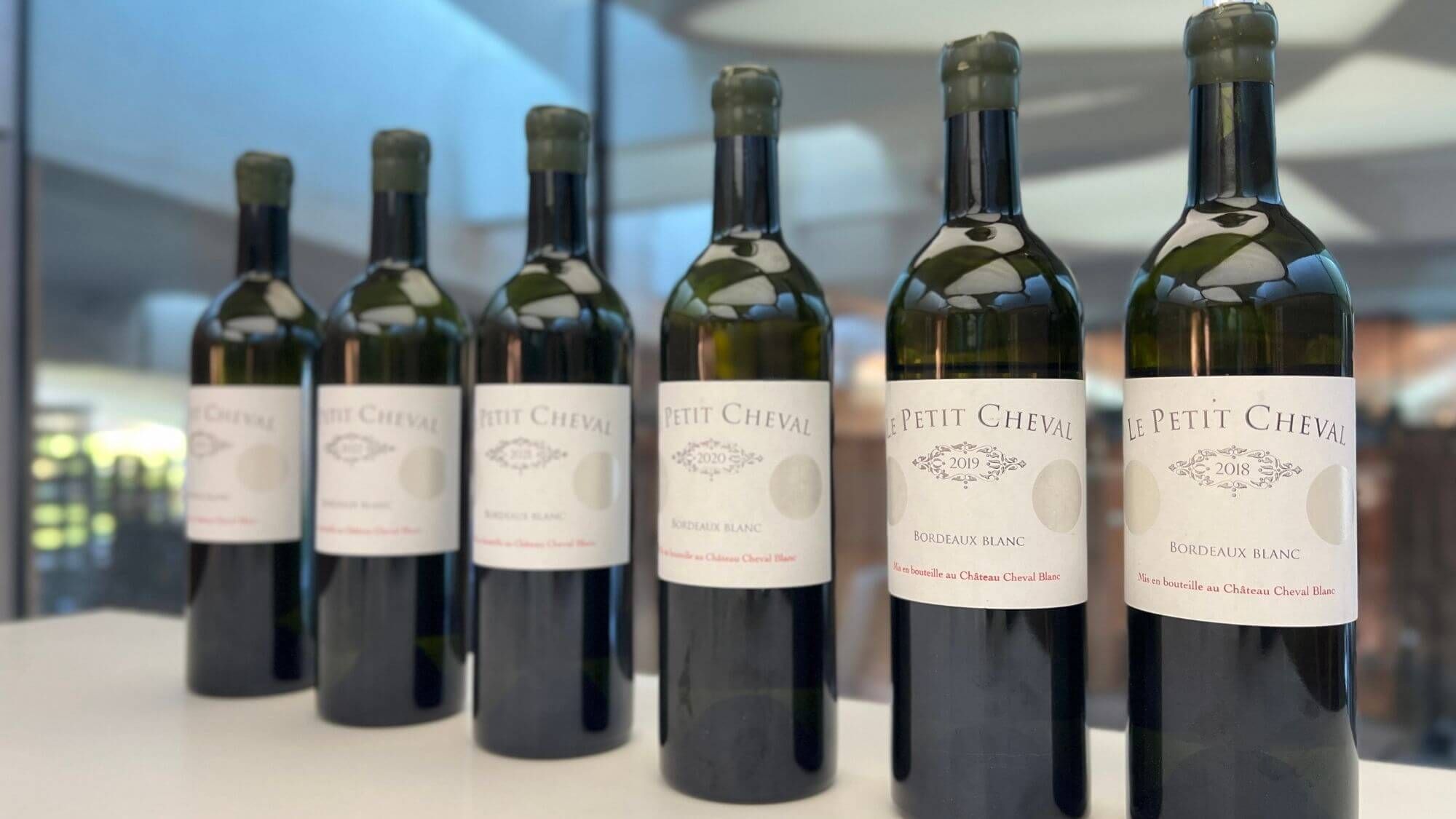
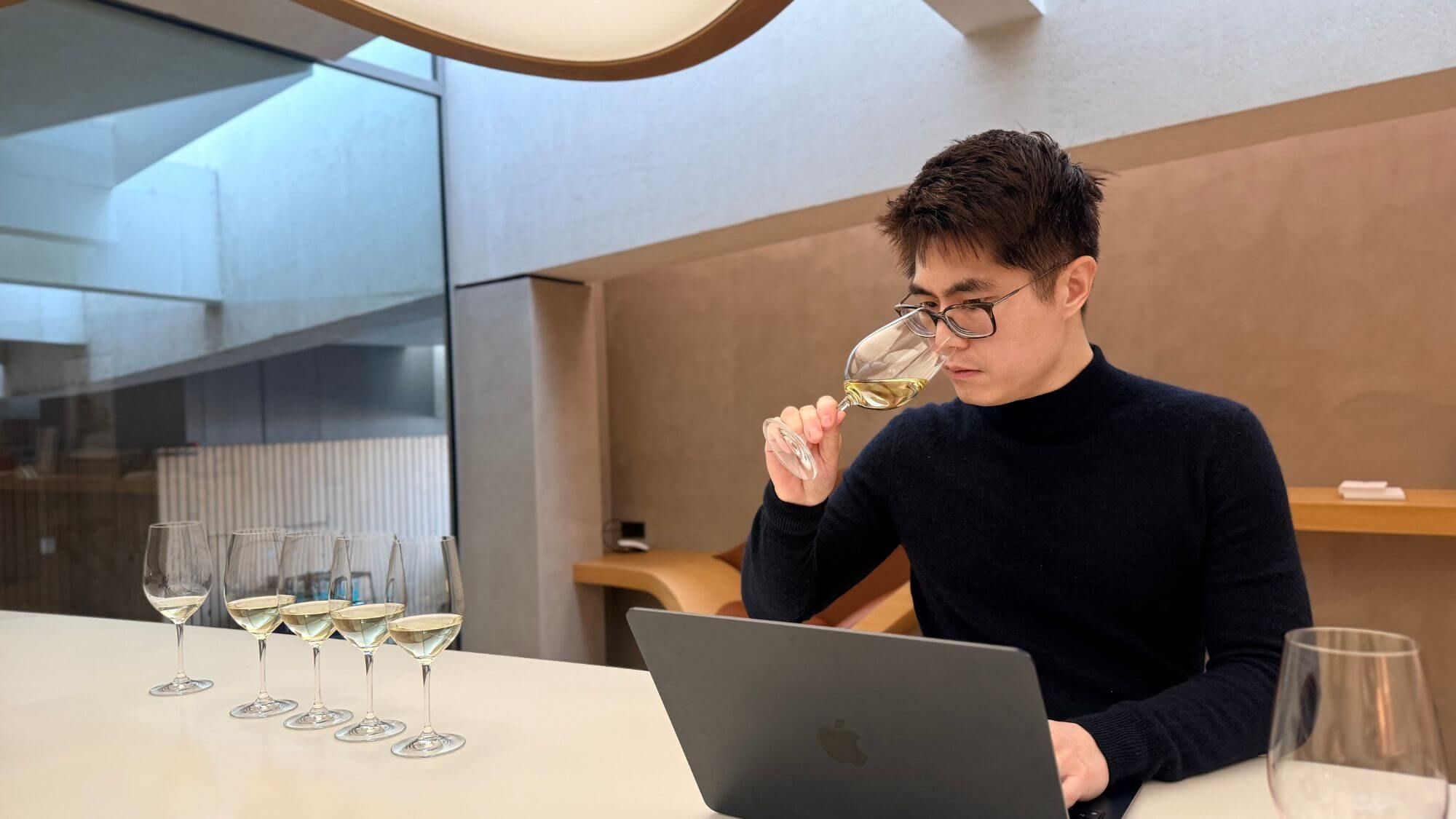
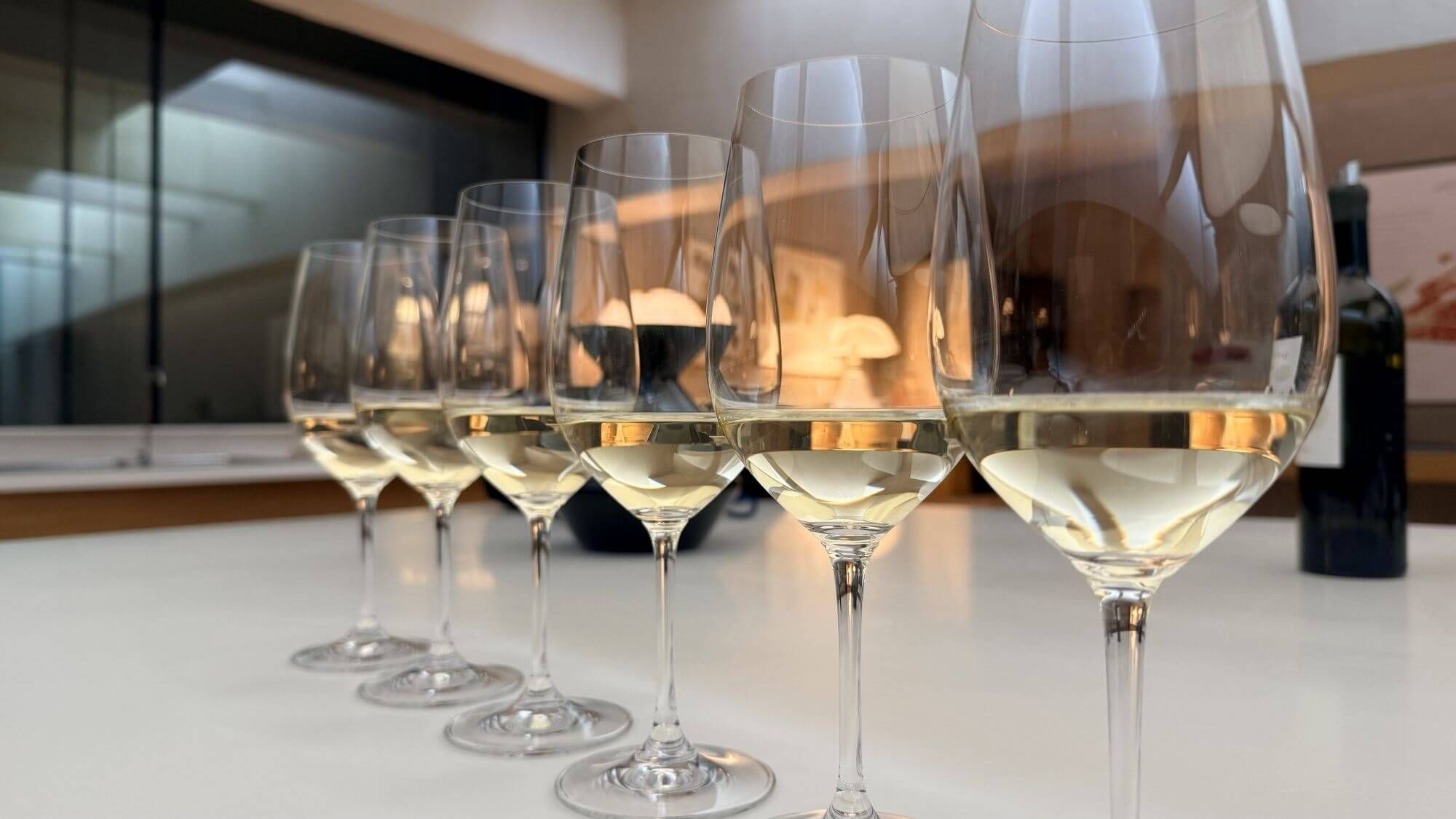
For this tasting, the estate placed six vintages side by side, from 2018 through 2023. To my surprise, colour alone revealed almost no discernible vintage differences. All the wines showed a pale yellow hue with a faint green tinge, looking strikingly youthful. Even the oldest vintage displayed no sign of oxidation at all, making it nearly impossible to judge age purely by appearance.
2. Sauvignon Blanc, without the clichés
This wine steps almost entirely outside the conventional expectations of Sauvignon Blanc. The familiar notes often associated with New World examples, especially those from New Zealand, such as grapefruit peel, pipi de chat, grassiness, or overt tropical fruit, are entirely absent.
Instead, the aromatics are mature and restrained, opening with delicate white florals before moving toward ripe white peach and Comice pear, accompanied by a refreshing note reminiscent of honeyed grapefruit water. The profile is precise, clear-lined, and inward-looking.
3. Generous body without heaviness
On entry, the wine’s generosity immediately creates a sense of fullness and enclosure on the palate. Yet, almost paradoxically, this slight sense of “plumpness” dissolves effortlessly, delivering a soft, gently glutinous texture. It brings to mind the sensation of bingfen melting in the mouth, ensuring that the wine never feels heavy.
4. A saline and gently bitter finish is always present
From the mid-palate onward, a saline note reminiscent of sea salt and soda crackers gradually emerges and carries through to the end of the tasting.
As the finish approaches, a subtle bitterness appears, evocative of chilled jasmine tea, often accompanied by a faint tannic touch. The finish is clean, decisive, and never lingering unnecessarily.
5. Acidity handled with great precision
Regardless of how warm the vintage conditions may be, the acidity of this wine is consistently kept above 3.6 g/L, with pH levels often hovering around 3.1. This is precisely what allows the wine to maintain its taut, streamlined profile at all times.
6. Vintage recommendations
At present, 2023 stands as my personal favourite. In addition, both 2021 and 2020 are vintages well worth close attention.
01 | How Did This White Wine Came to Life?
If we trace the origins of this white wine, it quickly becomes clear that its creation owes something to a fortunate twist of circumstance.
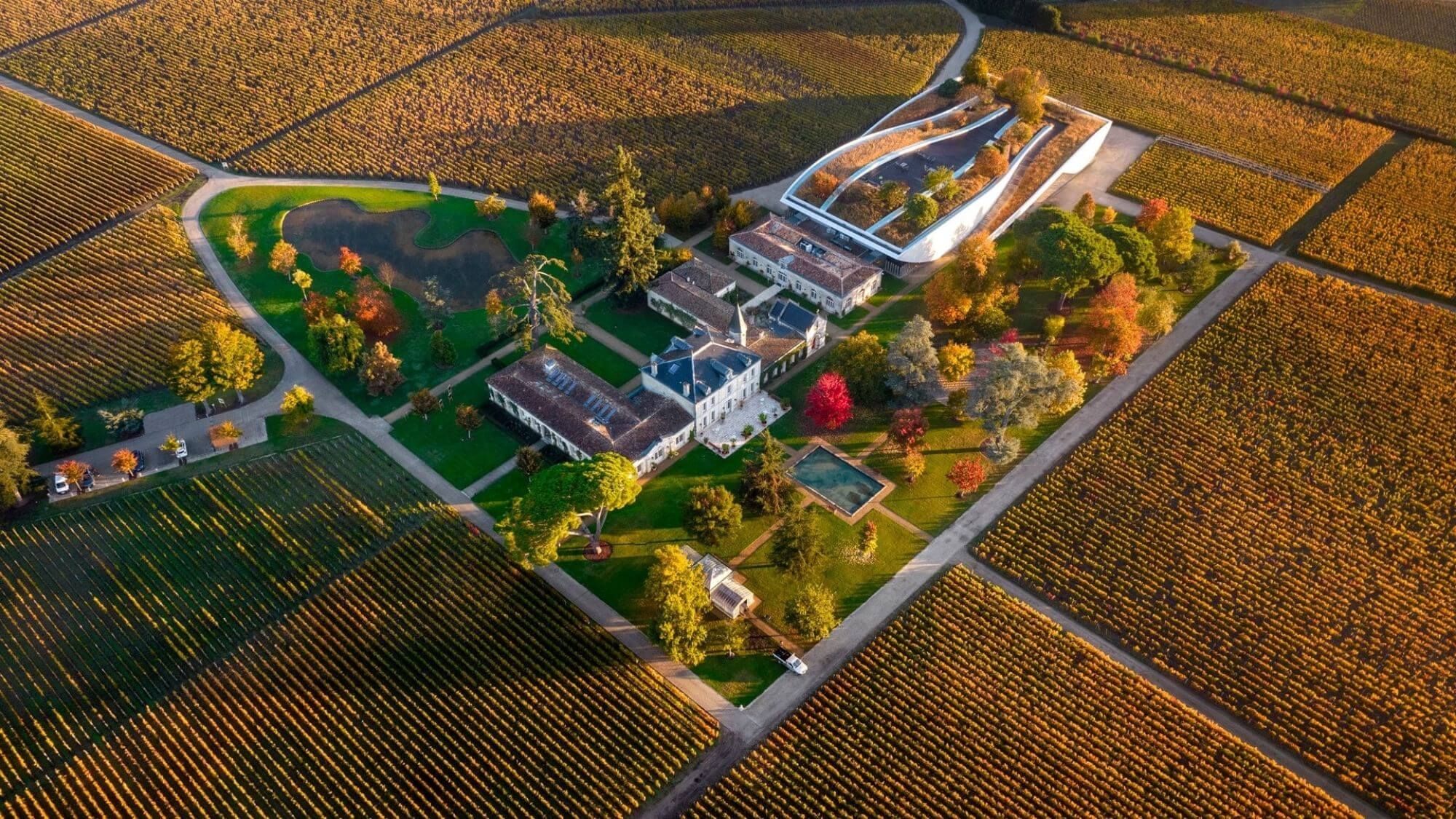
In the original plan, Château Cheval Blanc had no intention of producing a white wine at all. The idea was instead to consolidate surrounding vineyard resources in support of its red wines. Yet a single acquisition in 2006 quietly changed the course of events.
That year, Château Cheval Blanc acquired Château La Tour du Pin, located to the west of the estate, bringing the total vineyard area to around eight hectares. After a thorough reassessment, it became clear that only 1.3872 hectares, planted mainly on gravel-clay soils, truly met Cheval Blanc’s standards for red wine. The remaining roughly 6.5 hectares, dominated by sandy or gravelly-sand soils, simply could not deliver red wines with sufficient depth.
What followed, however, was an unexpected discovery. Over time, the Cheval Blanc team realised that these same parcels showed a striking natural affinity for white grape varieties.
This insight led to a five-year period of systematic soil research. Parcels were redefined according to soil type, and rootstock selections were further adjusted to achieve a closer match with local conditions.
Can a Red Wine Team Really Make White Wine?
The estate’s answer to this question has always been refreshingly candid. In the early stages of the project, the challenges were considerable. From 2009 to 2013, the first five vintages all fell short of the team’s expectations. To this day, those wines remain in the cellar, with not a single bottle released to the market. During that period, countless approaches were tested, setbacks were frequent, and moments of frustration were inevitable. Yet throughout it all, the team never abandoned its belief that it could craft a white wine capable of expressing Cheval Blanc’s terroir.
Why such confidence? For me, the most convincing explanation came from a remark by Pierre-Olivier Clouet at the time. He said, “If a great terroir can give birth to great red wine, then it can just as surely give birth to great white wine.”
Persistence eventually paid off. In the sixth year of the project, with the 2014 vintage, the team finally identified a clear stylistic direction that truly captured the identity of Cheval Blanc’s white wine. Produced in quantities of only around 4,500 bottles per year, the wine was officially released to the Bordeaux trade in 2016, with just about 3,000 bottles actually entering the market.
02 | “Cheval Blanc’s White”: What Kind of Style Is It, Really?
When it comes to defining the style of this wine, I spent a great deal of time discussing it with Pierre-Olivier Clouet. Two remarks from those conversations left a particularly deep impression on me, and together they neatly outline the direction behind what I call “Cheval Blanc’s blanc”.
The first was: “The loudest voice is not necessarily the truth.”
The second: “It must share the same temperament as Cheval Blanc’s red wines.”
If I were to put it into my own words, Le Petit Cheval – Le Blanc is a white wine that combines freshness, depth, and layering, while also possessing remarkable aging potential. It never allows Sauvignon Blanc to run free with exuberant aromatics, nor does it show the slightest hint of flattery. Instead, it feels like a child raised under strict guidance: through purity on the palate, restrained aromatics, and a gentle yet tensile body, it seeks to present the variety in its most truthful form, crafting a white wine that is unmistakably Bordeaux in spirit, sound in pedigree, and true to its roots.
With the style clearly defined, the next question naturally follows: how does the Cheval Blanc team achieve it? After looking closely at both vineyard work and winemaking choices, I would summarise their approach in a few key points.
First, in the vineyard, the team makes every effort to limit berry size, in order to achieve greater concentration and a stronger sense of energy.
Second, at harvest, the criteria are clear and uncompromising. Each parcel must reach full maturity before picking. The grapes must retain lively acidity, but without any greenness. They should show tension, never slackness, and absolutely no sweetness or excess weight.
Third, in terms of grape varieties, Sémillon was introduced into the blend starting with the 2018 vintage. Sauvignon Blanc is planted mainly on sandy and gravelly-sand soils. Under strict control of both bunch and berry size, the aim is to highlight freshness, acidity, and a sharp, decisive mineral drive. Sémillon, by contrast, is planted on higher-lying clay-rich parcels. Its contribution lies in texture and roundness, bringing a supple, gently gelatinous mouthfeel that adds layers and structural support. This, in turn, gives “Cheval Blanc’s blanc” a more complete expression, both in complexity and in aging potential.
Finally, during the aging stage, the wine undergoes an extended élevage of up to 24 months on its lees, entirely in oak. This approach builds a broader, more substantial body and a greater sense of scale, and it is also key to maintaining that paradoxical quality of youthful freshness over long-term aging.
At first glance, 24 months in oak may sound rather assertive. Yet after hearing Pierre-Olivier Clouet’s explanation, any such concern quickly faded. The estate uses around 20% 600-litre barrels, alongside 80% large-format foudres of 1,500, 2,000, and 3,000 litres. This combination not only keeps the imprint of new oak firmly in check and allows fruit expression to remain at the forefront, but also introduces a subtle tannic texture that gives the wine its distinctive edge.
03 | Returning to the question we began with: what does “Le Petit Cheval – Le Blanc” – a top-tier white wine made by Cheval Blanc – actually look like?
By this point, I think the answer has become fairly clear. It is a white wine that believes in terroir, respects time, understands restraint, and is willing to leave room for the drinker’s own imagination. Against the broader backdrop of steadily rising white wine consumption, this white wine has prompted many of my own reflections on the possibilities and future direction of white Bordeaux.
So, for those who encounter “Cheval Blanc’s blanc” again, I would simply suggest not rushing to judgement. Give it some air, take a moment to look out the window, and perhaps you will find that it has something different to say.