
AMA Vertical Tasting
Mas de Daumas Gassac
(1988-2024)
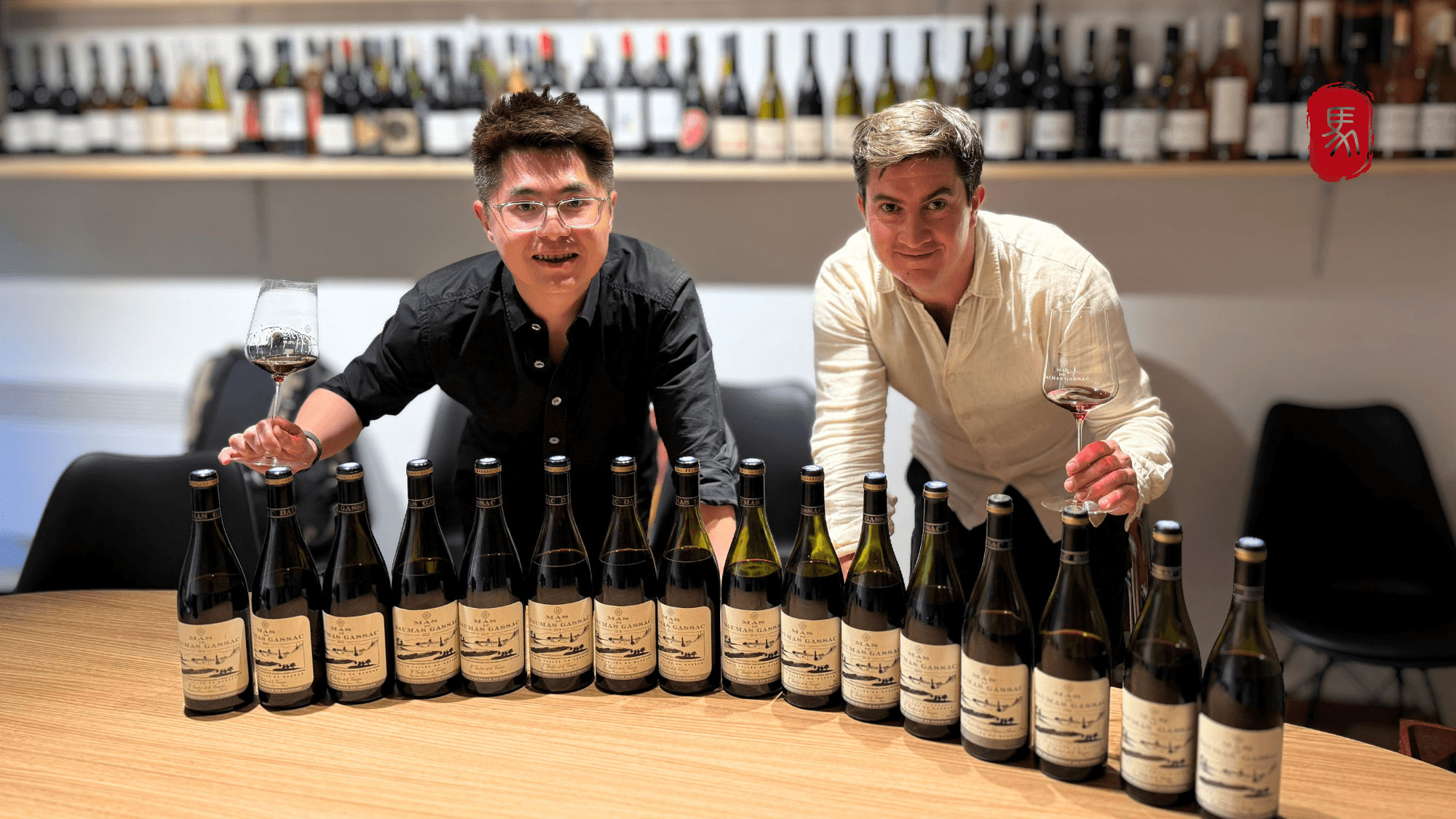
In early June, I drove nearly five hours from Bordeaux to the Gassac Valley, near Aniane, for a vertical tasting of Mas de Daumas Gassac that I had been looking forward to for a long time. I stayed there for two days.
Traveling that far for a single wine might seem excessive to some, but for Mas de Daumas Gassac, I felt it was entirely worthwhile. It was the very first estate from southern France that truly captivated me from the moment I tasted its wines. This visit felt less like a first encounter than a long-overdue appointment, years in the making.
Mas de Daumas Gassac has often been described as “the Lafite of the South” or “the First Growth of Languedoc.” But after this vertical tasting, what I want to share is something beyond those familiar labels. I want to explain what Daumas Gassac truly represents in my own eyes.
But before we get there, let me begin with my impressions from the tasting.
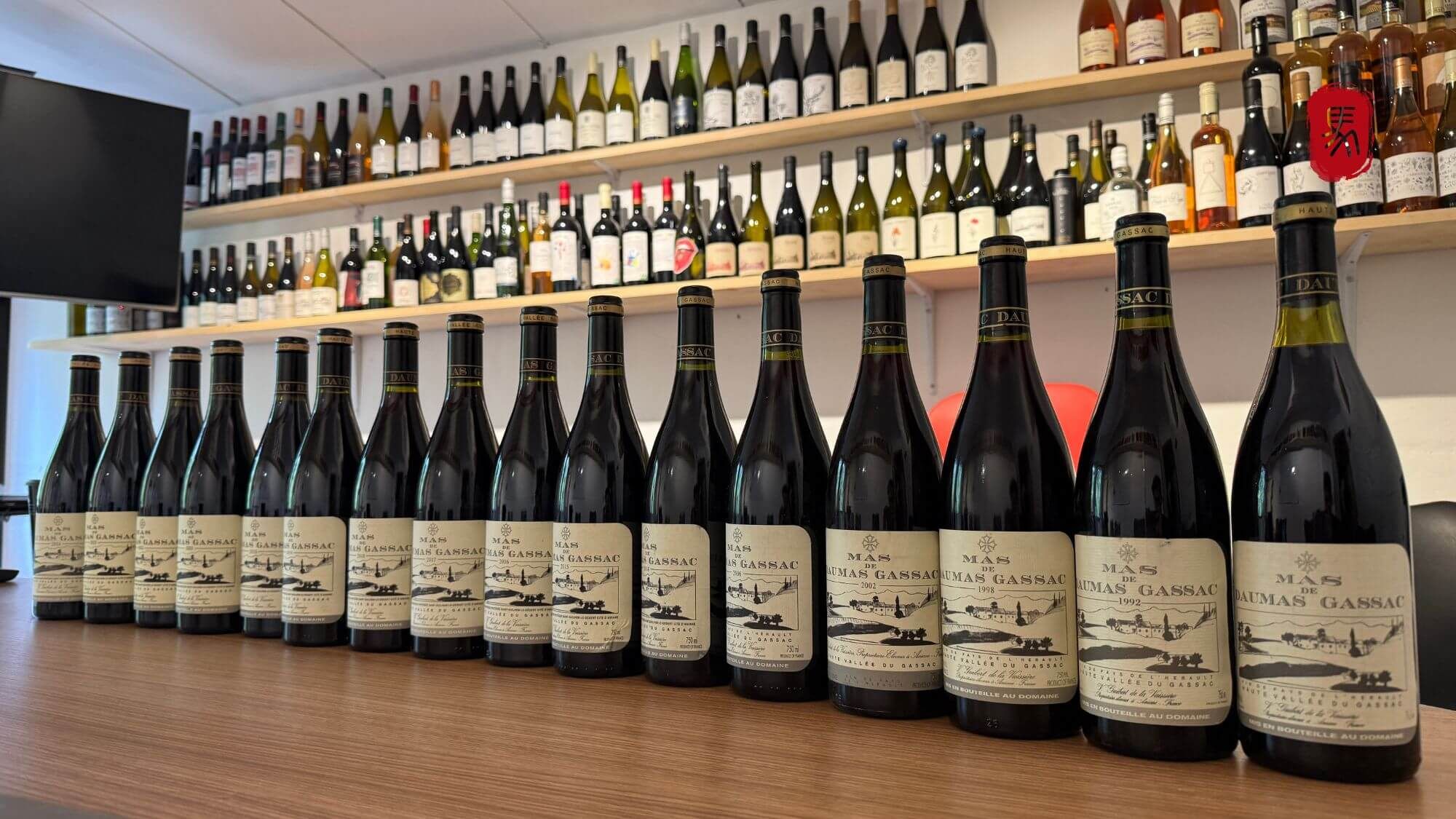
AMA Snapshot: Mas de Daumas Gassac
1. The overall style: the structure of Bordeaux, the ripeness of Languedoc, and the silky finesse of Burgundy.
2. After around ten years of bottle age, the wines develop a highly distinctive note reminiscent of weathered metal—a character I have rarely encountered elsewhere in southern France.
3. The cooling aromatics of the Mediterranean garrigue are a constant. Rosemary, sage, and wild herbs never fade with age; on the contrary, they become increasingly pronounced. The 1998 vintage is perhaps the finest example.
4. The finish always carries a muscular sense of strength. Even after more than twenty years in bottle, the tannins never lose their shape.
5. Vintage variation is relatively modest. Even the frost-affected 2017 vintage retains remarkably complete aromatic expression.
6. Cooler vintages often reveal floral notes of peony and iris, adding another layer of complexity. The 2017, 2021, and 2024 vintages all display a subtle aromatic resemblance to Nebbiolo.
7. Whether the vintage is cool or hot and dry, the tannins remain consistently supple. Across all the wines I tasted, they never once became coarse or rustic.
8. It is only after two decades of aging that Daumas Gassac truly begins to reveal its most captivating side.
At first glance, these observations may seem like a collection of isolated impressions. But after walking through the vineyards, exploring the cellar, and then returning to those mature vintages with a deeper understanding of the estate, I realized that they all point toward the same conclusion: The style of Daumas Gassac is anything but accidental.
A Leather Merchant, an Ethnologist, and a Piece of Land No One Believed In
The story begins in 1971.
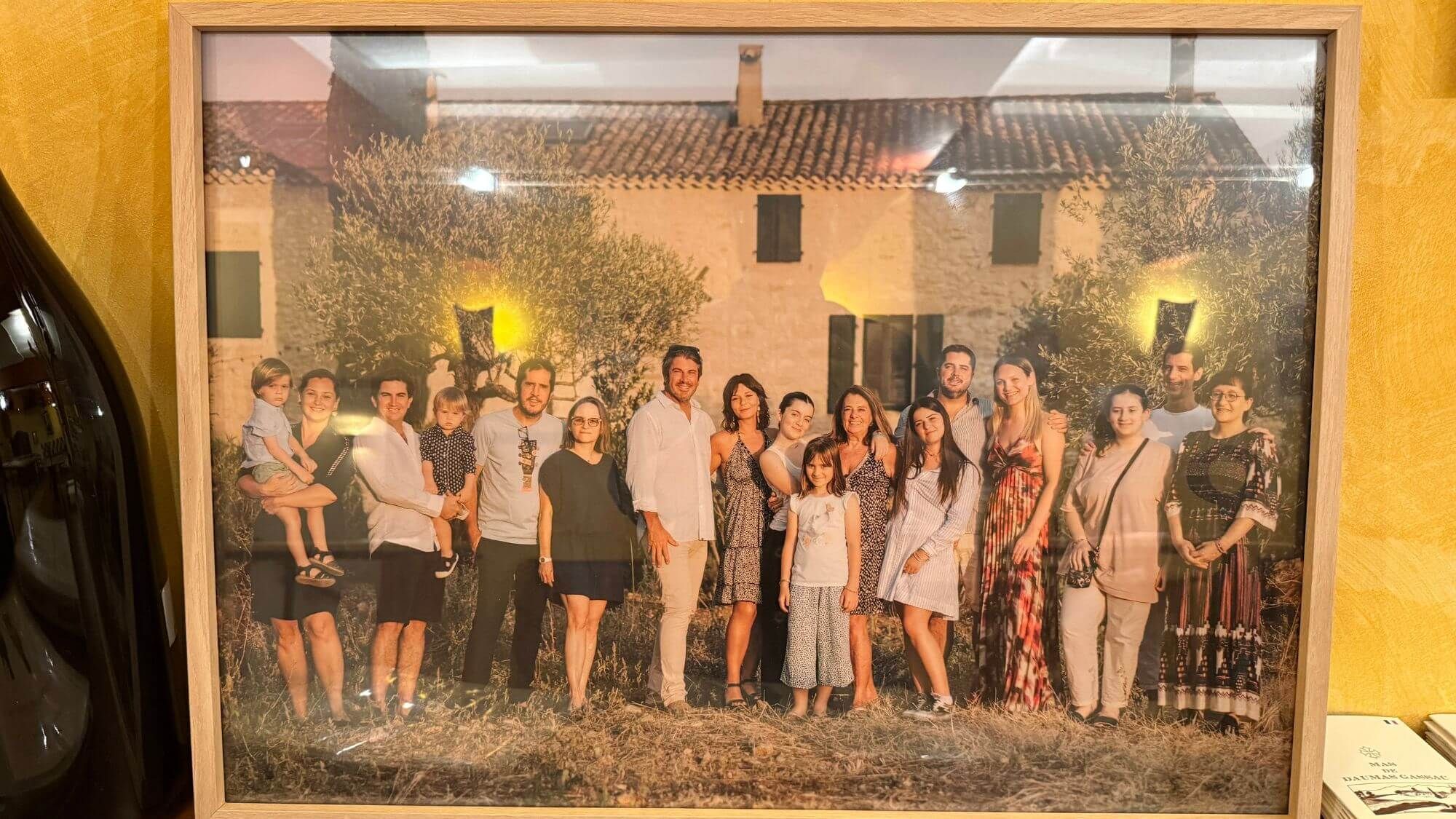
That year, Aimé Guibert and his wife, Véronique Guibert, were searching for a country house in the inland part of Hérault. At the time, they had virtually no connection to the wine world. Aimé was a leather merchant, while Véronique was an ethnologist.
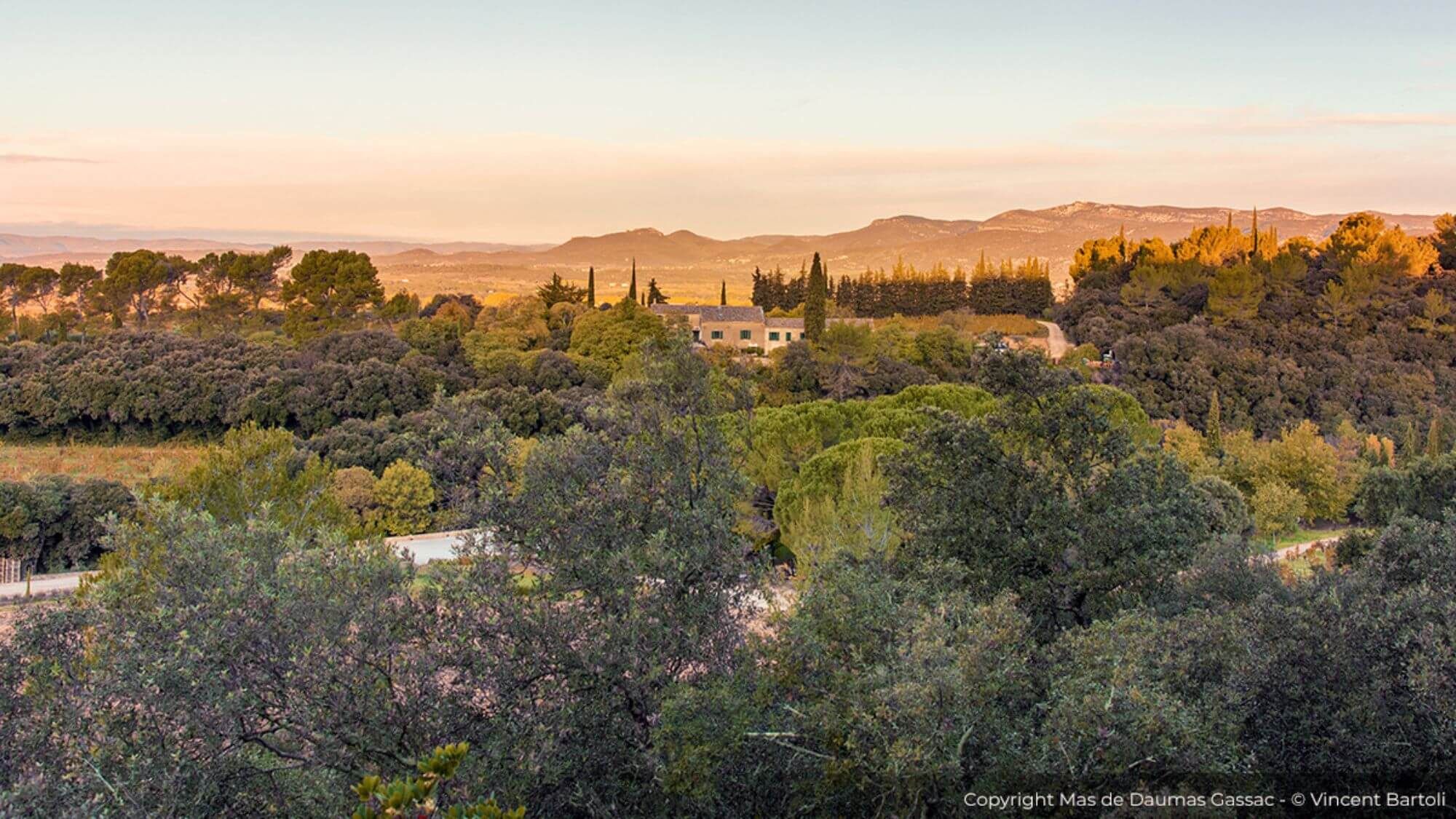
When they arrived near Aniane, they fell in love with an old farmhouse that had stood abandoned for years. Nestled in the Gassac Valley, close to the ancient Abbey of Aniane, it was surrounded by rolling Mediterranean garrigue and a landscape that felt almost untouched by the modern world.
At the time, no one could have imagined that what seemed like a spontaneous real estate purchase would not only transform the future of the Guibert family, but quietly alter the course of fine wine in Languedoc.
Today, Aniane is widely recognized as one of the region’s most important sources of high-quality wine. But back in the 1970s, the area did not even have an AOC. It belonged instead to the now-defunct VDQS classification. The local wines had little reputation, there were no success stories to speak of, and few believed that truly great wines could ever emerge from here.
A geographer named Henri Enjalbert, however, saw something entirely different.
The Prophecy of a Geographer
That man was Henri Enjalbert, one of France’s leading geographers and a renowned specialist in the relationship between vineyards and terroir.
After studying the Gassac Valley, he reached a conclusion that, at the time, sounded almost absurd: This was a great terroir waiting to be discovered.
What made his judgment so extraordinary was his ability to read what lay beneath the surface.
He recognized that:
- glacial gravel deposits left behind millions of years ago offered the vines exceptional rooting depth;
- the poor, free-draining soils would force the vines to send their roots ever deeper in search of water and nutrients;
- and, most importantly, the valley’s unique topography created an unusually cool microclimate—something exceptionally rare in Languedoc.
In those days, very few people believed him. History, however, proved him right. Henri Enjalbert understood the potential of the Gassac Valley long before anyone else.
Not Sure What to Plant? Plant Everything They Like
The geographer’s endorsement was certainly encouraging, but it immediately raised another question: What grape varieties actually belonged here?
The valley’s microclimate was noticeably cooler than the rest of Languedoc, making it unlike anything the region was accustomed to. Faced with so much uncertainty, Aimé Guibert and Véronique Guibert chose perhaps the simplest—and most characteristically Guibert—solution of all: They planted the varieties they loved.
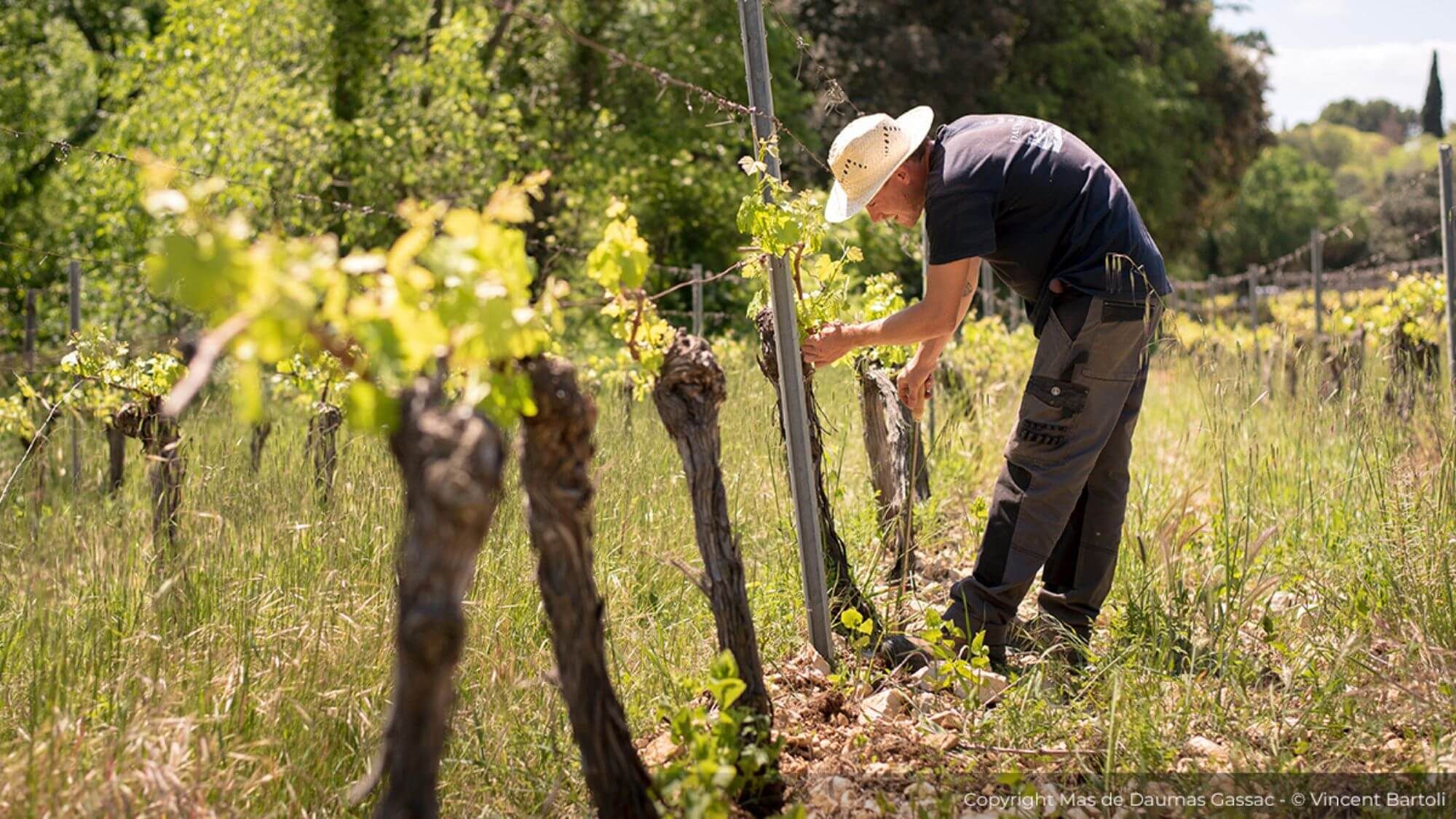
Aimé Guibert was a devoted admirer of Cabernet Sauvignon. Among his favorite wines were those of Château Lafite Rothschild and Château Latour. So in 1972, the couple obtained non-clonal Cabernet Sauvignon budwood from several leading Bordeaux estates and planted more than 17,000 Cabernet Sauvignon vines in the Gassac Valley.
Cabernet Sauvignon, however, was only the beginning.
No one knew which other varieties would truly thrive in this remarkable site.
So the Guibert family decided to plant them all—and let the vineyard provide the answers over time. Malbec, Merlot, Cabernet Franc, Tannat, Petit Verdot, Pinot Noir… more and more grapes found their way into the estate’s vineyards. Ironically, what appeared at first to be an almost improvised approach would eventually become one of Daumas Gassac’s defining characteristics.
1978: The First Bottle of Daumas Gassac
Planting the vines was one thing. Learning how to transform them into great wine was another.
It was during this period that fate brought them to Émile Peynaud, the legendary Bordeaux consulting oenologist. There is little need to introduce Professor Peynaud. Often described as the father of modern winemaking, he remains one of the most influential figures in the history of wine.
After learning about the extraordinary terroir of the Gassac Valley, he quickly became fascinated by the project and guided the estate through its first commercial vinification—remarkably, much of his advice was given over the telephone.
The first vintage of Mas de Daumas Gassac was released in 1978. The blend consisted of 80% Cabernet Sauvignon, with the remaining 20% made up of Malbec, Merlot, Cabernet Franc, Syrah, Pinot Noir, and Tannat.
Even by today’s standards, such a blend is highly unusual. At the time, it was nothing short of heretical. Because it did not comply with the local appellation regulations, the wine could only be released under the humble designation of Vin de Table. Yet it was precisely this “table wine” that first captured the attention of the French wine world and announced the arrival of an extraordinary outsider from the hills of Languedoc.
A Winegrower Takes on Robert Mondavi
If Daumas Gassac first established Aimé Guibert within the French wine community, it was his direct confrontation with Robert Mondavi that later turned him into a symbolic figure for many winegrowers in Languedoc.
At the time, Robert Mondavi, with the support of the mayor of Montpellier, was planning to develop a vast 500-hectare wine estate in the region. Aimé Guibert publicly opposed the project. In his view, the true value of wine lay in the individuality of terroir and the voice of the winegrower—not in standardized industrial products. He feared that large-scale, capital-driven viticulture would ultimately erase some of Languedoc’s most precious terroirs.
In the end, the project was abandoned after the mayor lost the municipal election. Yet the controversy itself spread Aimé Guibert’s reputation throughout France. In a sense, what he defended was not merely a piece of land, but a conviction about what wine ought to be.
Many people of my generation are familiar with what happened next. When the documentary Mondovino brought this story to the big screen, the name Mas de Daumas Gassac became known throughout the wine world.
The Surprisingly Cool Microclimate of Daumas Gassac
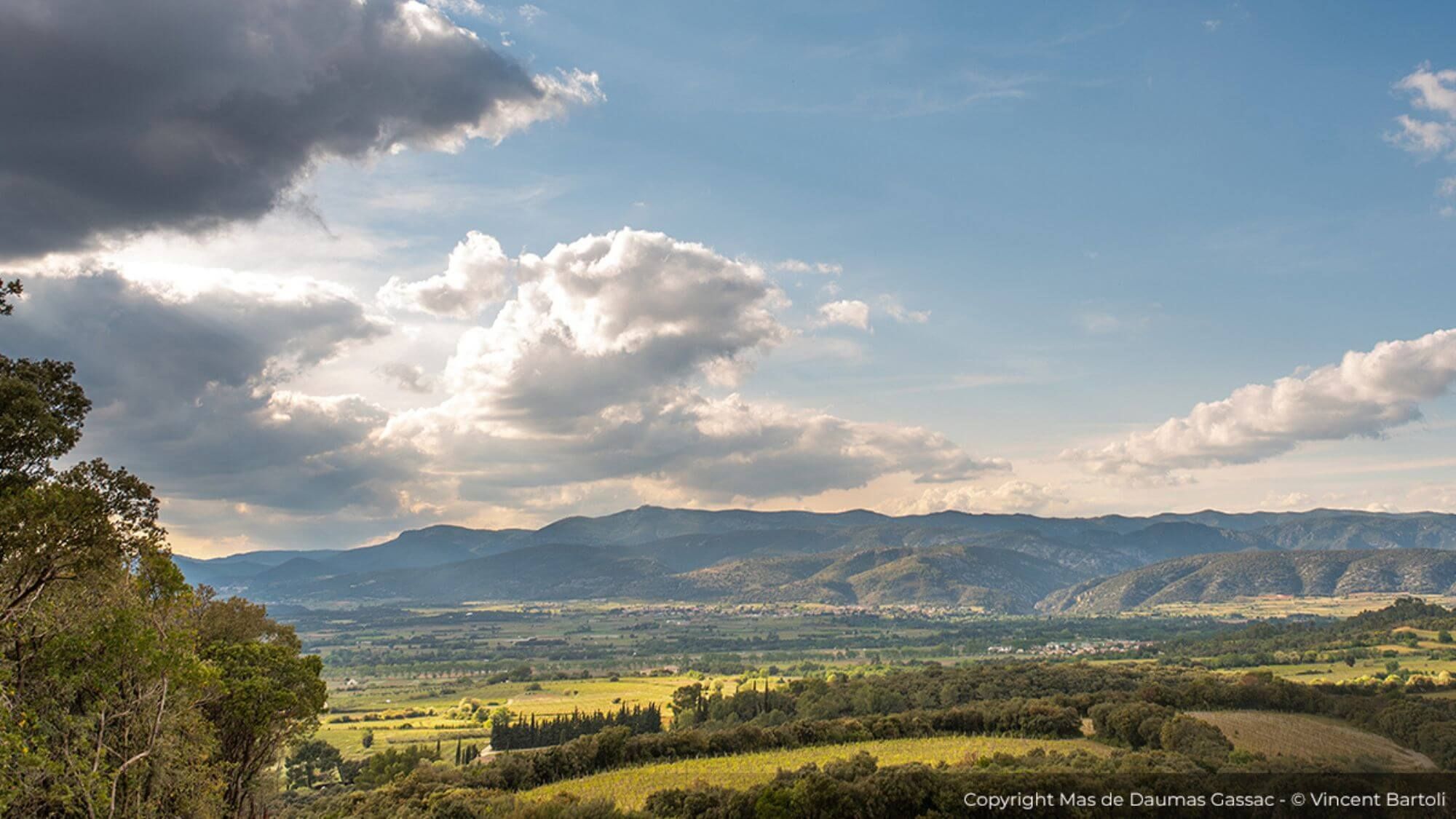
Located in southern France, Mas de Daumas Gassac lies in the Gassac Valley, just north of Aniane. Its vineyards sit at elevations of roughly 150 to 300 meters above sea level. While that may not sound particularly high, the estate lies immediately beneath the Larzac Plateau, which rises above 800 meters, and is sheltered within a long, narrow valley.
Every night, cold air from the Larzac Plateau flows naturally down the mountainsides into the Gassac Valley. This natural cooling system allows the vines to recover after the heat of the day, creating a pronounced diurnal temperature variation.
The vineyards are also surrounded by extensive Mediterranean woodland, with perennial springs flowing through parts of the valley. The forest acts like a natural air conditioner, while the underground springs further reinforce the valley’s cool character.
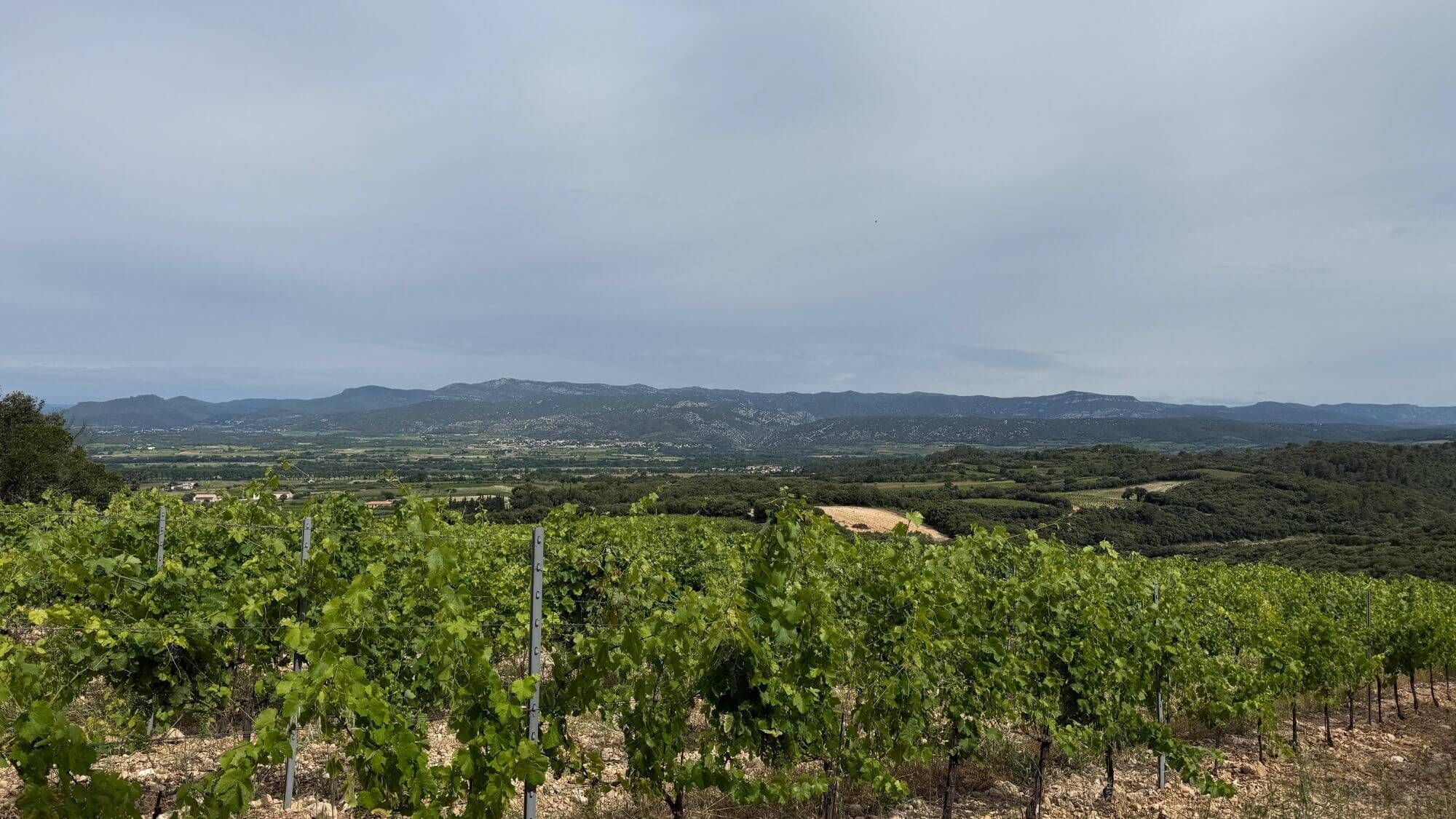
In addition, a large proportion of the vineyards are planted on north-facing slopes, receiving noticeably less sunlight than is typical in southern France.
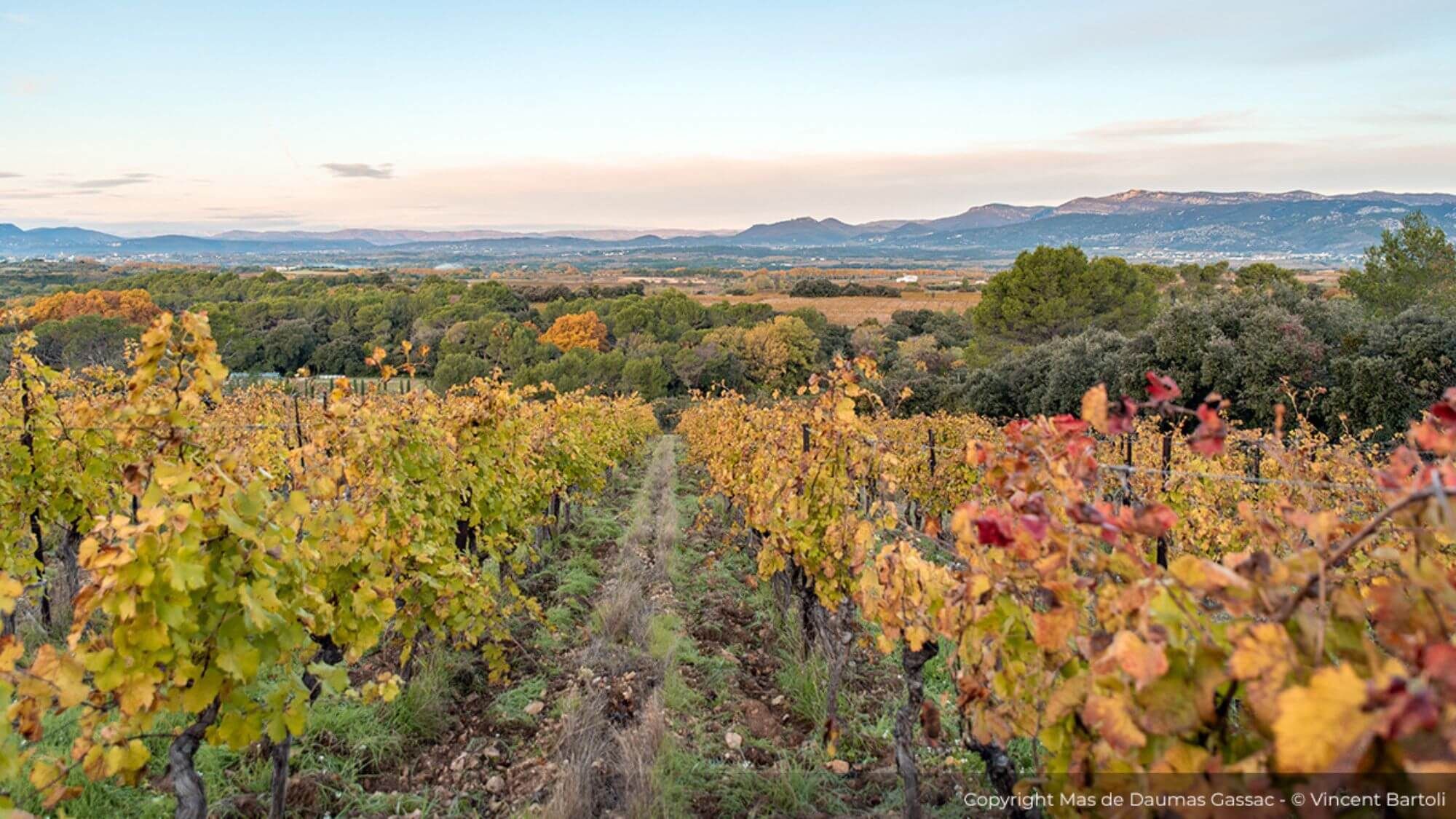
Together, these factors create a remarkably cool microclimate, one that is exceptionally rare in Languedoc. Flowering begins almost three weeks later than in the surrounding areas, and even in the height of summer, the nights remain refreshingly cool.
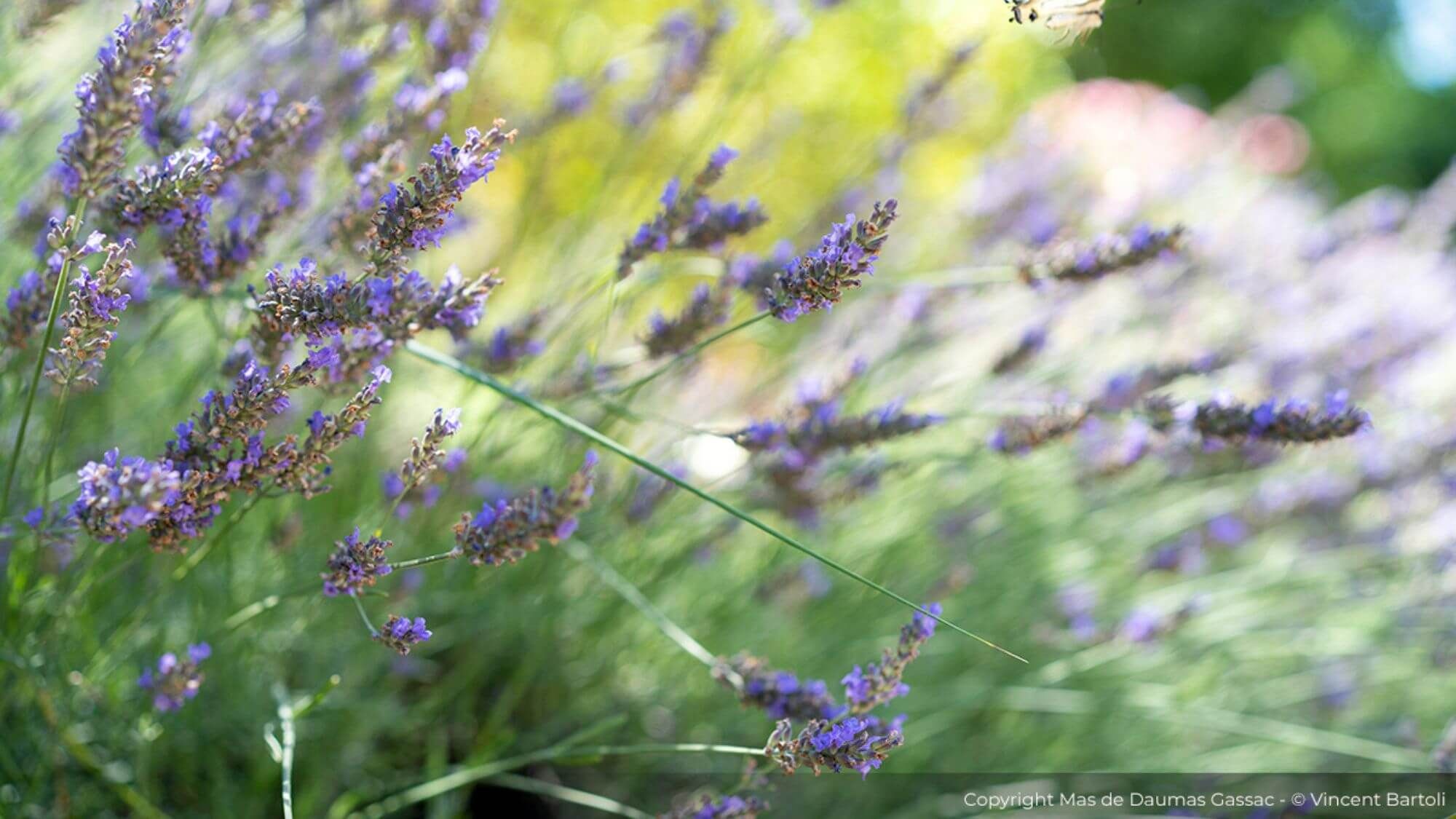
One experience from this visit made all of this suddenly click. As I walked through the vineyards that morning, I kept noticing Mediterranean herbs, rosemary, thyme, and others, emerging from the cracks in the limestone beneath my feet. At that very moment, I finally understood why, every time I taste Daumas Gassac, I find that unmistakable Mediterranean herbal freshness in the glass. No matter how hot the vintage may be, the wines never seem to lose their freshness, their vitality, or their beautifully defined acidity.
The answer, it turns out, had been hidden in this valley all along.
The Secret Beneath the Soils of Daumas Gassac
The estate has just 42 hectares of vineyards, yet they are divided into nearly 60 individual parcels. Rather than forming one continuous vineyard, the vines are scattered throughout the Mediterranean woodland, like clearings hidden within the forest.
To better understand where the distinctive style of Mas de Daumas Gassac comes from, I spent nearly three hours walking through the vineyards with the estate team. By the end of the visit, we had covered roughly six kilometers.
Along the way, I encountered three distinctly different soil types:
- Red clay covered with fractured limestone gravel;
- Yellow-white clay mixed with limestone;
- Almost bare white limestone bedrock exposed at the surface. (In some parcels, the rock must even be mechanically broken up before planting so that the vines have a chance to send their roots deeper into the ground.)
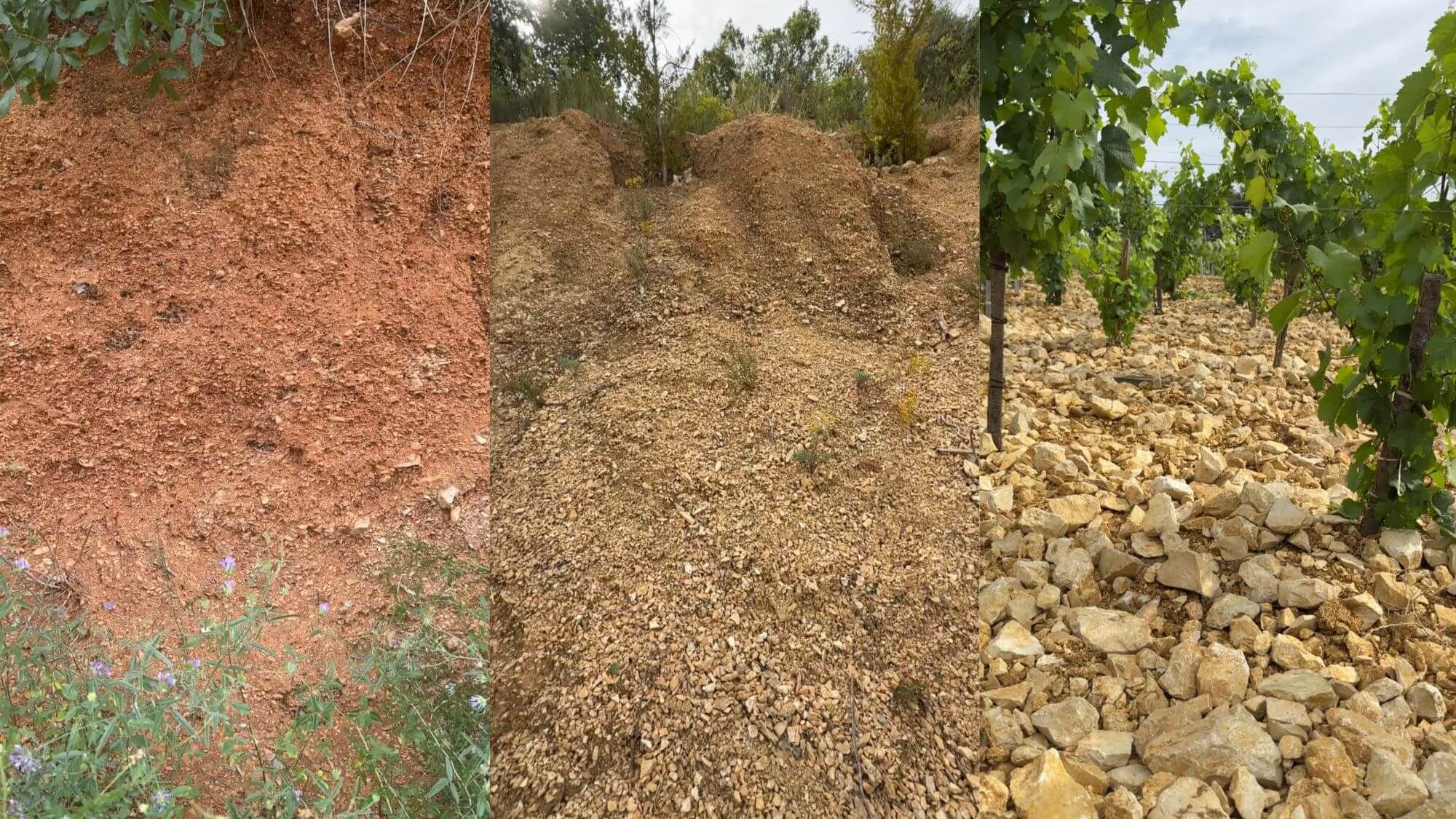
Of these, the first is by far the most widespread and, in my view, forms the soul of Daumas Gassac’s red wines. Most of the estate’s Cabernet Sauvignon is planted on this soil.
The gravel found here is a legacy of the Ice Age. Unlike the alluvial gravels of Bordeaux, these deposits were not laid down by rivers. Instead, they were gradually transported and accumulated by powerful winds during periods of glacial activity hundreds of thousands of years ago.
They provide the vines with three conditions that I believe are essential for producing truly great wines: depth, drainage, and poverty.
The deep soils allow the roots to penetrate far beneath the surface in search of water and nutrients. Even after heavy rainfall, excess water drains away rapidly. At the same time, the naturally poor soils force the vines to devote more of their energy to the fruit rather than to vigorous vegetative growth.
Many of the world’s greatest wine regions share these characteristics.
The remarkable thing about the Gassac Valley is that it possesses all three at once. Perhaps that was exactly why Henri Enjalbert was so confident, all those years ago, that this valley was capable of producing truly great wine.
An Unconventional Approach to Blending
Mas de Daumas Gassac is often compared with Bordeaux. But once you step inside the cellar, you quickly realize that its approach could hardly be more different.
In Bordeaux, most grape varieties are fermented separately, aged separately, and only blended together once élevage is complete. At Daumas Gassac, however, the thinking about blending begins much earlier—right from the fermentation stage.
The estate ferments exclusively in large-capacity vats and remains firmly committed to using indigenous yeasts.
Cabernet Sauvignon, the undisputed backbone of the wine, is fermented in its own dedicated vat. The other varieties—Malbec, Merlot, Cabernet Franc, Petit Verdot, Tannat, Pinot Noir, and others—are not vinified separately. Instead, they are fermented together in the same vat.
In other words, while many wineries allow each variety to develop independently before bringing them together, Daumas Gassac encourages its supporting cast to learn how to work together from the very beginning.
Once malolactic fermentation has been completed, the most fascinating part of the process begins. Around 30% of the Cabernet Sauvignon is first drawn off from its fermentation vat, creating enough space for the co-fermented blend of the other grape varieties to be transferred in. It is at this stage that the final assemblage begins to take shape.
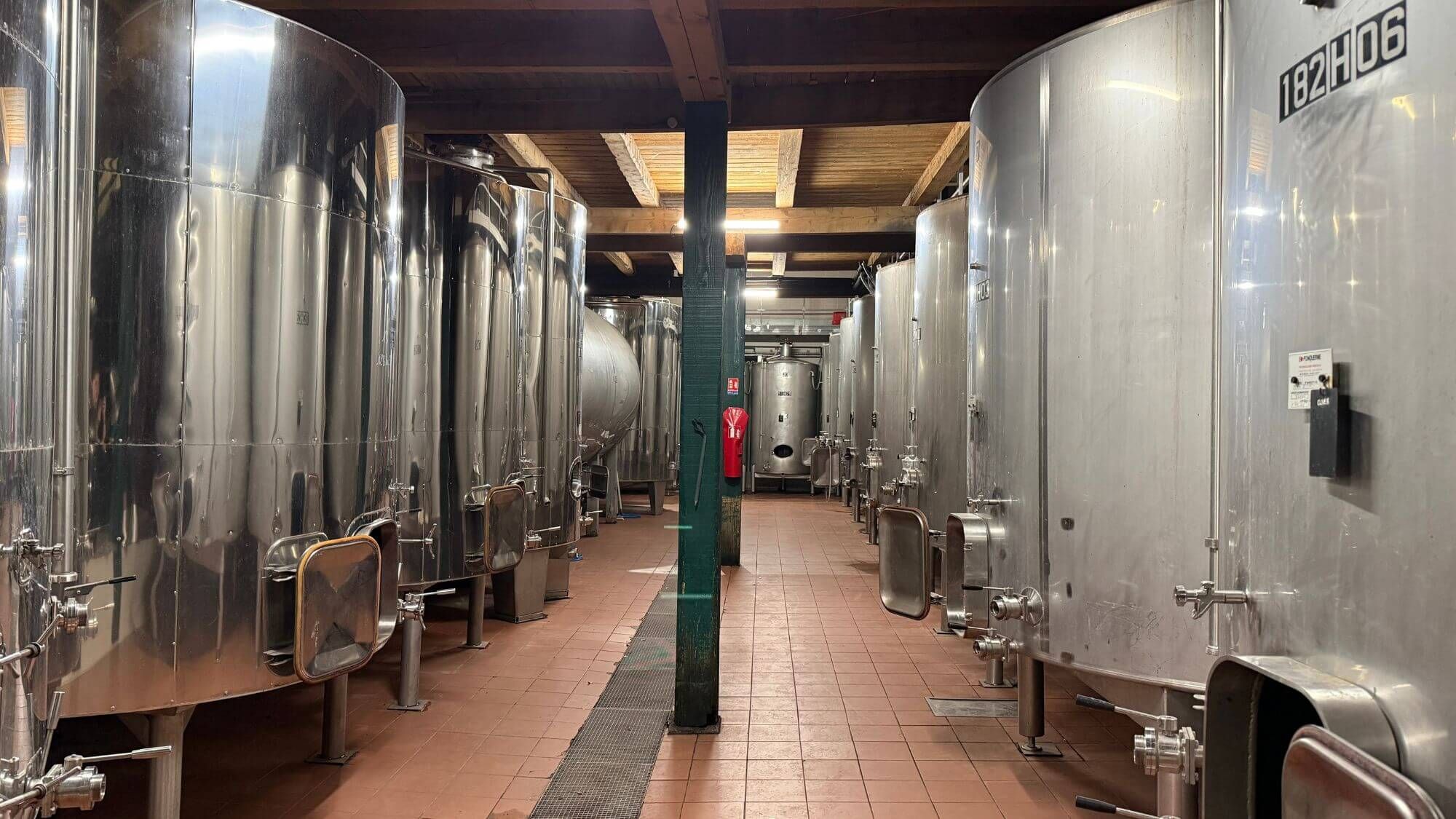
If that blending philosophy already sounds unconventional, what follows during élevage is just as distinctive.
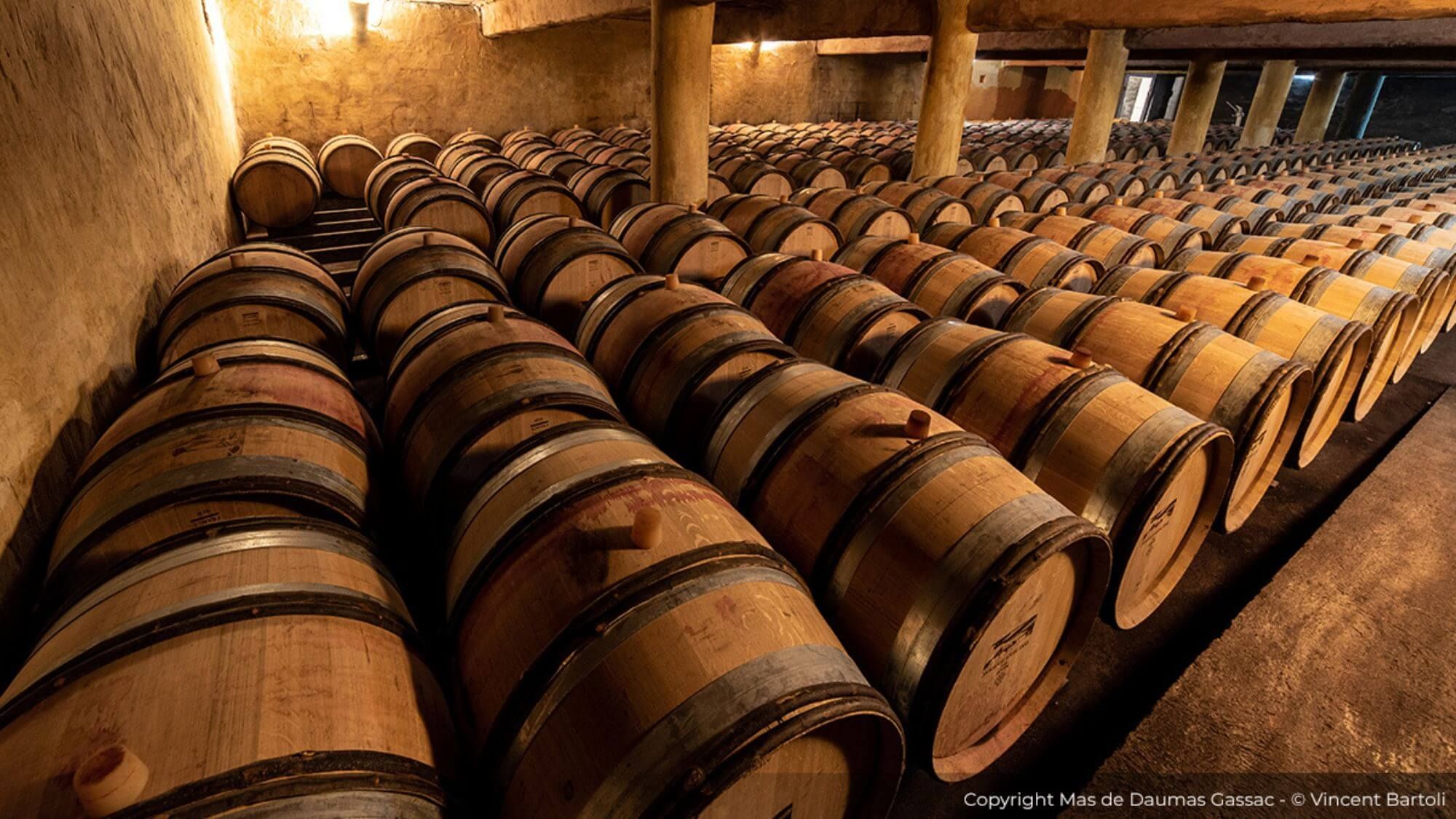
Once blending is complete, the wine is divided into two lots. One is transferred into oak barrels, while the other remains in large stainless-steel tanks. It is worth noting that the estate has always been remarkably restrained in its use of new oak, purchasing only around twenty new barrels each year.
The real surprise comes three months later. The wine that has been aging in barrel is moved into stainless steel, while the wine that has been resting in stainless steel is transferred into barrel. The two lots effectively exchange places and continue their élevage before being reunited and prepared for bottling roughly three months later.
The philosophy behind this approach is remarkably clear. Rather than emphasizing the individual identity of each grape variety, Daumas Gassac seeks to encourage them to integrate from the very beginning, allowing them to evolve together into a seamless whole. Even within France, it is an extraordinarily rare way of making wine.
Looking back today, the path that Mas de Daumas Gassac took to success still feels nothing short of extraordinary.
A leather merchant. An ethnologist. A piece of land that no one believed in.
They had no experience in winemaking, no proper cellar, and not even a clear idea of which grape varieties should be planted. What they did have was an unwavering conviction: that this terroir was capable of producing truly great wine.
More than forty years later, wine lovers around the world know the name Daumas Gassac. The estate has become not only a pioneer of fine wine in southern France, but also one of the forces that transformed the way people think about Languedoc.
When we talk about the success of a wine estate, we often credit investment, technology, resources, and hard work. All of those things matter, of course.
But in the story of Daumas Gassac, I see something even rarer. A determination that bordered on obsession. A willingness to keep believing in your own judgment, even when everyone else is convinced you’re wrong.
That is the Daumas Gassac I came to know. And I have a feeling that its story is still far from over.